Why Many Roofing Companies in Shreveport Misdiagnose Masonry Water Leaks
It is a scenario we see far too often across Northwest Louisiana. A homeowner in Shreveport wakes up after a heavy midnight thunderstorm to find a dark, spreading stain on their master bedroom ceiling. Frantic, they search for an emergency roof repair specialist and call a roofing company in Shreveport, LA. The roofer arrives, climbs a ladder, finds a few loose shingles, applies some mastic, and sends an invoice. Two weeks later, the rain returns – and so does the water dripping from the ceiling.
The frustration is palpable. You have spent money on a professional “fix,” yet the problem remains. As the owner of Anchored Roofing and a specialist in masonry forensics, I have spent years investigating these “mystery leaks.” What I have discovered is that many shreveport roofers are excellent at installing shingles but lack the diagnostic training to identify when a roof leak isn’t actually a roof leak at all. In many cases, the culprit is the masonry. Water follows structure, not drywall, and if your contractor doesn’t understand the “Uphill Logic” of home exterior forensics, you are likely throwing money at a symptom while the disease continues to rot your home from the inside out.
The “Uphill” Philosophy: Why Your Ceiling Stain is a Liar
One of the most common mistakes a roofing business near me might make is assuming that the source of a leak is located directly above the visible water damage. In the world of construction forensics, we call this the “Direct Drop Fallacy.” Water is lazy, but it is also opportunistic. It will enter a structure at its weakest point and then travel along the easiest path – usually gravity-fed – until it hits an obstruction or a low point where it finally pools and drips.
Proper leak detection begins “uphill.” If you have a water stain in the middle of your living room, the actual entry point could be ten feet away and six feet higher up the roofline. Water frequently enters through a cracked chimney crown or a porous brick facade, travels down the outside of the chimney structure, hits the roof decking, and then migrates along a rafter until it finds a gap in the insulation to settle on your drywall. If a roofing company shreveport only inspects the shingles directly above the stain, they are making an assumption, not an evaluation.
At Masonry Rescue, we utilize the research data championed by industry experts like Eric Kohn, which emphasizes that moisture migration is rarely a straight line. When local roofing companies perform a hail damage roof inspection, they are looking for impact marks on the architectural shingles roof. They aren’t necessarily looking at the saturation levels of the chimney’s mortar joints or the integrity of the transition flashing. To solve a leak, you must trace the water to its highest point of entry, which often leads away from the shingles and toward the masonry components of the home.
When “Roof Leaks” Are Actually Masonry Failures
The fundamental misunderstanding many homeowners – and even some roofing repair contractors – have is the belief that a brick wall is a waterproof barrier. In reality, masonry walls are designed to be drainage systems. Brick is naturally porous; it is essentially a hard sponge. When rain hits a brick wall, some of it sheds off, but a significant portion is absorbed. This is why modern construction requires a “weep” system and a moisture barrier behind the brick.
However, when that system fails or when the masonry itself degrades, you get significant water intrusion. Here are the three most common masonry failures that are frequently misdiagnosed as roof leaks:
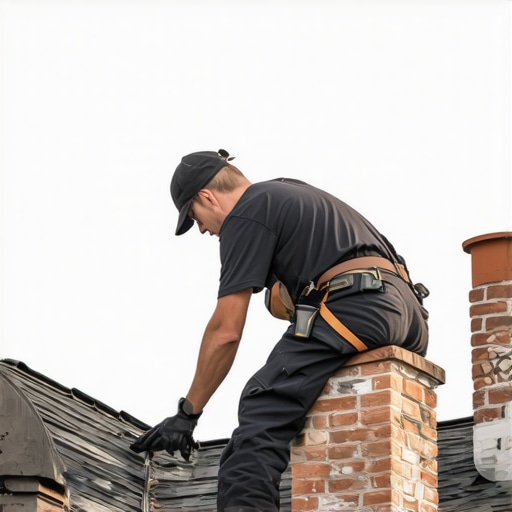
- Cracked Chimney Mortar: High winds and Shreveport’s temperature swings cause masonry to expand and contract. Over time, the mortar joints in your chimney can develop hairline cracks. During a storm, wind-driven rain is forced into these cracks. Because the chimney sits atop the roof, this water enters the building envelope and appears to be a shingle failure. Before you blame your shingles, you must check the shoulders before the flue.
- The “Red Brick Hack” and Porosity: Not all bricks are created equal. Some “red bricks” used in Shreveport neighborhoods are incredibly porous. We use a diagnostic tool called the “Red Brick Hack” to demonstrate this to homeowners. By applying a controlled amount of water to the brick face, we can show how quickly the material absorbs moisture. If the brick is absorbing water faster than it can drain, the moisture eventually pushes through to the interior framing.
- Failed Transition Flashing: This is where the roofing company shreveport la and the masonry specialist meet. The flashing – the metal material that bridges the gap between the roof and the brick wall – is a common failure point. If the roofer simply nails flashing to the face of the brick and goops it with caulk, it will eventually fail. Proper flashing must be “counter-flashed” or tucked into a reglet (a groove cut into the mortar). If this isn’t done, water will simply run down the brick wall, go behind the flashing, and enter the home.
The Shreveport Climate Factor: Why Local Roofers Miss the Signs
Shreveport, Louisiana, presents a unique challenge for building envelopes. We deal with extreme humidity, intense UV radiation, and heavy, horizontal rainfall during storm season. While many roofing companies shreveport la are highly skilled at identifying traditional storm damage, they often lack the specialized tools required to see how water pressure can secretly destroy your brickwork.
In our climate, a brick wall that faces the prevailing winds (usually the south or west) takes a massive “hydrostatic” beating. During a heavy downpour, the sheer volume of water hitting the wall creates pressure that can force moisture through even the smallest micro-cracks in the mortar. A standard roofer, focused on metal roof installation contractors or shingle replacement, might see a dry roof but fail to realize the wall itself is saturated.
Furthermore, the high humidity in Louisiana prevents masonry from drying out quickly. This leads to a cycle of “wicking,” where moisture is pulled deeper into the structure over several days. A homeowner might notice water dripping from the ceiling two days after the rain has stopped. A traditional shreveport roofing contractor might be baffled by this timing, but a masonry specialist understands that this is the result of the “sponge effect” finally reaching its saturation point and releasing water onto the ceiling joists.
Common Misdiagnoses: Shingles vs. Masonry
When a homeowner is faced with a leak, the first question is often about the metal roof or shingles cost. They assume that if they just upgrade to a high-end architectural shingles roof, their problems will vanish. However, if the leak is originating in the masonry, the most expensive roof in the world won’t keep the house dry.
Consider the comparison between a generalist like Triumph Roofing – who provides excellent standard roofing services – and a specialized diagnostic team. A standard roofer’s toolkit includes a hammer, shingles, and sealant. A masonry specialist’s toolkit includes thermal imaging cameras, moisture meters, and pressure testing equipment.
We often find that “roof leaks” are actually caused by water seepage through porous foundation blocks that wicks upward, or more commonly, failing mortar joints that have lost their structural integrity. When the mortar between bricks becomes “soft” or “sandy,” it no longer acts as a seal; it acts as a wick. A roofer might try to fix this by putting more caulk on the flashing, but that only traps the water inside the wall, leading to wood rot and mold growth that you won’t see until it’s a five-figure repair bill.
Our “50-Point Masonry Check” is designed to catch these nuances. While a roofing repair contractor looks at the “lid” of your house, we look at the “container.” We examine the chimney crown, the mortar hydration levels, the weep hole functionality, and the lintel integrity. If you only fix the lid but the container has holes in the side, you’re still going to get wet.
Commercial Roofing Services: A Different Level of Risk
For facility managers in Shreveport, the stakes are even higher. Commercial buildings often utilize large brick facades or parapet walls. When a leak occurs in an office building or retail space, the immediate reaction is to call for commercial roofing services. However, many commercial roof leaks are actually facade failures.
If you are managing a property, it is vital to understand why your office building’s emergency roof leak is actually a masonry issue. Parapet walls – the parts of the wall that extend above the roofline – are exposed to weather on both sides. If the masonry on the exterior of the parapet is compromised, water can travel down the center of the wall, bypassing the expensive commercial roof membrane entirely.
One of the most costly mistakes facility managers make with brick facades is failing to distinguish between a roof edge failure and a masonry saturation issue. This leads to repeated, expensive “patch jobs” on the roof membrane that never stop the leak because the water is entering through the brickwork three feet above the roofline. In the commercial sector, specialized diagnostic masonry work isn’t just a luxury; it’s a capital expenditure protection strategy.
Conclusion: Stop Chasing Stains and Start Fixing Structures
If you have called shreveport roofers multiple times and your ceiling leaking repair hasn’t held up, it’s time to change your perspective. Stop chasing the stain on the ceiling and start looking at the structure of your home or building. Water is a persistent force, and in a climate like Shreveport’s, your masonry needs as much attention as your shingles.
At Masonry Rescue, we bridge the gap that many roofing companies shreveport leave wide open. We don’t just look for where the water is dripping; we find where it is starting. Whether it’s a porous brick, a failing chimney, or a commercial parapet wall, we provide the forensic evidence needed to fix the problem once and for all.
Don’t settle for another temporary patch. It is time to go beyond the surface. Contact Masonry Rescue today to schedule your comprehensive 50-point masonry inspection and finally put an end to your “mystery” leaks. We serve the entire Shreveport-Bossier area with the diagnostic expertise your home deserves.