Stop Basement Damp: 5 Foundation Waterproofing Fixes for 2026
The Anatomy of a Dying Foundation
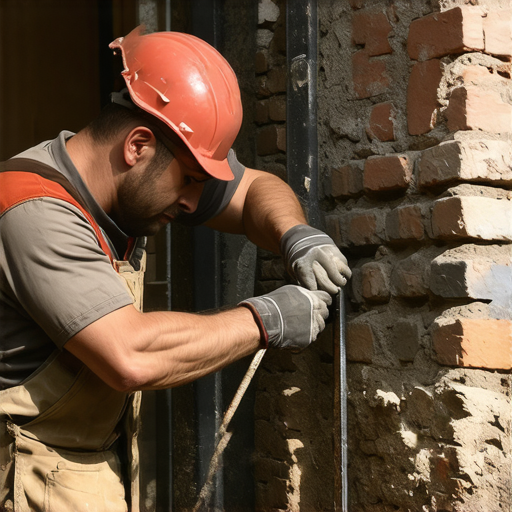
The basement smelled like a wet grave. I was in a 1920s cellar in the heart of a rain-soaked district, looking at what the homeowner called a ‘minor damp spot.’ I took my slicker and scraped at the white, fuzzy efflorescence blooming on the wall like a fungus. Beneath that salt, the brick didn’t just crumble; it turned to a slurry. When I shoved my fiber-optic scope into a vertical fissure, I didn’t see solid earth. I saw a void where the backfill had washed away, leaving the structural steel lintel rusted to a ghost of its former self. This wasn’t just ‘damp’; this was a slow-motion collapse caused by the relentless physics of hydrostatic pressure. In my forty years of buttering joints and hauling a hawk, I’ve seen this story a thousand times. People want a quick fix, a gallon of ‘waterproof’ paint they bought at a big-box store, but that’s like putting a band-aid on a gunshot wound. By 2026, the way we fight water has changed. We’ve moved beyond just slapping tar on a wall. We’re talking about the chemistry of the substrate and the mechanical reality of how water moves through the ‘tooth’ of the stone.
“Water penetration is the single greatest threat to masonry durability, accounting for over 90% of all accelerated deterioration.” – BIA Technical Note 7
The Physics of the Hydraulic Hammer
To understand why your basement is leaking, you have to understand the ‘Hydraulic Hammer.’ Every time it rains, the soil around your foundation becomes saturated. Water weighs 62.4 pounds per cubic foot. If you have eight feet of saturated soil against your wall, that is hundreds of pounds of lateral force pushing against every square foot of your masonry. In a freeze-thaw climate, that water expands by 9% when it turns to ice. If you’ve used a hard Portland-heavy ‘mud’ to repoint a soft historic brick, that expansion has nowhere to go but out, popping the face of the brick right off in a process we call spalling. The water doesn’t just sit there; it migrates through capillary action. It finds the microscopic ‘honeycombing’ in a poor concrete pour and hitches a ride inside. We aren’t just looking for cracks; we are looking for the path of least resistance. 2026 brings us tools to fight this at the molecular level.
1. Self-Healing Concrete Foundations: The Biological Seal
The biggest shift for 2026 is the mainstreaming of self-healing concrete foundations. For decades, we relied on membranes that eventually brittle and crack. Now, we use concrete infused with crystalline admixtures or, in some high-end forensic retrofits, dormant bacteria. When a hairline crack forms and water enters, it ‘wakes up’ the chemistry. In the case of crystalline tech, the water triggers the growth of insoluble calcium silicate hydrate crystals that fill the pore. It’s like the foundation has its own immune system. If you are dealing with a failing poured wall, we can now inject these crystalline slurries deep into the ‘cold joint’ where the footer meets the wall. This isn’t your ‘handyman special’ epoxy. This is a permanent alteration of the concrete’s permeability, turning a porous sponge into a hydrophobic fortress.
2. Sustainable Tuckpointing Mortars & Carbonation Logic
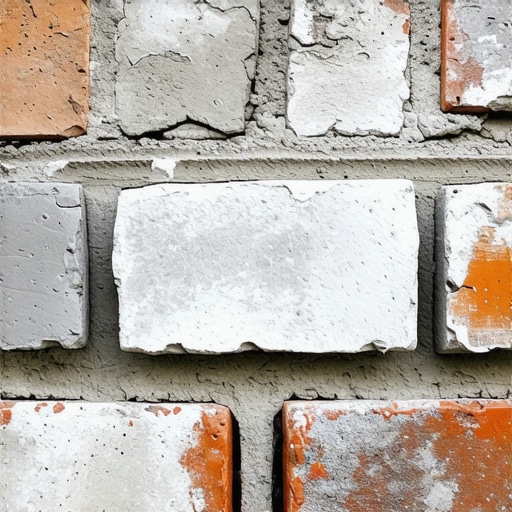
If you’re living in a historic home, the worst thing you can do is use modern Type S mortar. It’s too hard. It’s a death sentence for old clay. For 2026, we are seeing a return to sustainable tuckpointing mortars that utilize hydraulic lime (NHL). The physics is simple: the mortar must be the ‘sacrificial lamb.’ It must be softer and more vapor-permeable than the brick. This allows the wall to ‘breathe.’ When moisture gets in, it evaporates through the mortar joints rather than getting trapped and freezing inside the brick. The chemistry of carbonation in lime mortar takes decades to fully complete, meaning the wall actually gets more resilient over time, unlike Portland which begins its decay cycle the moment it reaches full cure. Using tuckpointing machine services for deep injection ensures that we aren’t just ‘skimming’ the surface, but filling the entire ‘bed joint’ to prevent water pockets from forming behind the ‘butter.’
“The compressive strength of the mortar should always be less than that of the masonry units to ensure that any stress-induced cracking occurs in the replaceable mortar joints.” – ASTM C270 Standards
3. Digital Twin Masonry Projects: The Forensic Map
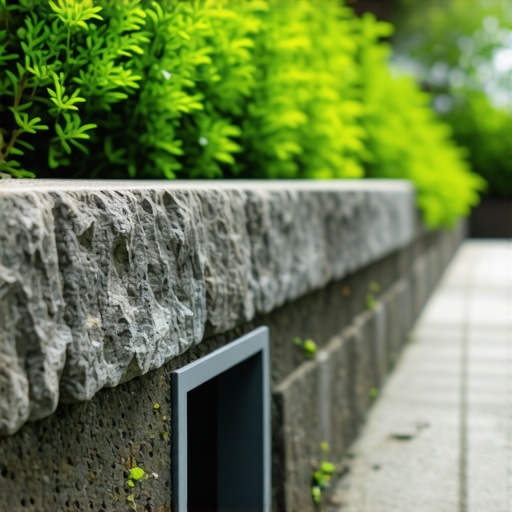
We used to guess where the water was coming from. Now, we use digital twin masonry projects. Before we ever mix a bag of mud, we use LiDAR and thermal imaging to create a 3D model of the structure. This ‘digital twin’ allows us to simulate how water sheds off the roof and where it pools against the foundation. Often, a basement leak isn’t a foundation problem; it’s a site-grading problem. We can see the ‘thermal bridges’ where moisture is wicking through the wall. This forensic approach saves homeowners from wasting $20k on an interior ‘French drain’ when the real culprit is a failing chimney flashing repair or a retaining wall capstone replacement that is dumping thousands of gallons of water toward the house instead of away from it.
4. Mortarless Masonry Systems & Drainage Planes
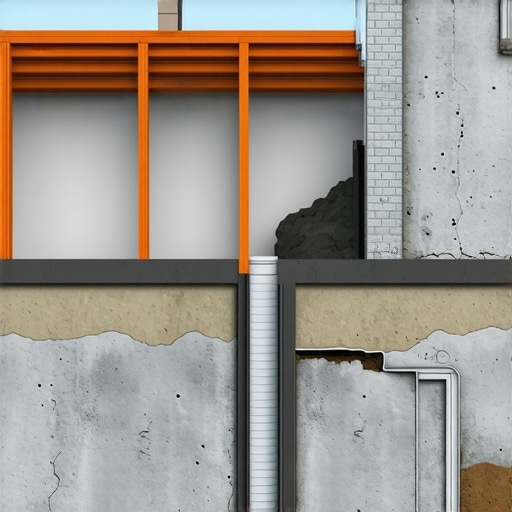
In 2026, we are moving away from the idea that a wall should be a solid, impermeable barrier. Modern waterproofing often involves mortarless masonry systems or ‘rain-screen’ principles. We install a dimpled drainage mat against the exterior foundation wall. This creates a ‘void’ that breaks the hydrostatic pressure. Instead of the water pushing against the concrete, it hits the mat and falls harmlessly into a perforated footing pipe. For those dealing with stone veneer repair, we are finding that ‘lick-and-stick’ applications—where stone is just glued to a wall—are the leading cause of rot. We are now retrofitting these with proper weep holes and drainage planes to ensure the ‘suction’ of the stone doesn’t pull moisture into the sheathing.
5. The External Defense: Paver Slopes and Weatherproofing
You can’t fix a basement from the inside only. You have to look at the ‘hardscape.’ A common cause of foundation failure is a brick paver driveway repair gone wrong, where the pavers have settled over time and now slope back toward the house. We use ‘compaction physics’ to reset these bases, ensuring a 2% minimum slope away from the foundation. Furthermore, tuckpointing weatherproofing now involves silane-siloxane sealers that are vapor-permeable. These aren’t the ‘shiny’ sealers of the 90s that trap moisture; these are ‘breathable’ chemicals that change the surface tension of the masonry. Water beads off like it’s on a fresh-waxed car, but the water vapor inside can still escape. It’s the difference between a plastic poncho and a high-tech Gore-Tex jacket for your house.
The Do-It-Once Rule
Don’t be fooled by the ‘asphalt gypsies’ or the ‘leftover material’ scams. True masonry forensics is about understanding that your home is a living, breathing machine. If you ignore the retaining wall capstone replacement or the small chimney flashing repair, you are inviting the hydraulic hammer to tear your house down from the mud up. Use tuckpointing machine services to get the depth you need, and always demand a mortar analysis before any ‘pro’ touches your wall with a grinder. In this trade, if you don’t do it right the first time, the stone will eventually tell the truth about your laziness. Fix the grade, fix the mortar, and let the wall breathe. That is how you stay dry in 2026.
![Does Your 2026 Patio Need Porous Stone Sealers? [Test Results]](https://masonryrescue.com/wp-content/uploads/2026/04/Does-Your-2026-Patio-Need-Porous-Stone-Sealers-Test-Results.jpeg)

![How to Stop Stone Veneer Over Brick Trapping Water [2026 Fix]](https://masonryrescue.com/wp-content/uploads/2026/04/How-to-Stop-Stone-Veneer-Over-Brick-Trapping-Water-2026-Fix.jpeg)