Sustainable Tuckpointing Mortars: 3 Reasons to Switch in 2026
The Facade of a Dying Era
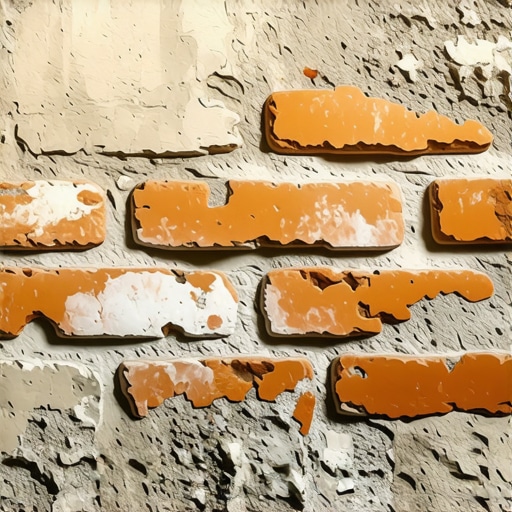
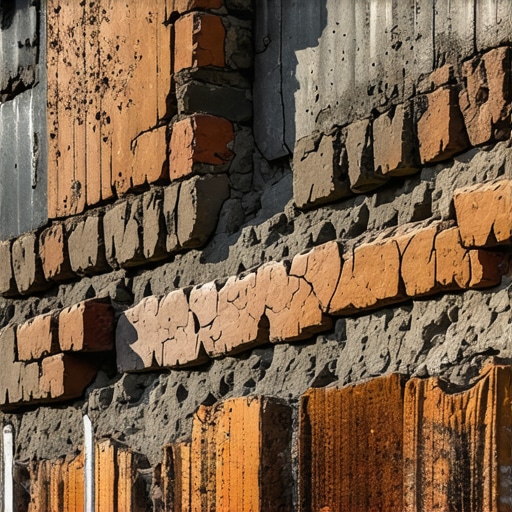
I recently stood before a 110-year-old Romanesque Revival that looked like it was shedding its skin. The owner was distraught; she had paid a ‘pro’ five years ago to freshen up the joints. But instead of a beautiful restoration, the brick faces were popping off in dinner-plate-sized shards, littering the sidewalk with the pulverized red dust of a century’s history. This isn’t just bad luck; it is a forensic failure. The culprit was a hard, gray ribbon of modern Portland cement. It had been smeared into the joints of soft, hand-molded clay bricks, creating a structural prison. When the moisture tried to leave the wall, it couldn’t pass through the cement. Instead, it stayed in the brick, froze, and expanded with the force of a hydraulic jack. This is the tragedy of the modern handyman special: they use 21st-century ‘strength’ to destroy 19th-century soul.
The Wisdom of the Slaking Pit
My mentor, a man named Silas who spent forty years in the mud, never trusted a bag that said ‘High Strength’ on the side. He used to say that if you can’t carve your initials into the mortar with a thumbnail after a month, the wall is going to die young. Silas didn’t need a lab; he’d watch the lime slake in a pit, listening to the hiss and steam as the quicklime reacted with water to create lime putty. He knew that the ‘tooth’ of the brick—the microscopic pores that allow for a mechanical bond—required a mortar that was flexible, not a mortar that was brittle. He taught me that re-pointing services aren’t about adding strength; they are about managing the inevitable movement of the earth. We aren’t building bunkers; we are building breathing organisms. If the mortar is harder than the brick, the brick becomes the sacrificial element. In a proper wall, the mortar is the sacrificial lamb, designed to weather and be replaced every fifty to eighty years without taking the masonry with it.
“Mortar should always be weaker than the masonry units it binds, ensuring that stresses from thermal expansion and moisture movement are relieved within the joints rather than through the units themselves.” – BIA Technical Note 1B
The Physics of the Freeze-Thaw War
In the North, we fight a war every winter. The enemy is the 9% expansion of water as it transitions from liquid to solid. In a wall treated with brickwork sealants application that wasn’t vapor-permeable, that water gets trapped. The pore structure of a historic brick is like a series of interconnected straws. Under a microscope, you can see how the water migrates toward the surface to evaporate. If you choke that surface with a non-breathable sealant or a dense Type S mortar, the pressure builds until the ‘spall’ occurs. This is why historic mortar analysis is the first step in any forensic intervention. We look at the sand gradation—the ‘bones’ of the mix—and the binder-to-aggregate ratio. By 2026, the industry is shifting back to sustainable, high-calcium lime mortars because they possess ‘autogenous healing’ properties. When a micro-crack forms in a lime joint, moisture dissolves a small amount of free lime, which then migrates into the crack and recarbonates, literally ‘healing’ the wound. You won’t get that from a bag of hardware-store pre-mix.
The 2026 Shift: Fiber-Reinforced Mortars and Bio-Binders
As we look toward the future of re-pointing services, we are seeing the integration of fiber-reinforced mortars. These aren’t the clunky nylon strands of the 90s. We are talking about micro-fibrils that bridge the gap between historic elasticity and modern durability. These fibers provide ‘green strength’ during the curing process, preventing the shrinkage cracks that haunt ‘mud’ that dries too fast in the sun. Furthermore, advanced masonry adhesives are now being used for specific brick infill panel repair where traditional mechanical bonds are impossible. However, the rule of the master remains: never use a chemical solution for a physical problem. If your chimney cap replacement is leaking, don’t just dump a bucket of silicone on it. You need a lead or copper counter-flashing that works with gravity, not against it. We also see a rise in masonry joint sand repair for horizontal surfaces like patios, where polymeric sands are being replaced by bio-based binders that don’t turn into a sheet of plastic but still resist the ‘washout’ from heavy rains.
“The best mortar is that which most closely resembles the original in its physical and chemical properties, allowing for a seamless transition of hydrothermal forces.” – ASTM C1713 – Standard Specification for Burnt Lime for Historic Restoration
When the Foundation Screams
Sometimes the crack in your brick isn’t a mortar problem at all; it’s a geotechnical cry for help. A stair-step crack that follows the soldier course or the running bond is often the first sign of settlement. If I see a crack where I can fit a nickel, I stop looking at the ‘mud’ and start looking at the dirt. This is where foundation helical pier installation comes into play. You can ‘butter’ the joints all day with the best lime putty in the world, but if the house is sinking into unstable clay, you’re just putting lipstick on a corpse. You have to pin that foundation to the load-bearing strata. Only after the structure is stabilized can we begin the delicate work of brick infill panel repair. And for the love of the craft, stay away from stone veneer over brick. It’s the ultimate ‘lick-and-stick’ lie. It traps moisture against the original structural wythe, leading to hidden rot and honeycombing of the mortar that you won’t see until the whole mess falls off the wall.
The Ritual of the Slicker
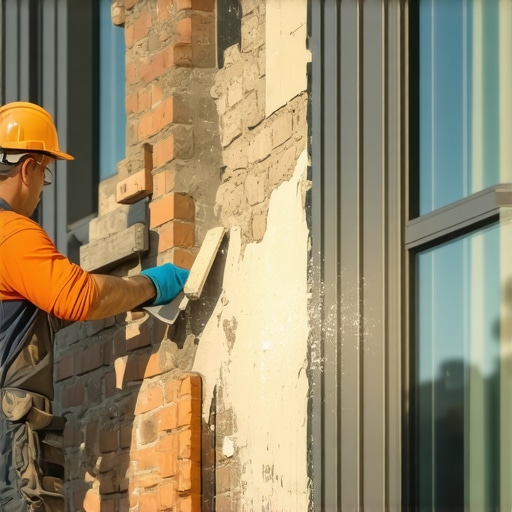
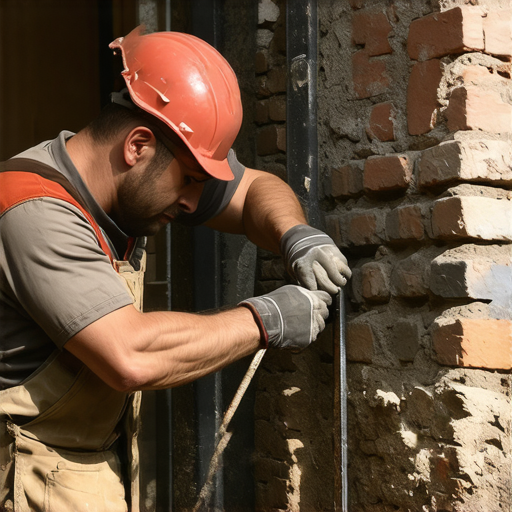
The final act of a true restoration is the ‘striking’ of the joint. You take your slicker or your jointer tool, and you compress the mud into the joint. This isn’t just for looks. Compaction increases the density of the surface, making it more resistant to water penetration while keeping the core of the joint breathable. We call it ‘tooling the joint.’ In 2026, we are moving back to ‘flush’ or ‘weather’ joints that shed water naturally, avoiding the deep ‘raked’ joints that create little shelves for ice to sit on. When you see a mason with a hawk in one hand and a trowel in the other, moving with a rhythm that looks like a dance, you’re seeing a thousand years of physics in motion. We are the stewards of the stone, the forensic auditors of the kiln, and we know that the only way to build for the future is to respect the chemistry of the past. If you do it once with the right ‘mud,’ you won’t have to do it again in your lifetime. Do it cheap, and you’ll be calling me back in five years to pick up the pieces of your facade from the dirt. It’s your house; don’t let it choke on its own skin.
![Fix Cracking Joints: 5 Historic Brickwork Repointing Tactics [2026]](https://masonryrescue.com/wp-content/uploads/2026/02/Fix-Cracking-Joints-5-Historic-Brickwork-Repointing-Tactics-2026.jpeg)