![How to Stop Stone Veneer Over Brick Trapping Water [2026 Fix]](https://masonryrescue.com/wp-content/uploads/2026/04/How-to-Stop-Stone-Veneer-Over-Brick-Trapping-Water-2026-Fix.jpeg)
How to Stop Stone Veneer Over Brick Trapping Water [2026 Fix]
The Ghost in the Wall: Why Your Veneer is a Ticking Time Bomb
My old mentor, a man whose hands were so calloused they felt like 60-grit sandpaper, used to drag a heavy iron key across a finished course of brick. He wasn’t looking for scratches; he was listening. He told me that a healthy wall has a resonance, a hollow but firm ‘thrum’ that tells you the masonry is unified. If he heard a ‘thud,’ he knew the suction was off. The brick hadn’t pulled the moisture from the mud correctly, and that wall would eventually flake and die. Today, I see the modern equivalent of that ‘thud’ everywhere: stone veneer slapped over structural brick without a single thought for how that assembly breathes. We are essentially plastic-wrapping our buildings and wondering why the bones are rotting underneath.
“Water penetration is the single greatest threat to masonry durability. Moisture trapped within a wall system through lack of drainage or breathability will inevitably lead to systemic failure through freeze-thaw cycles.” – BIA Technical Note 7
The Physics of the ‘Vapor Trap’
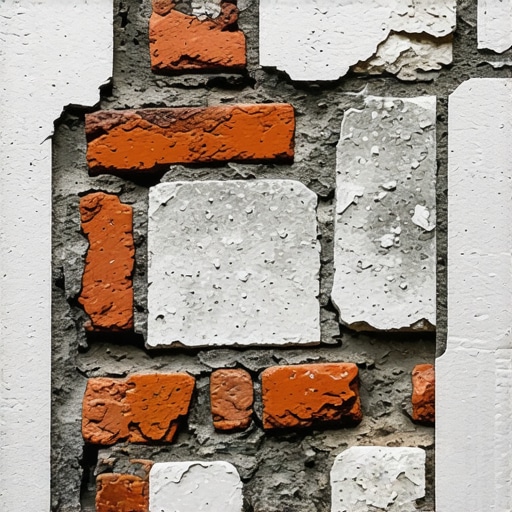
When you apply a thin stone veneer over an existing brick substrate using standard mortar, you are creating a sandwich of death. In the North, where the freeze-thaw cycle is a relentless predator, this is catastrophic. Brick is a porous material. It is a network of microscopic capillaries that ‘breathe’ water vapor in and out. When you coat that brick in a dense, non-breathable polymer-modified mortar and then ‘butter’ the back of a stone veneer, you’ve created a vapor barrier on the wrong side of the wall. Water enters the brick from the interior or through microscopic cracks in the stone joints. It hits that dense mortar bed and stops. Then the temperature drops. As we know, water expands roughly 9% when it turns to ice. That 9% expansion happens inside the pores of the brick. The resulting pressure, often exceeding 100,000 psi, literally explodes the face of the brick, leading to brick veneer detachment. This isn’t just an aesthetic issue; it’s a structural forensic scene.
Micro-Zoom: The Chemistry of Bond Failure
To understand the 2026 fix, we have to look at the ‘tooth’ of the bond. Traditional masonry relies on a mechanical and chemical bond where the mortar ‘fingers’ extend into the pores of the unit. Modern advanced masonry adhesives are often too rigid. They have a different modulus of elasticity than the old, soft clay bricks. During the day, the sun hits the stone, causing thermal expansion. The stone grows, but the rigid adhesive won’t let it move. This shear stress creates honeycombing in the mortar bed—tiny air pockets where liquid water can pool. Once that water sits, it begins the process of carbonation, leaching the lime out of the mortar and leaving behind a brittle, sandy mess that has no structural integrity.
The 2026 Fix: Integrated Drainage and 3D Printed Masonry Repairs
If you are facing a failing veneer, the solution isn’t more ‘lick-and-stick’ mud. We are now moving toward integrated drainage planes. This involves a rainscreen system—a 1/8-inch gap between the brick and the veneer that allows liquid water to move downward to tuckpointing weatherproofing weep holes. For areas where the brick has already spalled, we are seeing the rise of 3D printed masonry repairs. Instead of trying to patch a hole with mismatched mud, we scan the void and print a custom-fit ceramic insert that matches the sorption rate of the original brick, ensuring the wall’s ‘breathability’ is restored before the veneer is re-applied.
“The mortar should always be weaker than the masonry units it binds. A mortar that is too strong will cause the units to crack under thermal or structural stress, as it provides no relief for internal pressures.” – ASTM C270 Standards
Tuckpointing and Moisture Management
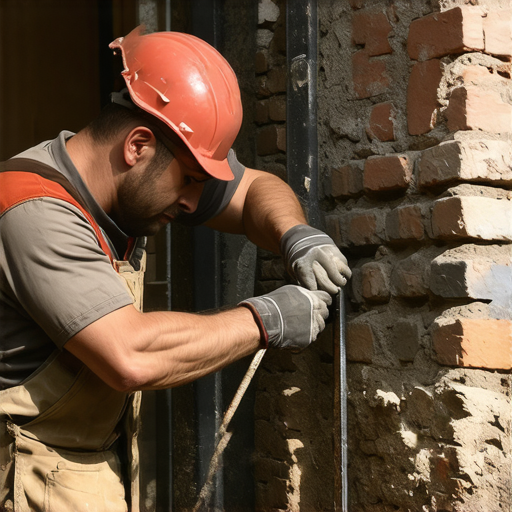
Before any veneer goes up, the base layer—the original brick—must be pristine. This means tuckpointing or, more accurately, repointing. You take a slicker and you pack that mud deep into the joint. But you don’t use high-Portland cement mixes on old brick. You use Type O or Type N lime-based mortars. This ensures that the joint is the ‘sacrificial’ part of the wall. If moisture is going to escape, it should escape through the mortar, not the brick face. Once the substrate is stable, we apply masonry staining techniques that are vapor-permeable, allowing the wall to shed water while maintaining a uniform color profile. This prevents the ‘patchy’ look of modern repairs.
The Forensic Inspection: Chimneys and Foundations
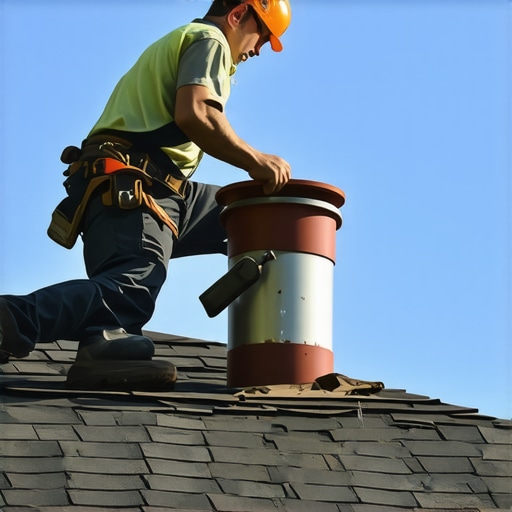
The most common failure points are where the wall meets the earth or the sky. Chimney leak detection often reveals that water is migrating downward from a cracked crown, getting behind the veneer, and freezing. Similarly, foundation crack repair must be addressed with hydrostatic pressure in mind. If your foundation is ‘heaving’ due to clay soil expansion, no amount of fancy stone veneer will stay attached. We use advanced masonry adhesives specifically designed for high-movement areas, but only after the drainage issues are solved. Use a hawk to hold your mud, but use your brain to ensure that mud isn’t a tombstone for your house.
The ‘Cold Joint’ Reality
One of the biggest sins in the trade is the cold joint. This happens when a mason stops for the day and starts again the next morning without properly prepping the surface. In a veneer application, a cold joint is an invitation for water. The new mud doesn’t chemically bond to the old, dry mud. It just sits there. Over time, the stone will ‘ring’ when you tap it—that hollow sound that tells you it’s detached. To fix this, we use bonding agents and ‘score’ the surface to provide a mechanical key, but the real trick is ‘buttering’ the stone correctly to ensure 100% coverage without air gaps.
Final Inspection: Do It Once, or Do It Twice
I’ve spent forty years looking at walls that were built ‘fast and cheap.’ Those walls are all in the landfill now. If you want to stop stone veneer from trapping water, you have to respect the physics of the material. Use a rainscreen, choose a vapor-permeable adhesive, and never, ever put a hard stone over a soft brick without a drainage plan. It’s about the ‘tooth,’ the ‘suction,’ and the soul of the masonry. Build it like your grandfather is watching with his iron key, ready to listen for that ‘thud.’