3 Chimney Leak Detection Fixes to Stop 2026 Attic Mold
The Anatomy of a Hidden Failure
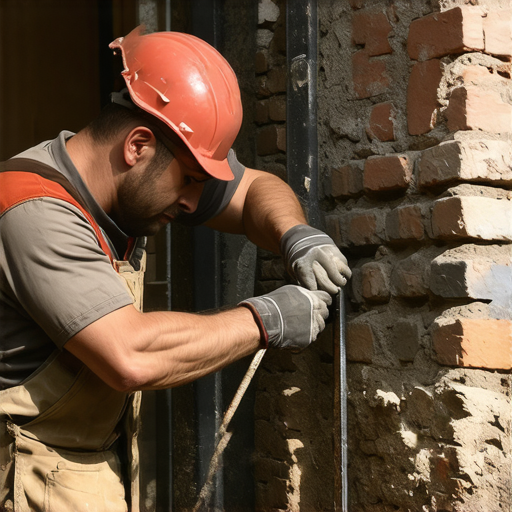
The homeowner thought it was just a hairline crack, a minor blemish on the chimney stack. But when I put my scope inside the cavity between the flue liner and the brickwork, I saw a nightmare: the structural steel was rusted to dust, and the wood framing of the attic was already weeping with black spores. By the time you see a damp spot on your ceiling, the masonry has been failing for years. This is the forensic reality of residential masonry in a freeze-thaw climate. Water is a patient predator. It doesn’t just sit on the surface; it uses the wick effect, traveling through the microscopic pores of a brick via capillary action until it finds a way to move inward.
“Water penetration is the single greatest threat to masonry durability. Moisture can enter masonry through various points including the brick units, mortar joints, and the interface between them.” – BIA Technical Note 7
If you live in a region where the thermometer bounces across the 32-degree line forty times a winter, your chimney is a ticking clock. When water enters a porous brick and freezes, it expands by exactly 9 percent. That pressure is enough to shear the face right off the unit—a process we call spalling. If your chimney hasn’t been inspected for the 2026 season, you’re not just looking at a brick wall restoration; you’re looking at a structural liability that will rot your attic from the inside out.
Fix 1: The Integrity of Stone Coping and Crown Geometry
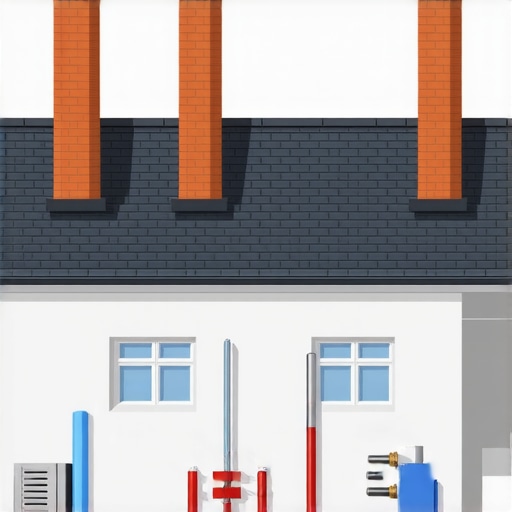
Most modern builders treat a chimney crown like a flat slab of leftover concrete. That is a death sentence for the masonry below. A proper stone coping installation or a cast-in-place concrete wash must have a drip edge. Without it, water runs down the face of the brick, saturating the brick veneer installation. We look for the ‘ring’ of the stone; if the crown is cracked, it’s not just a leak—it’s a funnel. A forensic inspection often reveals that the crown was made with a weak, high-sand mix that has ‘honeycombed’ over time. The fix requires emergency masonry repair to strip the old ‘mud’ and install a reinforced, overhanging cap that sheds water away from the stack. This prevents the brick veneer detachment repair scenarios that cost tens of thousands later.
Fix 2: The Chemistry of Tuckpointing and Mortar Choice
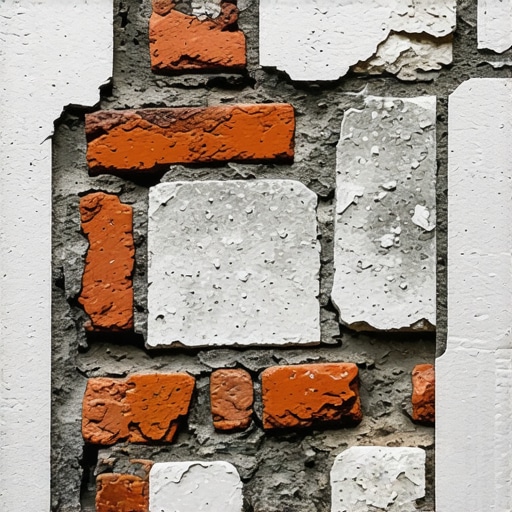
I see it every week: a well-meaning handyman buys a bag of high-strength Portland cement and ‘patches’ an old chimney. Within two seasons, the bricks are shattered. Why? Because the mortar was harder than the brick. In brick wall restoration, the mortar must be the sacrificial lamb. It needs to be softer and more vapor-permeable than the units themselves. Micro-zooming into the hydration process, we look at the carbonation of lime. A Type O or Type N lime-based mortar allows the chimney to ‘breathe,’ moving moisture out through the joints rather than trapping it behind the brick face.
“The use of mortar that is significantly harder than the masonry units can lead to the accelerated deterioration of the units themselves during thermal expansion and contraction.” – ASTM C270 Standard Specification
When calculating tuckpointing cost estimation, you aren’t just paying for labor; you are paying for the forensic matching of mortar strength. Our tuck pointing services involve grinding out the failed ‘mud’ to a depth of at least 3/4 inch, ensuring the new joint has enough ‘tooth’ to bond. Anything less is just a cosmetic Band-Aid that will flake off during the next hard freeze.
Fix 3: Flashing Failure and the ‘Cold Joint’ Nightmare
The intersection where the masonry meets the roofline is the most common failure point for attic mold. We often find a ‘cold joint’ where the chimney rebuild services failed to properly integrate the lead or copper flashing. If the counter-flashing isn’t reglet-cut into the brick and ‘buttered’ with a high-grade sealant, water will bypass the shingles entirely. We also see failures in retaining wall block replacement nearby where hydrostatic pressure pushes moisture toward the foundation, but at the chimney level, it’s all about the soldier course. If those vertical bricks at the base of the stack aren’t flashed with a proper end-dam, you’re basically inviting a river into your insulation. For high-volume repairs, we sometimes utilize concrete pump masonry mixes to stabilize the internal void, but only after the flashing has been physically mechanical-locked into the masonry units.
The Reality of Maintenance: Do It Once or Do It Twice
The smell of a damp basement often starts at the top of the chimney. If you wait until the brick veneer detachment repair is visible from the street, you’ve already lost the battle. Professional tuck pointing services and structural inspections are the only ways to prevent the ‘lick-and-stick’ failures of modern construction from compromising your home’s skeleton. When we use a ‘slicker’ to finish a joint, we aren’t just making it look pretty; we are compacting the mortar to ensure the maximum ‘suction’ between the mud and the brick, creating a hydraulic seal that will last fifty years, not five. Stop looking for the cheapest quote and start looking for the mason who understands the physics of the freeze-thaw cycle. Your attic—and your lungs—will thank you in 2026.


![How to Stop Stone Veneer Over Brick Trapping Water [2026 Fix]](https://masonryrescue.com/wp-content/uploads/2026/04/How-to-Stop-Stone-Veneer-Over-Brick-Trapping-Water-2026-Fix.jpeg)