Stop Fountain Water Loss: 4 Masonry Restoration Tactics for 2026
The Forensic Reality of the Weeping Stone
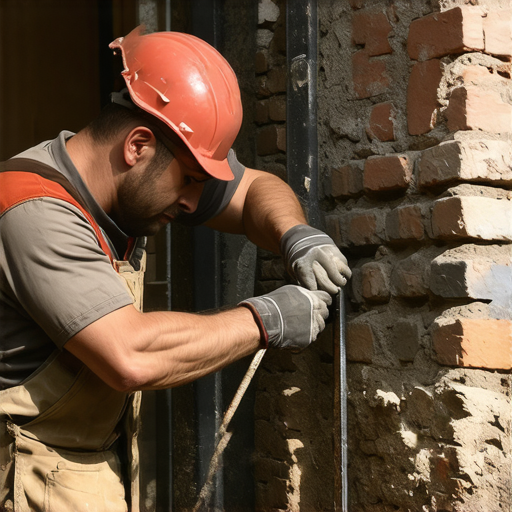
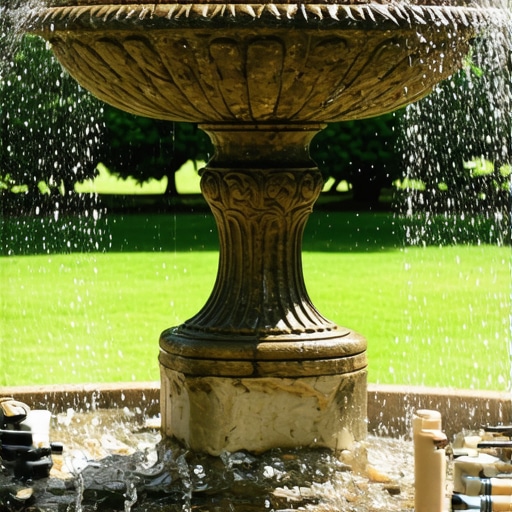
The property manager told me it was just a hairline crack, a minor nuisance on a multi-million dollar plaza fountain. He thought a bit of caulk would do the trick. But when I slid my high-definition borescope into the drainage cavity behind the granite cladding, the truth was far uglier. The structural steel lintel was rusted to a pile of red dust, and the concrete masonry unit restoration work from five years ago was turning back into slurry. This wasn’t a crack; it was a systemic failure of physics and material science. In the world of high-end masonry, water doesn’t just sit; it migrates, carrying dissolved salts and minerals that eat a structure from the inside out. When we talk about historic masonry preservation, we aren’t just talking about making things look old. We are talking about managing the relentless pressure of H2O and the chemical reality of how mortar interacts with stone. By 2026, the industry is shifting away from the ‘patch and pray’ methods of the last decade, moving instead toward a forensic approach that respects the ‘tooth’ of the material and the ‘suction’ of the substrate.
“Water penetration is the single greatest threat to masonry durability. Moisture reaching the interior of a wall system can cause corrosion of metal ties and anchors, wood rot, and the deterioration of the masonry units themselves through freeze-thaw cycles.” – BIA Technical Note 7
Tactic 1: The Molecular Bond of Fiber-Reinforced Mortars
For decades, the industry relied on Type S or Type N mortar for everything, regardless of the substrate. In 2026, we are micro-zooming into the tensile strength of the bond. Fiber-reinforced mortars are no longer a niche product; they are the standard for concrete masonry unit restoration in high-moisture environments. The science here is about arresting crack propagation at the microscopic level. Traditional mortar is brittle. When the ground shifts or the fountain’s thermal load changes, the mortar snaps. Fiber-reinforced mixes utilize synthetic or basalt fibers that act as a three-dimensional internal skeleton. This increases the ‘mud’s’ ability to handle shear stress. When you ‘butter’ a joint with these advanced mixes, you aren’t just filling a gap; you are creating a composite material that can bridge the microscopic voids that lead to brick spalling. This is particularly critical in brick spalling prevention, where the face of the brick often pops off because the mortar was too rigid to allow for natural movement. We look for a mortar that provides the ‘sacrificial’ quality—it must be slightly softer than the unit it holds, ensuring that the joint fails before the stone or brick itself does.
Tactic 2: Digital Twin Masonry Projects and Stress Mapping
We are entering the era of the ‘Digital Twin.’ Before a single trowel touches the ‘hawk,’ we are using LiDAR and photogrammetry to create a 1:1 digital replica of the fountain’s structure. This allows us to perform thermal expansion simulations. In the heat of the summer, a fountain’s stone veneer can reach 140 degrees Fahrenheit, while the water inside keeps the core at 60 degrees. That 80-degree differential creates a massive amount of internal stress. Digital twin masonry projects allow us to see exactly where the ‘cold joint’ is most likely to separate. We can simulate the hydrostatic head pressure against the concrete masonry units and predict where brick veneer detachment repair will be necessary before the first drop of water actually leaks. This isn’t just tech for tech’s sake; it’s about forensic precision. By mapping the exact porosity of the historic stone, we can order mortar matching services that don’t just match the color, but match the vapor permeability and the modulus of elasticity of the original 19th-century lime putty. If you put modern Portland cement on a soft historic brick, you are essentially signing its death warrant.
“Mortars should be weaker than the masonry units so that any cracks that occur will be in the mortar joints where they can be easily repaired, rather than in the masonry units.” – ASTM C270 Standards
Tactic 3: Advanced Brick Lintel Replacement and Flashing Systems
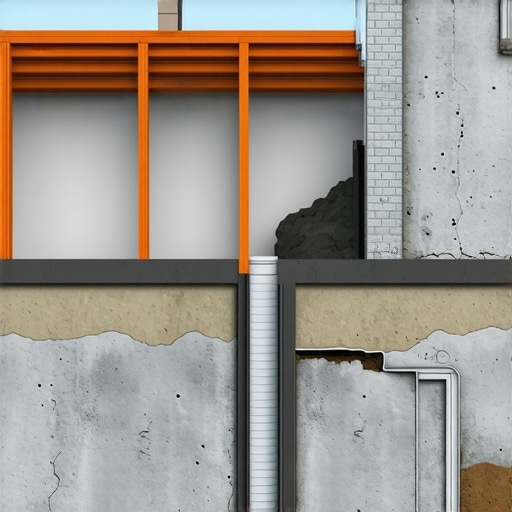
One of the most common points of failure in fountain masonry is the lintel—the horizontal support above an opening or a water feature’s weir. When these fail, the entire soldier course above them begins to sag and separate. Traditional steel lintels are a ticking time bomb in a fountain environment. Our 2026 restoration tactic involves replacing these with stainless steel or composite lintels paired with high-performance EPDM flashing. We don’t just ‘slap’ the flashing in. We ‘slick’ the joints and ensure a 100% mechanical bond between the flashing and the substrate. This prevents the capillary action that pulls water into the building’s envelope. This is essential for stone veneer repair, where the ‘lick-and-stick’ methods of the 1990s have led to thousands of square feet of delaminating stone. By installing proper weep holes and ensuring the drainage plane is clear of mortar droppings—a common ‘honeycombing’ error made by lazy masons—we ensure that any water that gets behind the veneer has a clear path out. It’s about the physics of gravity and the chemistry of adhesion.
Tactic 4: Green Roofing Masonry Integration and Soil Acidity Management
Modern architectural trends are pushing for more green roofing masonry integration, where fountains are surrounded by planters and living walls. This creates a nightmare for the traditional mason. Soil is acidic, and that acid leaches out, attacking the calcium carbonate in your mortar. If you aren’t using specialized acid-resistant mortars in these zones, the ‘mud’ will simply dissolve over a five-year period. We are now specifying mortars with higher pozzolanic content to resist this chemical attack. When we perform stone veneer repair in these ‘biophilic’ zones, we are also looking at the drainage mats. If the soil stays saturated against the masonry, the hydrostatic pressure will force moisture through even the tightest ‘slicker’ joint. We use a combination of crystalline waterproofing admixtures within the concrete masonry unit restoration phase to ensure the structure is waterproof from the inside out, rather than relying on a thin surface sealer that will inevitably peel and fail in the sun.
The Master’s Final Word on the ‘Slicker’ Joint
At the end of the day, no amount of technology can replace the hand of a master who knows how to ‘strike’ a joint properly. Whether it’s a grapevine joint or a simple concave, the way the tool compresses the mortar against the brick is what creates the weather-tight seal. We are seeing a return to these ‘Old World’ techniques because the modern shortcuts have failed us. When you see a mason who doesn’t know how to use a ‘hawk’ or who tries to ‘butter’ his bricks with a garden trowel, walk away. The restoration of a fountain is a forensic exercise in managing the inevitable. We don’t fight water; we lead it where we want it to go. By combining the digital twin masonry projects of 2026 with the fundamental physics of lime-based mortars and fiber-reinforced strength, we can ensure that these structures don’t just last for a season, but for a century. Do it once, do it right, and respect the suction of the stone. Anything less is just a ‘handyman special’ waiting to become a pile of rubble. This is the reality of the trade—it’s gritty, it’s wet, and it demands a level of precision that most people simply aren’t willing to give. But for those of us who have the dust of a thousand bricks in our lungs, there is no other way to build.
![Does Your 2026 Patio Need Porous Stone Sealers? [Test Results]](https://masonryrescue.com/wp-content/uploads/2026/04/Does-Your-2026-Patio-Need-Porous-Stone-Sealers-Test-Results.jpeg)
I really appreciate the emphasis on using fiber-reinforced lime mortars as a ‘sacrificial’ layer to protect the underlying masonry. In my own restoration projects, I’ve noticed a marked improvement in crack resistance and longevity when switching from traditional Portland-based mixes to these advanced composites. The integration of digital twin technology also seems like a game-changer, allowing us to predict stress points before any physical work begins. That proactive approach surely saves time and resources down the line. From your experience, how receptive are traditional masons to adopting these new techniques, especially the digital modeling aspects? I find that sometimes there’s initial resistance due to unfamiliarity, but once you demonstrate the long-term benefits, most are eager to learn.