How to Weatherproof 2026 Brickwork Using Pro Tuckpointing Tips
The Anatomy of a Dying Facade: A Forensic Perspective
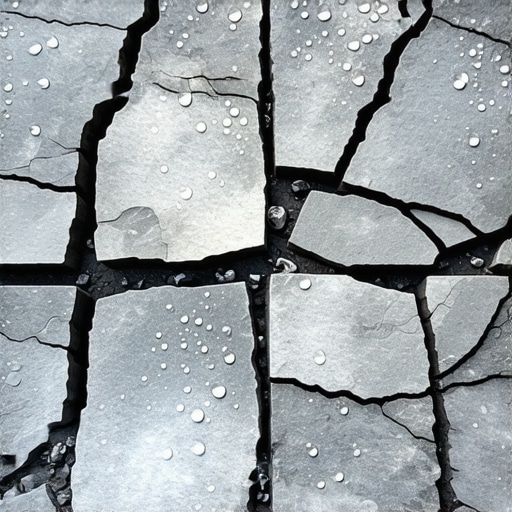
The homeowner called me out to a 1920s Tudor because of what they described as a ‘hairline nuisance’ on a sweeping radius wall. From the driveway, it looked like a simple case of cracked brick wall repair. But when I pulled a single loose header and slid my fiber-optic scope into the cavity, the reality was grim. The internal structural steel lintels had transformed into a blooming mass of oxidized iron, expanding with enough force to lift the entire stone balustrade restoration project three inches off its bed. What they thought was a cosmetic blemish was actually the ‘death rattle’ of the masonry assembly, caused by seventy years of improper ‘waterproofing’ that had trapped moisture inside the wall. This wasn’t a failure of the brick; it was a failure of the physics of breathability.
“Water penetration is the single greatest threat to masonry durability. Moisture that enters the wall system must be allowed to exit through the mortar joints via vapor transmission.” – BIA Technical Note 7
As we head into 2026, the industry is seeing a surge in masonry water damage repair calls, largely because the ‘quick-fix’ coatings of the last decade are finally suffocating our buildings. When you apply a non-breathable sealer to a brick wall, you aren’t keeping the water out; you are sealing the moisture in. In a freeze-thaw climate, that water expands by 9% when it hits 32 degrees Fahrenheit. That pressure has to go somewhere, and it usually takes the face of the brick with it—a process we call spalling. If you want to weatherproof a wall for the next century, you don’t reach for a bucket of silicone. You reach for a hawk and a slicker.
The Chemistry of ‘Mud’: Why Your Mortar Choice Is a Life-or-Death Decision
Modern contractors love to use Type S Portland cement for everything because it sets fast and is hard as a rock. But in the world of structural masonry inspection, high-strength cement is often the villain. If you are dealing with concrete masonry unit restoration or historic brick, your mortar must be the ‘sacrificial lamb’ of the system. It needs to be softer than the units themselves. When the building shifts or the temperature swings, you want the mortar to develop micro-cracks, not the brick. If the mortar is too hard, the brick will crack under the stress, leading to spalled concrete steps repair and crumbling facades.
Micro-zooming into the hydration process: When you mix ‘mud’ (mortar), you are initiating a chemical dance. In lime-based mortars, the carbonation process takes years. The mortar actually absorbs CO2 from the air to harden, maintaining a porous structure that allows liquid water to ‘wick’ to the surface and evaporate. This capillary action is the lungs of your house. In 2026, pro-grade tuckpointing curved walls requires a deep understanding of these ‘pore-climbing’ physics. You aren’t just filling a hole; you are restoring a drainage system.
The Execution: Mastering the Tuckpoint and the Grind
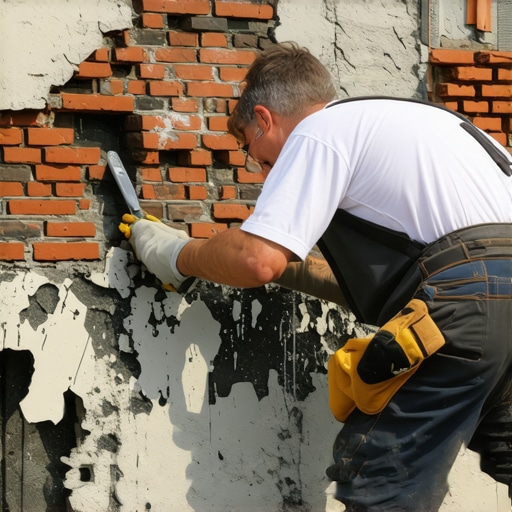
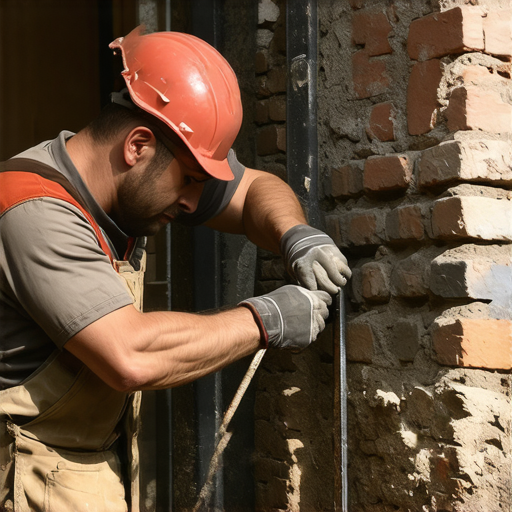
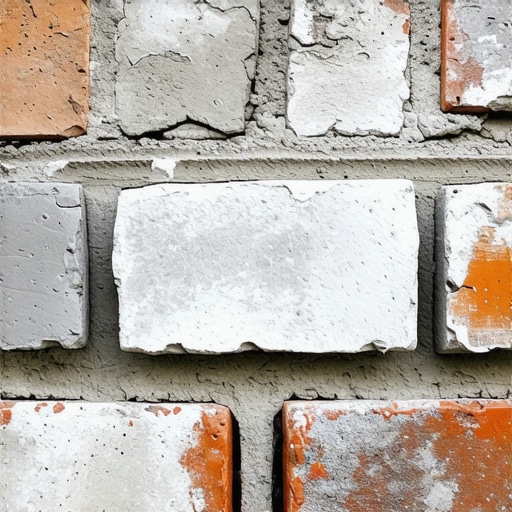
Most ‘handyman specials’ fail because they only ‘butter’ the surface. They smear a 1/4-inch layer of new mud over the old, crumbly joints. This is a cold joint, and it will pop off within two winters. Proper brick infill panel repair starts with the grind. You have to rake out the old joints to a depth of at least 3/4 of an inch, or until you hit solid material. The back of the joint must be square, not V-shaped, to ensure the new mortar has a proper ‘tooth’ to grab onto.
Before you ever apply new material, you have to manage the ‘suction.’ If you put dry mortar into a dry brick wall, the brick will suck the water out of the mud instantly, preventing a proper chemical bond. This is called ‘burning’ the joint. A pro will always damp down the wall first. Then, you pack the mortar in ‘lifts’—1/4 inch at a time—firmly compressing it to eliminate honeycombing or air pockets. This compaction is what creates the weather-tight seal, not some chemical additive.
“Mortar for repointing should be softer than the original masonry units and no harder than the historic mortar to prevent irreversible damage to the masonry.” – ASTM C270 Standards
Solving the Modular Puzzle: Retaining Walls and Foundations
When we move from the facade to the ground, the physics change from vapor transmission to hydrostatic pressure. I’ve seen modular retaining walls that were engineered perfectly on paper but leaned like the Tower of Pisa because the ‘contractor’ forgot the 12 inches of clean 57-stone drainage behind the block. Without a path for water to escape, the soil becomes a liquid slurry that exerts thousands of pounds of pressure. This is often where foundation crack repair begins. A stair-step crack in your basement isn’t just a sign of settlement; it’s a sign that the earth is trying to reclaim your living room.
For concrete masonry unit restoration in these high-moisture zones, the 2026 standard involves crystalline waterproofing that grows into the pores of the concrete itself, rather than sitting on the surface. But even then, if you have a soldier course of brick at the grade line that is being hit by splash-back, no amount of chemical will save it if the tuckpointing is blown out. You have to strike those joints with a concave tool to ‘tool the joint’ tight, shedding water away from the center of the wall.
The Verdict: Do It Once, or Do It Twice
There is a cynical trend in modern masonry to prioritize the ‘lick-and-stick’ aesthetic—thin stone veneers and synthetic stuccos that look great for the first thirty-six months. But as a third-generation mason, I tell my clients that if you can’t see the weep holes and you don’t know the PSI of your mortar, you don’t have a wall; you have a ticking time bomb. Structural masonry inspection isn’t about looking for the obvious holes; it’s about understanding the thermal expansion coefficients and the moisture migration patterns of the entire assembly. Whether it’s a stone balustrade restoration or a simple cracked brick wall repair, the rules of gravity and chemistry don’t care about your project’s timeline. Respect the stone, manage the water, and never trust a man who doesn’t get his hands dirty mixing his own mud.
![How to Stop Stone Veneer Over Brick Trapping Water [2026 Fix]](https://masonryrescue.com/wp-content/uploads/2026/04/How-to-Stop-Stone-Veneer-Over-Brick-Trapping-Water-2026-Fix.jpeg)