Robotic Masonry Repair: 3 Reasons It Beats Manual Work in 2026
The Anatomy of a Failing Facade: A Forensic Perspective
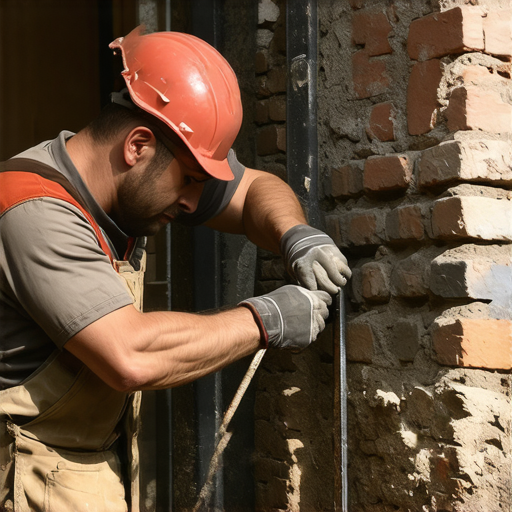
The homeowner told me it was just a hairline crack, a cosmetic annoyance on a 1920s brick manor that had weathered a century of storms. But as a third-generation mason, I know that bricks don’t just ‘crack’ for no reason. When I inserted the fiber-optic scope into that 1/16th-inch fissure, the reality was a structural nightmare: the internal wall ties, those critical steel anchors, had rusted to nothing but a streak of orange dust in the cavity. The entire outer wythe of the building was essentially floating, held up by little more than gravity and hope. This is the reality of forensic masonry; what looks like a scratch is often a mortal wound. For decades, we fixed these issues with a hammer, a chisel, and the ‘feel’ of our hands. But as we move into 2026, the industry is shifting. The introduction of AI masonry assessment and robotic precision isn’t just a gimmick for the tech-obsessed; it is a fundamental evolution in how we preserve the bones of our cities.
1. The Precision of AI Masonry Assessment vs. Human Intuition
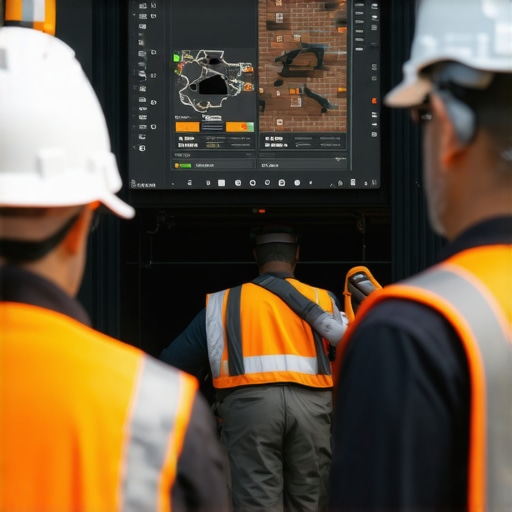
In the old days, we diagnosed a building by tapping the masonry with a trowel handle and listening for the ‘thud’ of a hollow spot. It worked, mostly. But humans are prone to fatigue and bias. In 2026, AI masonry assessment utilizes multi-spectral imaging and ground-penetating radar to see through the ‘mud’—our trade slang for mortar—and into the very core of the structure. These systems can detect honeycombing in poured concrete and internal voids in a stone facade restoration project that no human eye could ever catch. The physics of masonry is governed by moisture and movement. When we look at a wall, we are looking at a living thing that expands and contracts. Robots can calculate the exact thermal expansion coefficient of a specific batch of clay brick, ensuring that when we perform commercial tuckpointing, the new mortar matches the modulus of elasticity of the original material. If the mortar is harder than the brick, the brick will lose the fight every time.
“Water penetration is the single greatest threat to masonry durability. A failure to manage moisture migration leads inevitably to the destruction of the structural bond.” – BIA Technical Note 7
This data-driven approach allows for professional masonry restoration that isn’t just a patch job but a molecular-level integration of new and old materials.
2. Robotic Consistency in Commercial Tuckpointing and Joint Prep
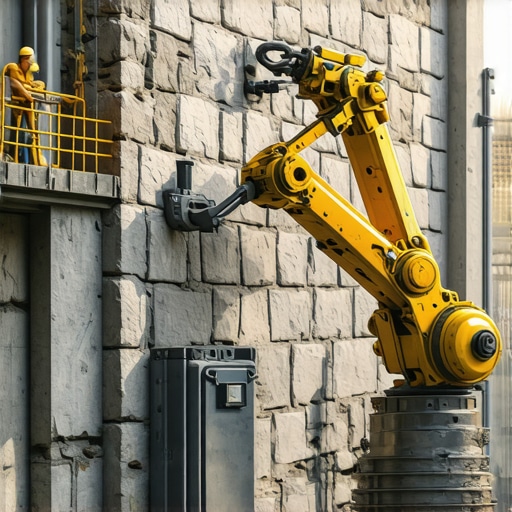
Have you ever watched a man grind out mortar joints for eight hours straight? By the fourth hour, the precision wanes. The grinder slips, ‘over-cutting’ the vertical joints and nicking the corners of the bricks. This is where commercial tuckpointing often fails; those tiny nicks become entry points for water, leading to brick spalling prevention nightmares down the road. Robotic arms, however, don’t get tired. They don’t have bad backs or heavy eyes. In 2026, robotic masonry repair services use high-frequency oscillating blades that can remove failing mortar with sub-millimeter accuracy. This precision is vital for stone facade restoration, where the irregular shapes of the stones make manual grinding a risky endeavor. When the robot ‘butters’ the joint, it applies a consistent pressure that ensures the mud reaches the very back of the joint, eliminating the risk of a ‘cold joint’—a weak point where new mortar fails to bond with the old. This is particularly critical in chimney structural repair, where the masonry is subjected to extreme temperature differentials that would cause inferior, hand-applied joints to fail within a few seasons.
3. Sustainable Block Cutting and Material Science
Modern sustainable block cutting is no longer just about reducing dust; it is about the chemistry of the cut itself. When a human cuts a stone with a circular saw, the heat generated can create micro-fractures that compromise the stone’s integrity. Robotic cutting systems use water-cooled diamond wires and AI-guided paths to minimize waste and preserve the ‘tooth’ of the stone—the microscopic texture that allows the mortar to grip. This is essential for chimney repair services and heavy structural work where the load-bearing capacity of every unit is paramount. Furthermore, when we talk about masonry staining to match new repairs to old sections, robots can analyze the mineral composition of the existing brick and mix a custom stain that mimics the natural patina of a hundred years of carbonation.
“The selection of mortar for restoration must prioritize a lower compressive strength than the masonry units themselves to ensure the mortar acts as a sacrificial element.” – ASTM C270 Standards
This ‘sacrificial principle’ is the heart of professional masonry restoration. If you use a modern, hard Portland cement on soft, 19th-century bricks, the bricks will shatter as the building settles. Robotic systems ensure that the mix of lime, sand, and cement is perfect every time, preventing the heartbreak of seeing a historic facade destroyed by ‘lick-and-stick’ amateurs who don’t understand the chemistry of the wall.
The Future of the Trade: Why Robots Won’t Replace the Master
People ask me if I’m worried that these machines will take my job. The answer is no. A robot can’t ‘smell’ a damp basement or understand the history of a specific quarry’s limestone. It needs a Master Mason to program the logic. But for the heavy, dangerous, and mind-numbingly repetitive tasks like commercial tuckpointing or brick spalling prevention across a forty-story skyscraper, the robot is my best tool. It allows us to focus on the forensic side—solving the mystery of why the wall is failing—while the machine handles the execution with a level of perfection no human can match. Whether it’s chimney structural repair or a massive stone facade restoration, the marriage of AI and the hawk and trowel is the only way we’ll keep our history standing for another century. If you’re looking for masonry repair services in 2026, don’t look for the guy with the cheapest bid; look for the guy who has embraced the data. In this business, if you don’t evolve, you crumble like a soft brick in a hard freeze.“,

![4 Geogrid Mistakes Ruining Retaining Walls [2026 Checklist]](https://masonryrescue.com/wp-content/uploads/2026/02/4-Geogrid-Mistakes-Ruining-Retaining-Walls-2026-Checklist.jpeg)