4 Helical Pier Benefits to Fix Sinking 2026 Foundations
The Anatomy of a Failing Footer: A Forensic Perspective
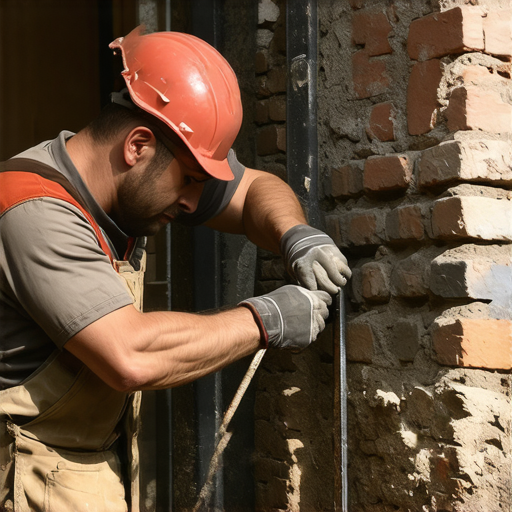
The homeowner called me out because of what they described as a ‘cosmetic nuisance.’ It was a hairline fracture tracing a jagged path through the brick quoin repair they had tried to DIY with a tube of silicone. But masonry doesn’t lie, and it doesn’t just ‘settle’ for no reason. When I bored a hole for my digital scope and looked into the cavity, the reality was grim. The structural steel was rusted to a fine orange dust, and the clay-rich soil had pulled away from the footer, leaving the entire corner of the house suspended by nothing but prayer and the friction of the remaining mortar. This wasn’t a job for a patch; it was a job for forensic intervention. In my forty years of buttering bricks and swinging a hammer, I’ve seen thousands of ‘quick fixes’ fail because people treat the symptom instead of the sickness. By 2026, the erratic shifts in our water table and the intensifying freeze-thaw cycles mean that traditional shallow repairs are dead on arrival. We need to talk about the physics of deep-foundation stabilization.
“Vertical expansion joints are necessary to accommodate the irreversible moisture expansion of clay brick, but they cannot compensate for the failure of the underlying bearing strata.” – BIA Technical Note 18
The Physics of the Stair-Step: Why Your Walls Are Screaming
When you see a stair-step crack migrating through your mortar joints, the house is telling you that the soil can no longer support the dead load. In the north, we deal with the ‘jacking’ effect of ice. Water trapped in the pore structure of a high-performance mortar mix is one thing, but water trapped under a four-ton concrete footer is a hydraulic press. When that water freezes, it expands by 9%, lifting the house. When it thaws, the soil turns into a slurry, and the house drops. This cycle wrecks the ‘tooth’ of the masonry—that mechanical bond where the mortar grips the microscopic voids in the brick. Once that bond is snapped, no amount of tuckpointing brick walls will save you. You have to go deep. This is where helical piers come in, bypassing the unstable ‘active zone’ of the soil to find the competent load-bearing strata below. They aren’t just anchors; they are the new skeletal system for a building that’s lost its legs.
Benefit 1: Immediate Load Transfer and Hydraulic Precision
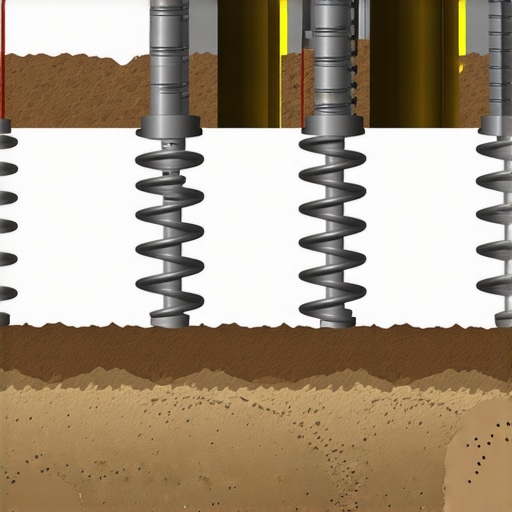
The first advantage of a helical pier in a 2026 foundation recovery is the immediacy of the fix. Unlike concrete push piers that rely on the weight of the house to drive them down (which can actually cause more masonry water damage repair issues by stressing already brittle walls), helical piers are screwed into the earth using high-torque hydraulic motors. We monitor the torque in real-time. There’s a direct mathematical correlation between the resistance we feel on the ‘mud’ and the capacity of the pier. We aren’t guessing. Once that pier hits the bearing layer, we transition the weight of the masonry onto the pier head. This stops the sinking instantly. If you’re dealing with a commercial smokestack repair or a heavy stone wall repair, you can’t afford the ‘wait and see’ approach of chemical grouting. You need a mechanical connection to the earth’s crust.
Benefit 2: Minimal Disturbance to the ‘Tooth’ of the Soil
Modern ‘lick-and-stick’ contractors want to bring in a backhoe and destroy your landscaping to fix a foundation. A master mason knows that the less you disturb the surrounding soil, the better. Helical piers require minimal excavation. We can install them with hand-held equipment in tight crawlspaces or around delicate brick quoin repair sites. By avoiding massive excavation, we prevent the soil from losing its natural compaction. If you dig a giant hole next to a sinking wall, you’re just inviting hydrostatic pressure to push that wall inward. By keeping the site tight, we maintain the integrity of the masonry waterproofing solutions we’ve already put in place. It’s a surgical strike instead of a carpet bomb.
“The design of a masonry wall must provide for the mitigation of moisture-induced volume changes to prevent structural instability.” – ASTM C1314
Benefit 3: All-Weather Installation and Freeze-Thaw Resilience
In our climate, the window for masonry work is usually dictated by the thermometer. You can’t pour a footer in a blizzard. However, helical piers are indifferent to the frost line. Because they are driven deep below the active layer—the zone where water turns to ice and soil turns to mush—they can be installed in the dead of winter. This is critical for emergency masonry water damage repair. If your chimney leak detection reveals that the entire stack is leaning due to a frozen footer, you can’t wait until May to fix it. We can drive the piers, stabilize the stack, and then use tuckpointing machine services to restore the joints with a lime-rich, breathable mortar once the air warms up. It allows us to separate the structural stabilization from the aesthetic restoration.
Benefit 4: Verifiable Engineering for High-Performance Mortar Mixes
When I’m mixing a batch of mud for a historic restoration, I’m looking for a specific suction rate. When I’m installing a pier, I’m looking for a specific torque. The beauty of the helical system in 2026 is the data. Each pier comes with a digital log showing exactly how many foot-pounds of torque were required for every inch of depth. This gives the homeowner—and the forensic inspector—peace of mind that the stone wall repair isn’t just a band-aid. We often see retaining wall weep hole cleaning neglected, leading to massive soil saturation and pier failure in cheap systems. But with a properly engineered helical pier, the wall is decoupled from the fickle nature of the surface soil. It’s the difference between standing on a raft and standing on a bridge.
The Cure: Integrating Piers with Holistic Masonry Care
Once the piers have stabilized the structure, the real work of the mason begins. You can’t just leave those cracks open. We use tuckpointing machine services to inject high-performance mortar mixes deep into the voids. I don’t use that hard Portland cement garbage on old bricks; it’s too brittle. I want a mix with some ‘give’—something that can breathe. We also look at the drainage. If you aren’t doing retaining wall weep hole cleaning, you’re just asking for the soil to turn into a heavy, wall-pushing sponge again. True masonry waterproofing solutions involve managing the water before it ever touches the brick. From chimney leak detection to commercial smokestack repair, the principle remains: stabilize the base, manage the moisture, and respect the material. Don’t let a ‘handyman’ with a bag of pre-mix touch your foundation. Call someone who knows the smell of the lime and the ring of the brick.
This article really highlights how crucial it is to approach foundation repair with a deep understanding of soil mechanics and moisture cycles. I’ve seen many DIY fixes fail because they didn’t address the root cause, especially with older homes on clay soil. The emphasis on helical piers and real-time torque monitoring is particularly interesting; it seems like a precise way to ensure stability without unnecessary disturbance. I also appreciate the focus on installation in all weather conditions. Down here in the Pacific Northwest, winter storms often stall foundation work, so knowing repairs can be made year-round is a huge advantage. Have you noticed any specific challenges or common pitfalls when installing these piers in moist or heavily frozen ground? I’d love to hear other professionals’ tips on managing unexpected conditions during installation.