4 Helical Pier Benefits to Fix Sinking 2026 Foundations
The Diagnostic Eye: When a Crack is Never Just a Crack
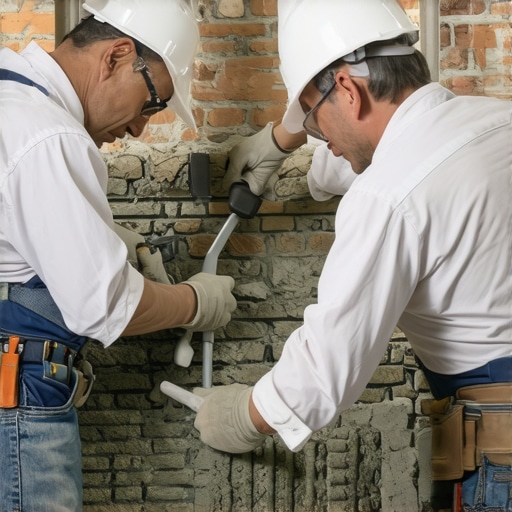
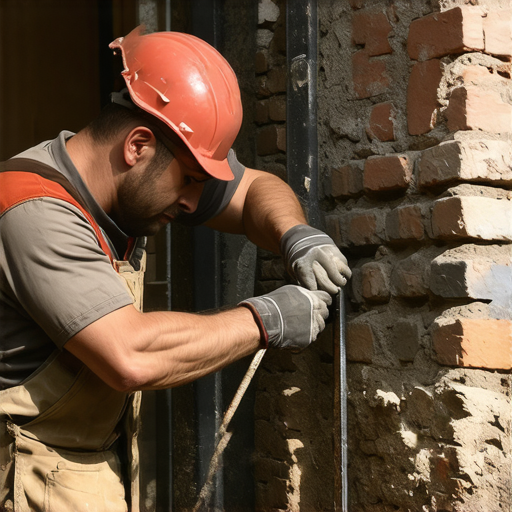
The homeowner called me out to a 1920s Tudor in a neighborhood where the clay is as stubborn as a mule. She thought it was just a hairline crack, a little character line from a century of service. But when I put my scope inside that fissure, I didn’t see dust; I saw the structural steel lintel rusted to red flakes, and the voids in the earth behind the brick were large enough to swallow a hawk. This wasn’t a cosmetic issue. This was a slow-motion collapse. In the masonry world, we talk about the ‘tooth’ of the stone and the ‘suction’ of the brick, but none of that matters if the ground beneath the footing has turned to mush. When you see a stair-step crack migrating through your soldier course, you aren’t looking at a masonry failure; you’re looking at a geotechnical betrayal. By 2026, the changing moisture tables are going to make these foundation failures more common, and for a forensic inspector like me, there is only one surgical solution that doesn’t involve destroying the yard: helical piers.
“Differential settlement is often caused by non-uniform soil conditions or moisture variations around the perimeter of the foundation.” – BIA Technical Note 18
The Physics of the Sink: Why Modern Soil is Failing Old Bricks
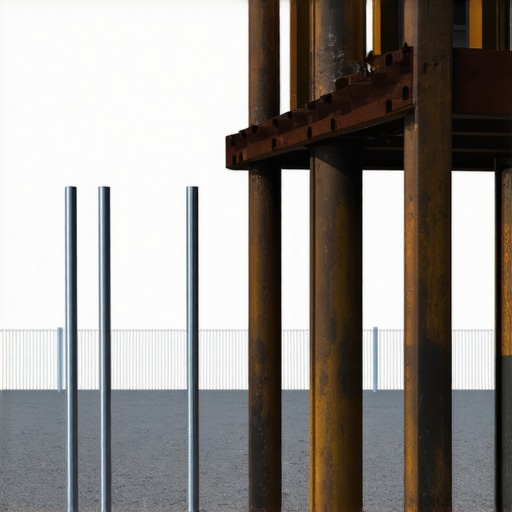
To understand why a foundation sinks, you have to look at the micro-scale. Soil isn’t a solid mass; it is a collection of minerals, air, and water. In regions with heavy clay, we deal with expansive soil cycles. When it rains, the clay molecules pull in water, swelling like a sponge. When it dries, they shrink, leaving a void. Over decades, this creates ‘honeycombing’ in the sub-grade. The weight of a double-wythe brick wall—roughly 40 pounds per square foot—eventually wins. The foundation doesn’t just sit; it ‘hunts’ for stability. If you try to fix this with a ‘handyman special’ of epoxy injection, you’re just putting a Band-Aid on a gunshot wound. You haven’t addressed the bearing capacity. You need to reach the strata that doesn’t care about the weather—the competent soil. This is where the helical pier becomes the hero of the story. It’s a galvanized steel shaft with circular plates (helices) that acts like a giant wood screw, biting into the earth until it hits a torque rating that can actually hold the tonnage of your home.
Benefit 1: Reaching the Bearing Strata Without Total Excavation
The first benefit of helical piers is their ability to bypass the ‘active zone’ of the soil. Most foundation failures happen in the top 5 to 10 feet of earth. This is where the freeze-thaw cycles play havoc with the chemistry of the ground. In a traditional brick wall restoration project, old-timers might try to ‘underpin’ with concrete. But pouring more ‘mud’ (concrete) under a sinking wall often just adds more weight to the problem. Helical piers are driven deep—sometimes 30 or 40 feet—until they reach the ‘bearing strata.’ We monitor the hydraulic pressure on the drive head to calculate the exact load-bearing capacity. It’s pure physics. We aren’t guessing. We are anchoring your home to the prehistoric layers of the earth that haven’t moved in ten thousand years. This is critical for commercial smokestack repair or heavy masonry rescue after disaster scenarios where the surface soil is completely compromised.
Benefit 2: Instant Load Transfer and Foundation Leveling
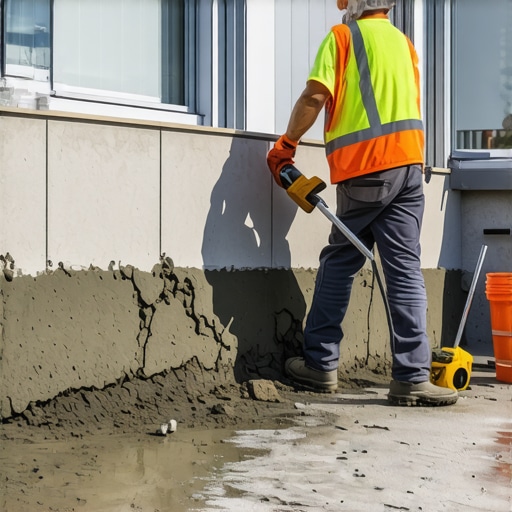
Unlike concrete piers that require a 28-day hydration period to reach their tensile strength, helical piers provide instant capacity. The moment the pier is torqued into place and the bracket is ‘buttered’ against the footing, we can begin the lift. We use heavy-duty hydraulic jacks to move the house back to level. You’ll hear the house ‘groan’—that’s the sound of the ‘cold joints’ and the timber frames realigning. It’s a surgical process. Once the foundation is stabilized, we can then focus on the high-performance mortar mixes needed to repair the facade. If you try to do tuckpointing weatherproofing before the piering is done, the very first time the soil shifts, your new mortar will pop out like a loose tooth. You have to stop the bleeding before you stitch the wound.
“The compressive strength of mortar should not exceed the compressive strength of the masonry units to allow for thermal and moisture expansion without damaging the brick.” – ASTM C270
Benefit 3: Minimal Vibration and Site Preservation
I’ve seen guys bring in backhoes and tear up a $50,000 landscape to fix a foundation. It’s a slaughterhouse. Helical piers are installed with a small excavator or even handheld equipment. There is no vibration. This is vital for historic restoration. If you start pounding or vibrating near a 100-year-old chimney, you’re going to shake the lime mortar right out of the joints. You’ll end up needing an outdoor masonry fountain restoration just to fix the damage the ‘repair’ crew did. With helical piers, we are ‘screwing’ into the ground, not hammering. We preserve the integrity of the existing brickwork, including those delicate masonry staining finishes and tuckpointing machine services that were applied years ago. It’s a clean, professional intervention that respects the ‘Old World’ craftsmanship of the original builder.
Benefit 4: All-Weather Installation and Long-Term Durability
In the North, we fight the freeze-thaw cycle every year. Water expands 9% when it freezes, and that expansion generates thousands of pounds of pressure. If you’re trying to pour concrete footings in the dead of winter, you’re asking for trouble—the ‘mud’ will freeze before it cures, leading to weak, crumbly footers. Helical piers don’t care about the temperature. We can drive them through frozen ground or in the middle of a summer drought. Once they are capped, they are immune to the moisture fluctuations that cause brickwork sealants to fail or commercial tuckpointing to crack. By using galvanized steel, we prevent the ‘rust-jacking’ that happens when internal steel reinforcements oxidize and expand, which is a common death sentence for older masonry structures. This is the 2026 standard for ensuring a home stands for another century.
The Restoration Phase: Stitching the Skin
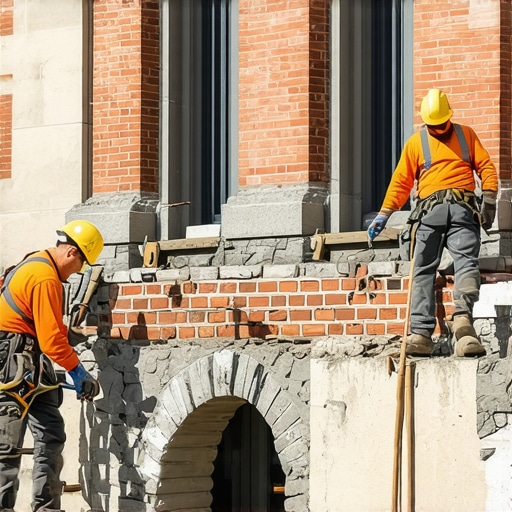
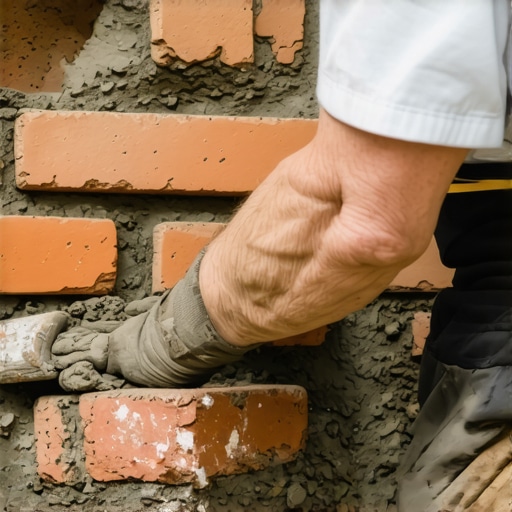
Once the piers have stabilized the structure, the forensic work moves to the surface. This is where the artistry of brick wall restoration begins. We don’t just slap in some Type S cement and call it a day. That’s how you kill a brick. For older homes, we use high-performance mortar mixes that lean heavily on lime. We use a ‘slicker’ to strike the joints, ensuring the ‘mud’ is packed tight to keep the weather out. We look at the ‘suction’ of the brick—if the brick is dry, it will suck the water out of your mortar too fast, causing it to ‘burn’ and crumble. We pre-wet the masonry to ensure a slow, deep cure. This is the difference between a repair that lasts five years and one that lasts fifty. Whether it’s tuckpointing weatherproofing or a complex commercial smokestack repair, the principles remain the same: the mortar is the sacrificial lamb that protects the brick. If the mortar is harder than the brick, the brick will spall and explode during the next freeze. Do it once, do it right, and let the house breathe.