How High-Performance Mortar Mixes Save 2026 Foundations
The Forensic Scene: When a Hairline Crack Becomes a Structural Autopsy
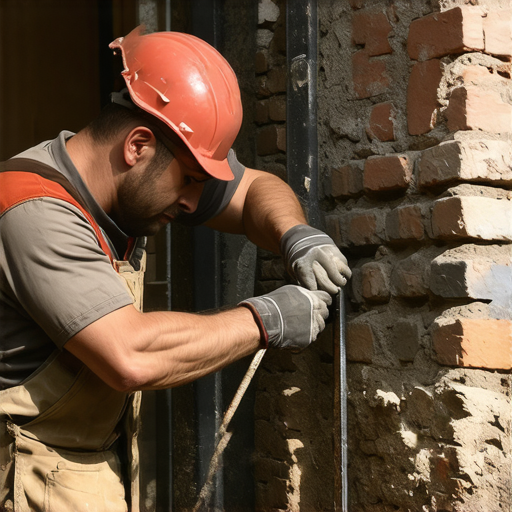
The homeowner thought it was just a hairline crack, a minor blemish on the face of a century-old facade. But when I put my scope inside that fissure, I didn’t see solid masonry. I saw a structural ghost. The internal structural steel was rusted to dust, expanded to three times its original thickness by oxidation, and it was pushing the brickwork outward with thousands of pounds of pressure. This is where professional masonry restoration stops being about aesthetics and starts being about forensic survival. In 2026, we are seeing a massive failure rate in buildings where previous ‘experts’ used modern, high-strength Portland cement on historic structures, effectively suffocating the building until it choked on its own moisture.
The Chemistry of Death: Why Harder Isn’t Better
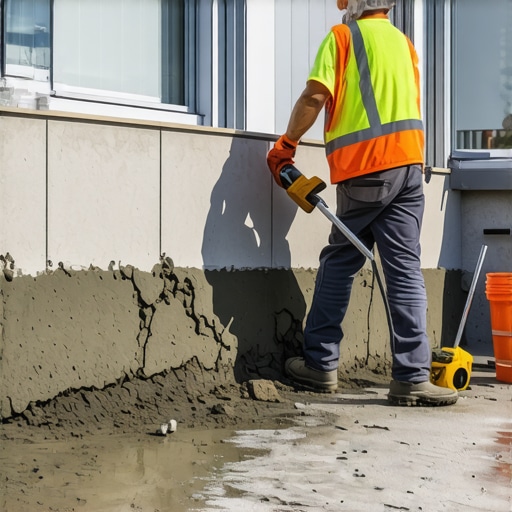
Most modern contractors treat mortar like glue. They think the harder it is, the stronger the wall. That is a lie that destroys foundations. In the world of historic tuckpointing, we live by the sacrificial principle. The mortar must be softer than the brick. If the wall moves—and it will—the mortar should crack, not the brick. When you use a high-strength Type S mortar on a soft, pre-1940s clay brick, the brick becomes the weakest link. During a freeze-thaw cycle, the water trapped in the brick can’t escape through the dense cement. It freezes, expands by 9%, and pops the face of your brick right off. We call this spalling, and it is the signature of a hack job.
“Mortar should be designed as a sacrificial element; it is far easier and cheaper to repoint a joint than to replace a shattered historic brick.” — National Park Service Preservation Brief 2
Micro-Zoom: The Hydration and Carbonation Cycle
Let’s talk about the ‘mud.’ High-performance mortar mixes in 2026 aren’t just bags of sand and lime. We are looking at the molecular level of Calcium Silicate Hydrate (C-S-H) gels. In a traditional lime-rich mix used for historic pointing styles, the curing process isn’t a quick chemical flash; it’s a slow dance with the atmosphere called carbonation. The lime (Calcium Hydroxide) absorbs CO2 from the air to turn back into limestone (Calcium Carbonate). This process can take years, and it allows the joints to ‘self-heal.’ If a micro-crack forms, the lime can actually migrate and reseal the void. Modern high-performance mixes for 2026 foundations now incorporate pozzolans like metakaolin or volcanic ash to speed up the initial set without losing that critical elasticity. This is how we achieve brick veneer detachment repair that actually lasts through the next fifty seasons of thermal shock.
The Art of the Joint: Beyond Simple Filling
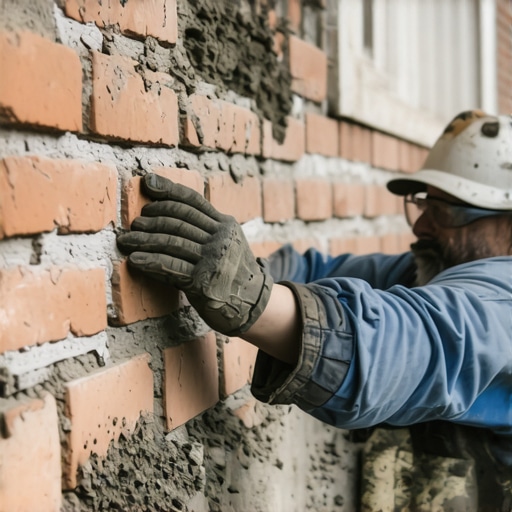
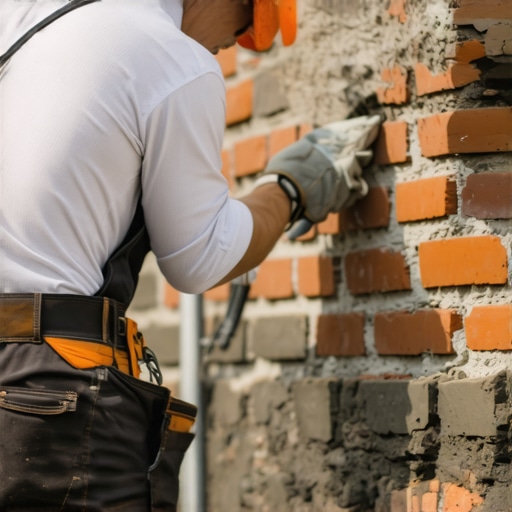
When I’m out there with a hawk and slicker, I’m not just shoving mud into a hole. I’m managing suction. If the brick is too dry, it sucks the water out of the mortar instantly, ‘burning’ the mix and preventing a proper bond. You end up with honeycombing—a brittle, porous mess that looks like a hornet’s nest inside the joint. Proper tuckpointing requires pre-wetting the substrate to achieve a ‘SSD’ (Surface Saturated Dry) condition. Then we talk about brickwork pointing styles. Are we doing a struck joint, a weathered joint, or a beaded joint? Each serves a forensic purpose. A weathered joint sheds water like a roof shingle; a recessed joint, if done wrong, creates a shelf for ice to sit on and eat your wall alive. For those dealing with masonry joint sand repair on horizontal surfaces, the physics of compaction are even more brutal. If that sand isn’t vibrated to the proper density, it becomes a reservoir for weed seeds and ants, leading to the inevitable patio stone realignment call-out.
The Chimney and the Veneer: Forensic Failure Points
Chimney structural repair is the ultimate test of a mason’s understanding of thermal expansion. You have a central flue reaching 800 degrees while the exterior wythe of brick is sitting in 20-degree wind chill. The internal stress is immense. If you don’t use a high-performance, refractory-stable mortar, the chimney will twist and lean, often shearing the lead flashing and causing a ‘mystery’ roof leak. Similarly, brick veneer detachment repair often reveals the dark secret of modern construction: missing or rusted wall ties. I’ve seen soldier courses held up by nothing but prayer and a bit of dried mud. In these cases, we have to perform surgical interventions, installing helical stainless steel ties and using masonry staining to mask the scars of our structural stitches. We make the new work vanish, but the strength is 2026-grade tech.
“Water penetration is the single greatest threat to masonry durability. A failure to manage moisture is a failure to manage the structure.” — BIA Technical Note 7
The Hardscape Truth: Compaction and Drainage
I get called to look at ‘wavy’ driveways every week. The homeowner blames the stones, but I blame the invisible 8 inches below them. Patio stone realignment isn’t about the stones; it’s about the base. If you don’t have a geotextile fabric separating your subgrade from your crushed stone, the soil will eventually pump up into the gravel, destroying the friction that holds the whole system together. It’s simple physics: you cannot build a permanent monument on a shifting sea of mud. Whether it’s masonry staining to fix a bad batch of bricks or a full-scale foundation stabilization, the rule is the same: do it once with the right chemistry, or do it twice and pay the ‘ignorance tax.’ If you see a contractor showing up without a slicker or failing to match the historic pointing styles of the neighborhood, send them packing before they turn your legacy into a pile of rubble.