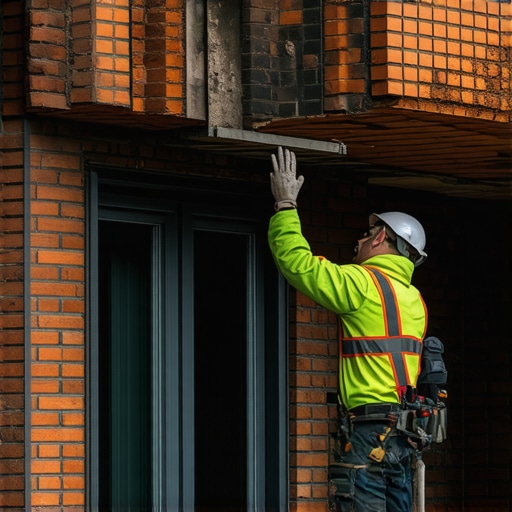
4 Brick Lintel Replacement Signs to Save Your 2026 Windows
The Forensic Scene: The Silent Expansion Under the Soldier Course
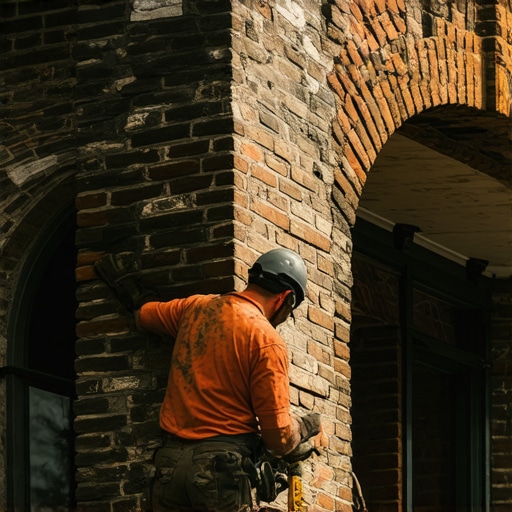
The call came in on a Tuesday from a homeowner who was convinced they had a simple window seal failure. They’d noticed a bit of resistance when trying to crank open their casements, and a thin, jagged line had appeared in the brickwork above the frame. I didn’t even need to step off the ladder to know we weren’t looking at a window problem; we were looking at a structural failure in the making. I slid my borescope into a clogged weep hole and the screen filled with the jagged, orange scales of a dying steel lintel. The 4×4 steel angle, originally a crisp quarter-inch thick, had oxidized into a three-quarter-inch slab of rust. This is what we call ‘rust jacking’ in the trade. When iron converts to iron oxide, it expands up to ten times its original volume. That expansion exerts thousands of pounds of upward pressure on the brickwork, literally lifting the soldier course and crushing the window frame beneath it. If this homeowner hadn’t called, by 2026, those expensive new windows would have been crushed into their sills. This isn’t just about aesthetics; it is about the physics of corrosion and the inevitable gravity of historic masonry preservation.
1. The ‘Smile’ Crack: Understanding Stress Distribution
The first sign of a failing lintel is often a horizontal or ‘stair-step’ crack originating from the corners of the window opening. In the world of professional masonry restoration, we call this the ‘smile’ because of how the brickwork bows. When the steel lintel loses its structural integrity due to oxidation, it can no longer support the weight of the masonry above it. This leads to a deflection in the center of the opening. Because bricks are incredible in compression but abysmal in tension, they snap.
“Structural steel members built into masonry walls shall be protected from corrosion by galvanizing or other approved methods to prevent the build-up of corrosion products which can cause cracking of the masonry.” – BIA Technical Note 31B
This cracking isn’t just a surface issue. If you see a crack wider than a 1/16th of an inch, the bond between the mud and the brick has been broken. Water now has a direct highway into the wall cavity. In our northern climate, that water will freeze and expand by 9%, further prying the bricks apart in a vicious cycle of spalling and structural decay.
2. The Hemorrhage: Oxidation Bleeding and Material Decay
If you see reddish-orange stains weeping down the face of your brick or running onto your window trim, the lintel is already in a state of advanced decomposition. This isn’t just a stain; it is a chemical signal that the protective mill scale of the steel is gone. At this point, the steel is ‘burning’ in slow motion. I often see people try to hide this with a concrete patch or by slopping some tile grouts on masonry joints. That is like putting a band-aid on a gunshot wound. The rust will continue to grow beneath the patch, and eventually, the entire repair will pop off, often taking the face of the brick with it. For a proper fix, we have to talk about sustainable masonry materials. When I perform a retaining wall installation or a lintel swap, I insist on hot-dipped galvanized steel or 316 stainless. We want materials that can withstand the alkaline environment of the mortar and the relentless moisture of the cavity wall without turning back into dust.
3. The Bind: Mechanical Failure of Window Operation
Windows are designed with very tight tolerances. When a lintel sags, it transfers the ‘dead load’ of the entire brick facade directly onto the window head. This causes the frame to bow. If your windows are suddenly difficult to open, or if you see daylight through the mitered corners of your window trim, the masonry is physically crushing the unit. This is often misdiagnosed as foundation slab jacking issues. While soil movement can cause window binding, a localized bow in the lintel is far more common in older homes. I’ve been on outdoor fireplace rebuild jobs where the same principle applies—excessive heat and moisture cycle through the masonry, and if the support steel wasn’t properly specified for thermal expansion, the whole firebox starts to pinch. In a window opening, this pressure can eventually shatter the glass or warp the frame so severely that the entire unit must be replaced.
4. The Spall: When the Brick Face Surrenders
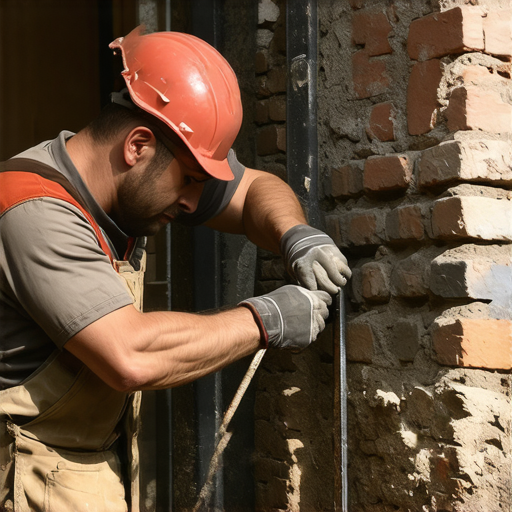
The most dramatic sign is ‘spalling’—when the outer inch of the brick literally flakes off and falls to the ground. This happens because the rusting lintel is pushing outward as much as it is pushing upward. The pressure becomes so intense that the clay body of the brick shears. I despise seeing ‘lick-and-stick’ stone veneer over brick applied to hide these issues. It creates a moisture trap that accelerates the lintel’s rot. To fix this right, we perform masonry birdsmouth cuts into the adjacent bricks to ensure the new lintel has a proper bearing surface—at least 4 to 6 inches on either side of the opening. We then ‘butter’ the new bricks with a soft Type N or Type O mortar to ensure the repair matches the breathability of the historic masonry preservation standards.
“The use of mortar that is harder than the masonry units themselves can lead to irreversible damage to the units during thermal expansion cycles.” – ASTM C270 Standard Specification
We don’t just shove mud in there; we use a slicker to tightly pack the joints, ensuring there are no honeycombing voids where water can sit. We then strike the joints to match the original profile, ensuring the professional masonry restoration is invisible to the untrained eye but structurally sound for the next fifty years.
The Anatomy of the Fix: Doing it Once, Doing it Right
When we pull a failing lintel, we don’t just slap in a new piece of iron. We look at the flashing. A lintel without proper end-dams and weep holes is just a gutter that lives inside your wall. We install high-density polyethylene flashing that extends beyond the lintel and turns up at the ends, forcing water out through the weeps instead of letting it pool on the steel. We use a hawk and trowel to meticulously rebuild the soldier course above the opening, ensuring each brick is level and plumb. It’s a tedious process, but it’s the only way to avoid a cold joint that will leak in two seasons. If you’re looking toward 2026 and your windows are on the list, look up first. If the lintels are failing, your new windows are already doomed. Call a pro who knows the smell of wet lime and the sound of a ‘ringing’ brick. Don’t settle for a handyman with a caulk gun; your foundation and your facade depend on the ‘tooth’ of the work and the integrity of the steel.
![4 Stone Balustrade Restoration Tactics for Wobbly Rails [2026]](https://masonryrescue.com/wp-content/uploads/2026/04/4-Stone-Balustrade-Restoration-Tactics-for-Wobbly-Rails-2026.jpeg)