![4 Signs Your Brick Ties Are Failing (And How to Fix Them) [2026]](https://masonryrescue.com/wp-content/uploads/2026/04/4-Signs-Your-Brick-Ties-Are-Failing-And-How-to-Fix-Them-2026.jpeg)
4 Signs Your Brick Ties Are Failing (And How to Fix Them) [2026]
The Ghost in the Cavity: A Forensic Scene
The homeowner thought it was just a hairline crack, a minor blemish on a stately Tudor facade. But when I put my borescope through a drilled pilot hole into the air space behind the veneer, I saw a nightmare of oxidation. The structural steel ties, intended to be the backbone of that wall, were rusted to dust. They looked like brittle, orange wafers. This wasn’t a cosmetic issue; it was a gravity-defying disaster waiting for a stiff wind. As a third-generation mason, I’ve seen this ‘lick-and-stick’ mentality ruin more homes than termites ever could. Modern masonry relies on the cavity wall system—a beautiful dance of physics where the outer brick ‘skin’ is tethered to the inner frame. When those ties fail, the skin starts to shed, and that is where my forensic work begins.
The Anatomy of a Brick Tie and Why Physics is Your Master
To understand failure, you have to understand the ‘tooth’ of the system. In the old days, we built solid masonry walls three or four wythes thick. Today, we use a single veneer of brick tied to a backup wall with metal anchors. These anchors, or brick ties, must manage three forces: tension, compression, and shear. When the wind blows against a commercial parapet wall repair job, the ties must push that load into the structure. When the wind sucks outward, they must pull. If the ties were installed by a ‘handyman special’ crew who didn’t understand the chemistry of galvanization, the clock is ticking. Most ties are made of corrugated galvanized steel, which relies on a thin coating of zinc. Once that zinc is sacrificed to the moisture trapped in the cavity, the raw steel meets oxygen. This is where the expansion begins.
“Water penetration is the single greatest threat to masonry durability.” – BIA Technical Note 7
When steel rusts, it doesn’t just get weaker; it gets bigger. The volume of rust can be up to seven times that of the original metal. This is a phenomenon we call ‘oxide jacking.’ It’s a slow-motion car jack lifting your bricks from the inside out. If you aren’t looking for the signs, you’ll miss the moment the wall becomes a free-standing liability. This is why mortar repointing services are more than just a facelift; they are a vital check on the health of the ties behind the mud.
Sign 1: The Horizontal Lift (The Jacking Effect)
If you see a perfectly horizontal crack running through the bed joints, usually every six to eight courses, you aren’t looking at settlement. You are looking at the ties physically lifting the brickwork. As the corrugated metal expands from oxidation, it forces the mortar joints apart. This is different from the stair-step cracks you see in cracked brick wall repair involving foundation issues. In the forensic world, we look for the ‘lift.’ If I can slide a credit card into a horizontal joint on a ten-year-old building, I know the ties are failing. The physics here is brutal: the expansion pressure of rust can exceed 10,000 PSI, which is more than enough to snap a brick or pop a mortar joint. We often see this in historic brick salvage projects where someone used the wrong ties during a 1980s renovation.
Sign 2: The ‘Belly’ of the Wall (The Outward Bulge)
A brick wall should be plumb. When you look down the line of a wall and see a ‘belly’—an outward bulge—the ties have either snapped or pulled out of the backup wall. This often happens because of poor ‘buttering’ of the bricks or using ties that were too short to begin with. Without the tie to hold the veneer to the studs, gravity and thermal expansion take over. In the heat of a summer afternoon, a brick wall can expand significantly. Without proper control joints and functioning ties, that expansion has nowhere to go but out. This is a critical stage. If the wall is bulging, the ‘suction’ that holds it to the building is gone. I’ve seen commercial parapet wall repair scenes where a single gust of wind brought down a thousand pounds of masonry because the ties had turned to powder. It’s the masonry equivalent of a skin graft that didn’t take.
Sign 3: Rust Bleeding and Masonry Staining
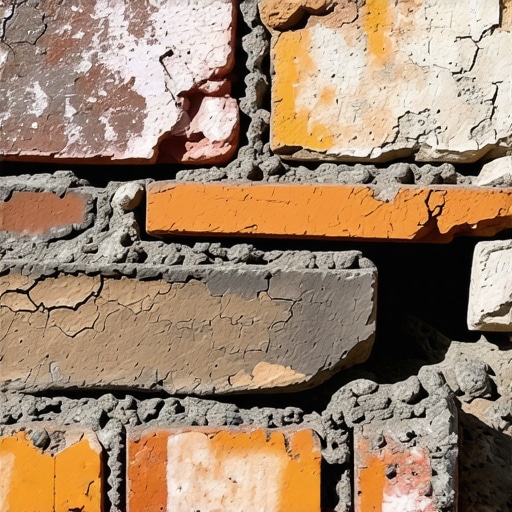
Iron oxide is a persistent traveler. When ties fail, they often leave a trail. If you notice vertical streaks of orange or brown localized around specific mortar joints, that’s ‘rust weeping.’ This masonry staining is the chemical signature of a dying anchor. The water that enters the cavity—through retaining wall weep hole cleaning neglect or poor flashing—mixes with the corroding steel and leeches back out through the porous mortar. It’s a cry for help from the interior of the wall. When I see this on a chimney sweep and repair job, I know the chimney flue liner installation might be the least of the owner’s problems. The structural integrity of the chimney stack itself is likely compromised. We use chemical cleaners to remove the stain, but unless you address the ‘bleeding’ tie, the ghost will return every time it rains.
“All metal ties and anchors shall be corrosion-resistant… properly embedded in mortar to ensure load transfer.” – ASTM C270 Standards
Sign 4: The Loose Skin Effect (Vibration and Sound)
Sometimes, the signs aren’t visual; they are tactile. If you can lean your weight against a brick veneer and feel it ‘give’ or vibrate, you are in the danger zone. A healthy masonry wall should feel like a mountain—solid and immovable. If it feels like a hollow drum, the ties have failed. This is common in areas with high seismic activity or heavy truck traffic. The constant vibration shears the weakened ties. In brick patio restoration, we don’t worry about this as much because the earth is the base, but for a vertical wall, this lack of ‘stitch’ is fatal. I always tell my apprentices: ‘The mud holds the bricks together, but the ties hold the wall up.’ If the ties are gone, you’re just looking at a pile of rocks stacked with hope.
The Forensic Solution: Remedial Anchoring
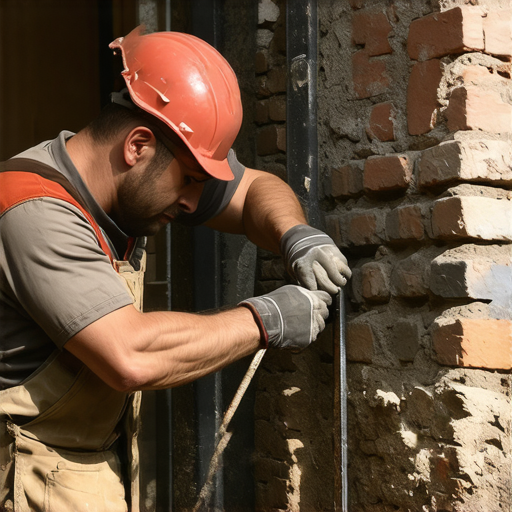
How do we fix it without tearing the whole house down? We use remedial masonry anchors. We drill through the face of the brick into the backup material—be it wood, concrete, or steel—and install stainless steel helical ties. These ties have a ‘tooth’ that grips both the veneer and the structure. We then use a mortar repointing services approach to hide the drill holes. It’s a surgical strike. We also look at the foundation. If the wall is moving because of soil issues, we might discuss self-healing concrete foundations or helical piers, but usually, tie failure is a moisture and chemistry problem. We ensure that retaining wall weep hole cleaning is performed to allow the cavity to breathe. If the wall can’t dry, the ties will die. It’s as simple as that. Don’t let a ‘slicker’ tool fool you into thinking a fresh coat of mortar fixes a structural void. You need to get into the cavity, see the steel, and respect the physics of the build. Do it once, do it right, or get out of the way of the falling brick.