
The Orange Dust of Decay: Understanding Masonry Spalling
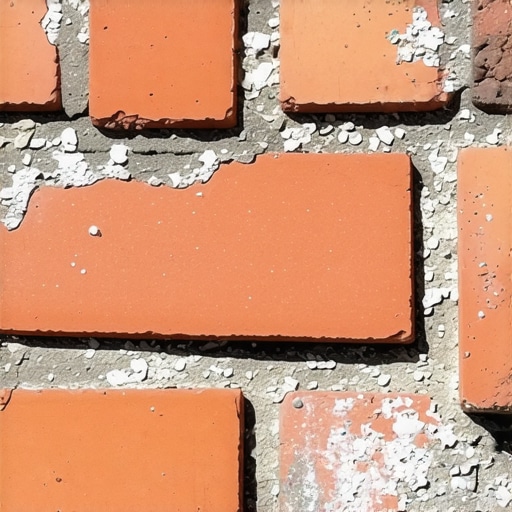
You walk out your front door on a crisp morning and notice a fine, terracotta-colored powder on your concrete. At first, you think it is just dirt, but then you look closer. The face of your porch bricks—the outer 3/8ths of an inch—is literally peeling away like an onion skin. This is not a cosmetic quirk; it is a structural scream for help. In the trade, we call this spalling. It is the physical manifestation of a war being fought between your building materials and the local climate. If you do not understand the physics of moisture migration, you are just throwing money into a mud hole.
The Lesson of the Density Test
My old man used to take a fresh brick from a pallet and drop it into a bucket of water for exactly sixty seconds. He would then pull it out, snap it in half with a single strike of his hammer, and look at the ‘tide mark’ of the moisture. If the water had reached the core, he would refuse the shipment. He knew that a brick with too much ‘suction’—high initial rate of absorption—was a liability in any area prone to freezing. He used to say, ‘A brick is like a lung; if it breathes too deep, it drowns in its own phlegm when the frost hits.’ He taught me that the longevity of a porch is decided the day the materials are selected, not the day they are laid. Most modern masons do not know the difference between a Grade SW (Severe Weathering) brick and a Grade MW (Moderate Weathering) brick. That ignorance is why your porch is falling apart.
The Physics of the Freeze: Why Bricks Pop
To understand why your bricks are flaking, we have to micro-zoom into the capillary structure of the clay. Bricks are porous. When it rains, they pull water into their internal network of voids via capillary suction. In a northern freeze-thaw climate, that water eventually turns to ice. Basic physics tells us that water expands by approximately 9% when it freezes. If the pore structure is saturated and the ice has no room to expand, it exerts massive internal hydrostatic pressure—up to 100,000 psi. This pressure exceeds the tensile strength of the fired clay, and the face of the brick simply ‘pops’ off.
“Water penetration is the single greatest threat to masonry durability.” – BIA Technical Note 7
This cycle is exacerbated by the use of de-icing salts. When you throw salt on your porch to melt ice, you are creating a brine solution. This brine penetrates deeper into the brick than pure water. When the water evaporates, the salt recrystallizes. These crystals grow inside the pores—a process called sub-florescence—and exert mechanical pressure similar to ice, shredding the brick from the inside out. This is why spalled concrete steps repair and brick restoration often go hand-in-hand after a harsh winter.
The Portland Trap: Historic Masonry Preservation
The most common cause of porch failure I see during forensic inspections is the improper use of modern Portland cement on older homes. If your house was built before 1940, it was likely laid with lime-based mortar. Lime is soft, flexible, and breathable. Modern Type S or Type M mortar is incredibly hard and impermeable. When a ‘handyman special’ contractor uses hard cement to ‘fix’ a lime joint, they create a moisture trap. The water can no longer escape through the mortar joints (which are supposed to act as the ‘wick’ of the wall), so it is forced into the bricks. Because the mortar is now harder than the brick, the brick becomes the sacrificial element. Historic masonry preservation requires using a ‘sacrificial’ mortar—meaning the mortar should always be softer than the brick.
“Mortar should be weaker in compression than the masonry units so that it acts as a relief valve for stress.” – ASTM C270 Standards
Advanced Solutions: Tuckpointing and Weatherproofing
Fixing a flaking porch is not about slapping a sealer on it. In fact, most cheap siliconized sealers make the problem worse by trapping moisture behind a plastic film, leading to deeper spalling. The real solution begins with tuckpointing weatherproofing. This involves grinding out the failed, crumbly joints to a depth of at least 3/4-inch and ‘buttering’ in new, compatible mud. We look at different brickwork pointing styles—like the weathered joint or the concave joint—to ensure water is directed away from the brick’s bed. For large-scale assets, commercial tuckpointing and commercial masonry maintenance often involve drone chimney inspections to spot these failures before they reach the foundation level. If the porch is sinking or pulling away, we might even look at foundation slab jacking to stabilize the sub-grade before we even touch a trowel.
The Modern Mason’s Toolkit
Today, we have advanced masonry adhesives and silane-siloxane breath-able water repellents that can help protect a porch, but they are only effective after the structural integrity is restored. If your steps are crumbling, a facade cleaning using low-pressure steam can remove the salts and biological growth that accelerate decay. But remember: if you see honeycombing in the concrete or a cold joint where the porch meets the house, you aren’t just looking at a ‘flaking’ problem; you’re looking at a systemic failure. You can butter the joints and use a slicker to make it look pretty, but if you don’t address the drainage and material compatibility, you’ll be back on your hands and knees in three years. Do it once, or do it twice. The choice is yours.