The homeowner pointed to a thin, horizontal line running across the third course of her foundation. She called it a ‘hairline crack’ and had already bought a tube of hardware-store caulk to ‘zip it up.’ But when I clicked on my high-intensity headlamp and slid my fiber-optic scope into a weep hole, the reality was grim. Behind that ‘hairline’ surface, the interior webs of the concrete masonry units (CMUs) had fractured under the weight of saturated clay soil. The structural steel, which should have been encased in solid grout, was a jagged strip of orange-red rust, expanding and blowing the block apart from the inside out. This wasn’t just a leak; it was a slow-motion structural collapse disguised as a damp basement. In my thirty years of forensic masonry, I’ve seen this story end in a $60,000 foundation underpinning job more times than I care to count because people ignore the physics of the joint.
The Anatomy of a Block Failure: Why Joints Leak
Concrete blocks, or CMUs, are the workhorses of modern construction, but they are inherently porous. Think of them as rigid sponges. The real magic—and the real vulnerability—happens at the mortar joint. This is where we ‘butter’ the edges of the block with ‘mud’ (mortar) to create a seal. But a basement is a pressurized environment. When the ground outside becomes saturated, it creates hydrostatic pressure. Water isn’t just sitting there; it is pushing with thousands of pounds of force against your foundation walls. If your mortar joints have lost their ‘tooth’—the mechanical bond between the cement and the aggregate of the block—that water will find a way in. It starts as an efflorescence, a white salty powder on the inside of your wall, which is the physical evidence of water migrating through the block, dissolving minerals along the way. Eventually, that migration becomes a flow.
“Water penetration is the single greatest threat to masonry durability, leading to efflorescence, freeze-thaw damage, and corrosion of embedded metals.” – BIA Technical Note 7
In Northern climates where the freeze-thaw cycle is a seasonal hammer, this issue is magnified. Water trapped within the hollow cores of a concrete block expands by 9% when it freezes. This expansion doesn’t just crack the block; it shears the face right off, a process we call spalling. If your foundation joints are failing, no amount of ‘lick-and-stick’ stone veneer over brick or interior paint will save it. You have to address the structural integrity of the mortar itself.
The Crack Whisperer’s Guide: Identifying the Threat
Not all cracks are created equal. As a forensic inspector, I look for patterns. A stair-step crack following the mortar joints often indicates settlement or soil heaving. This is where foundation underpinning might be necessary to stabilize the footings. However, a horizontal crack midway up the wall is a classic sign of hydrostatic pressure bowing the wall inward. This is the ‘danger zone.’ When the wall bows, the mortar joints on the exterior open up, inviting even more water into the system. This is often exacerbated by poor commercial masonry facade maintenance at the ground level, where water is allowed to pool against the foundation instead of being shed away. We see similar failures in chimney structural repair, where the chimney acts like a giant straw, sucking moisture down into the house’s skeleton.
The Forensic Fix: Beyond the Band-Aid
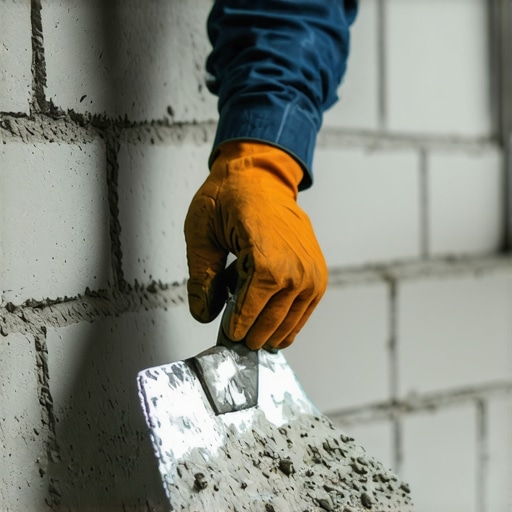
Fixing a leaking block joint requires more than just smearing some ‘mud’ over the gap. It requires tuckpointing—the surgical removal of the failed mortar and the installation of new, compatible material. But here is where most modern masons fail: they use a mortar that is too hard. If you put a high-strength Type M Portland cement mortar into an older, softer block wall, the mortar won’t give. When the wall shifts (and all walls shift), the block will crack instead of the mortar. I always recommend a Type N mortar for most residential block repairs because it offers a balance of strength and flexibility, acting as a ‘sacrificial’ element that protects the more expensive block. For those seeking the ultimate in modern diagnostics, an AI masonry assessment can now be used to map thermal anomalies in the wall, pinpointing exactly where the moisture is concentrated before we ever pick up a hammer.
The Role of Chimneys and Facades in Basement Health
You might wonder what a chimney sweep and repair or a chimney flue liner installation has to do with your basement joints. The answer is ‘vertical water management.’ A chimney with a cracked crown or failing structural brick ties replacement needs will dump gallons of water into the wall cavity. This water travels down, bypasses the flashing, and ends up sitting behind your basement block. Once it’s back there, it begins the slow process of ‘honeycombing’ the concrete, leaving it brittle and weak. Proper brickwork sealants application is vital here, but only after the masonry has ‘breathed’ out its internal moisture. If you seal a damp wall, you are just trapping the enemy inside.
“The selection of mortar should be based on the properties of the masonry units and the environmental exposure conditions.” – ASTM C270 Standard Specification
The Science of the Seal: Brickwork Sealants Application
When we talk about brickwork sealants application, we aren’t talking about the clear-coat junk you buy at the big-box stores. We are talking about silane-siloxane penetrating sealers. These don’t form a film on the surface; they bond chemically with the silica in the concrete and mortar. This keeps liquid water out while still allowing water vapor to escape. If your basement is leaking, we first address the joints, then we look at the exterior drainage, and finally, we apply a breathable barrier. If the chimney is part of the problem, a full chimney structural repair or a new chimney flue liner installation ensures that combustion gases and moisture are vented out, not into your structural walls.
When to Panic: The Red Flags of Masonry Failure
If you see a ‘soldier course’ (bricks standing on end) that is leaning outward, or if you notice your stone veneer over brick is pulling away from the substrate, the structural brick ties have likely failed. This is a critical safety issue. In commercial settings, commercial masonry facade maintenance programs catch these issues early using borescope cameras and AI masonry assessment tools. For the homeowner, the best tool is a simple ‘slicker’ or jointer tool. If you can scrape the mortar out of your basement joints with a screwdriver, the ‘mud’ has turned back to sand. At that point, you aren’t just looking at a leak; you’re looking at a structural liability. Do it once, or do it twice. Fixing it right means excavating, repointing, and ensuring your drainage is bulletproof.