
The Tragedy of the Spalled Face: A Forensic Autopsy
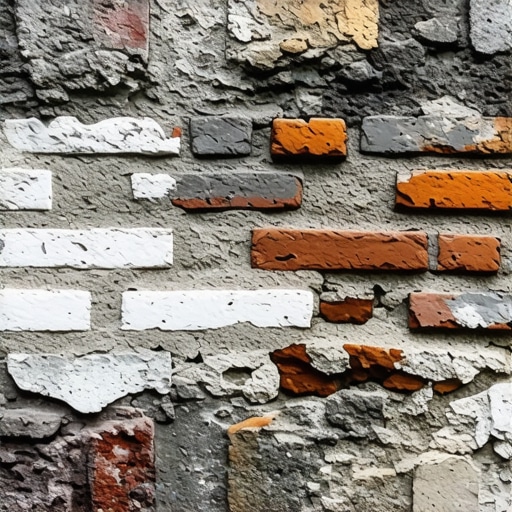
I recently stood before a 1920s Georgian revival that looked like it had been through a mortar shell attack. Great chunks of the brick faces—the ‘fire-skin’—were popping off, lying in the dirt like red scabs. The homeowner had hired a guy with a truck and a bag of ‘high-strength’ mortar from a big-box store to fix some minor cracks three years ago. That ‘pro’ thought he was doing a favor by using the strongest mud he could find. Instead, he signed the death warrant for that facade. In the trade, we call this the ‘Sacrificial Principle’ violation, and it is the primary reason why amateur mortar repointing services turn into total masonry disasters.
“Mortar should always be weaker than the masonry units it binds. Using a mortar with higher compressive strength than the brick leads to stresses that cause the brick to fail during thermal expansion and moisture cycles.” – ASTM C270 Standard Specification for Mortar for Unit Masonry
My first mentor, an old-school stonecutter who could read a wall like a priest reads scripture, used to make me taste the dust from a joint. He wasn’t crazy; he was checking for salt and acidity. He taught me that a wall is a living, breathing lung. If you slap a waterproof, rigid ‘skin’ of modern Portland cement over a soft, hand-molded 19th-century brick, you are essentially plastic-wrapping a person and asking them to run a marathon. The wall can’t sweat, the moisture gets trapped, and the first time the temperature drops below thirty-two degrees, the physics of freeze-thaw damage restoration become a brutal reality. Water expands by nine percent when it turns to ice; if it can’t escape through the mortar, it will push its way out through the face of your brick.
The Physics of the Pore: Why Off-the-Shelf ‘Mud’ Fails
Most people walk into a hardware store and grab a bag of Type S or Type M mortar. It is convenient, it is cheap, and it is absolute poison for historic masonry. These modern mixes are heavy on Portland cement, creating a dense, brittle matrix. Historic bricks, fired at lower temperatures than modern extruded units, are porous. They move. They expand when the sun hits them and contract when the shadows fall. When you use a high-strength commercial tuckpointing mix on these bricks, you create a rigid cage. The brick wants to move, the mortar won’t let it, and the softer material—the brick—loses every single time.
The secret is in the lime. Before the 1930s, mortar was primarily lime and sand. Lime mortar undergoes a process called carbonation. It doesn’t just ‘dry’; it absorbs CO2 from the air and turns back into limestone over decades. This creates a flexible, ‘self-healing’ joint. If a micro-crack forms, rain dissolves a bit of the free lime and redeposits it into the crack. It is a slow, beautiful chemical dance that modern ‘lick-and-stick’ contractors simply don’t understand. Using sustainable masonry materials like Natural Hydraulic Lime (NHL) isn’t just about being eco-friendly; it is about matching the physical modulus of elasticity of the original structure.
The Commercial Scale: Parapets and Smokestacks
This issue isn’t limited to residential cottages. I’ve seen commercial parapet wall repair jobs where the entire roof-line was bowing outward because the wrong mortar prevented thermal expansion. On a commercial smokestack repair project, the stakes are even higher. The heat differentials are massive. If the ‘mud’ doesn’t have the ‘tooth’ to grip the brick while remaining flexible enough to handle the sway and the heat, the stack will literally unzip itself from the top down. This is where flush pointing services must be executed with surgical precision, ensuring the joint profile doesn’t trap water on the ledge of the brick.
“Water penetration is the single greatest threat to masonry durability. The use of incompatible mortar materials often accelerates deterioration by trapping moisture within the wall system.” – BIA Technical Note 7: Water Resistance of Brick Masonry
When we perform a masonry rescue after disaster, the first thing we do is a mortar analysis. We look at the sand gradation and the binder-to-aggregate ratio. If we see that gray, hard, Portland-heavy smear, we know we’re in for a long haul. We have to carefully grind out those joints without ‘nicking’ the brick—a task that requires a steady hand and a hawk full of the right lime-based mix. We aren’t just filling holes; we are restoring the vapor permeability of the entire building envelope.
Beyond the Wall: Chimneys and Drainage
The same logic applies to specialized areas like chimney heat shield installation. A chimney is the most exposed part of a building, taking a beating from wind, rain, and internal flue gasses. If you use off-the-shelf mortar here, the freeze-thaw damage restoration costs will be astronomical within five years. We also look at the ‘hydrostatic’ reality of the site. A retaining wall drainage upgrade is often necessary because even the best masonry can’t survive if it’s being pushed by a thousand tons of water-logged soil. You need weep holes, you need clear stone, and you need a mortar that knows how to let water pass through it rather than fighting against it.
Don’t let a ‘handyman special’ ruin a century of history. When you see a soldier course of bricks starting to lean or the mortar turning to dust, don’t just ‘butter’ over the problem with a bag of gray cement. Real masonry is about the ‘suction’ of the brick and the ‘slicker’ finishing the joint to shed water. It is a trade of millimeters and chemistry. Do it once, do it right, and use the materials that the original masons intended. Anything else is just a slow-motion demolition.