
The Forensic Scene: A Wall on the Brink
I was called out to a job site in the aftermath of a three-day deluge, the kind of rain that turns backyard slopes into slow-moving glaciers. The homeowner thought it was just a hairline crack, a cosmetic annoyance in a wall he’d paid twenty grand for just two years prior. But when I slid my fiber-optic scope into a weep hole that had never seen a drop of water, I didn’t see clean drainage stone. I saw the structural brick ties replacement was already a losing battle because the structural steel was rusted to orange dust and the ‘backfill’ was nothing but native clay. The wall wasn’t just leaning; it was breathing. Every gust of wind and every inch of rain was pushing a five-ton slab of saturated earth against a structure that had no way to vent the pressure. It’s a scene I’ve seen a thousand times: a beautiful face hiding a terminal internal disease. Most folks think a wall fails because the brick is weak. That’s a lie. A wall fails because the mason forgot that water is the most patient demolition crew on earth.
The Physics of the ‘First Big Storm’
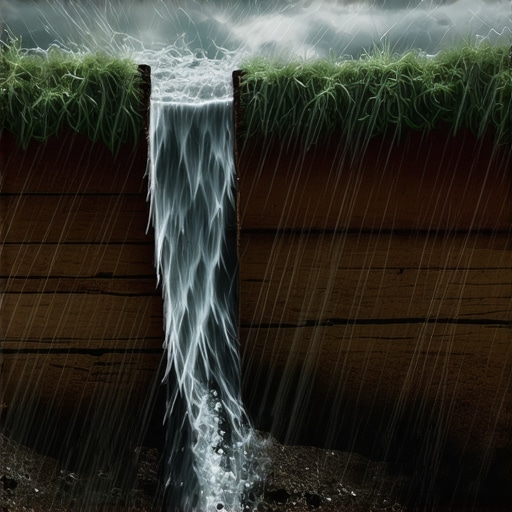
When the clouds open up, the chemistry of your backyard changes. Dry soil has an ‘angle of repose,’ a natural slope where it stays put. But once you add water, you’re no longer dealing with dirt; you’re dealing with hydrostatic pressure. This is the silent killer. As the soil becomes saturated, the weight against the back of the masonry doubles or even triples. If you haven’t used mortarless masonry systems or high-performance mortar mixes designed to handle lateral load, you’re asking for a collapse. The pressure builds until it finds the weakest point—usually a cold joint or a spot where the masonry birdsmouth cuts weren’t notched deep enough to lock into the adjacent stone. I’ve seen 12-inch thick concrete blocks snapped like toothpicks because the installer didn’t understand that water weighs 62.4 pounds per cubic foot. Multiply that by a saturated hillside, and you have a battering ram.
“Water penetration is the single greatest threat to masonry durability. Without proper moisture management, even the strongest materials will succumb to hydrostatic load and freeze-thaw cycles.” – BIA Technical Note 7
The Chemistry of Failure: Mud, Suction, and Strength
In the trade, we talk about ‘mud’ like it’s a living thing. A high-performance mortar mix isn’t just a bag of Portland and sand. It’s a carefully balanced cocktail of cement, lime, and often polymers that dictate the ‘tooth’ of the bond. When I see a wall failing, I often look at the ‘suction’—how the brick pulled the moisture out of the mortar when it was first laid. If the brick was too dry, it sucked the water out of the mud before the hydration process could complete, leaving a brittle, ‘burnt’ joint. For structural integrity, especially in load-bearing retaining walls, we often look toward brick quoin repair techniques to reinforce the corners where the most stress accumulates. If those corners aren’t keyed in properly, the wall ‘zippers’ right up the middle. You can apply all the metallic brick colors application you want to make it look pretty, but if the bond isn’t chemical and mechanical, it’s just a stack of expensive rocks waiting to fall over.
The Critical Role of Foundation Waterproofing
If you aren’t talking about foundation waterproofing, you aren’t building a wall; you’re building a dam. A retaining wall needs to be a sieve, not a barrier. This is where the ‘handyman specials’ always fail. They slap some tar on the back and call it a day. Real waterproofing involves a multi-stage approach: a liquid-applied membrane, a dimpled drainage board to break the hydrostatic tension, and a dedicated perforated pipe encased in clean 1-inch stone. I’ve seen brick patio restoration projects where the patio collapsed because the retaining wall below it didn’t have a single functioning weep hole. The water pooled, the soil turned to soup, and the ‘high-performance’ patio became a slide. We also see this in chimney interior parging; if the moisture can’t escape through the flue or the masonry, it forces its way through the brick, causing spalling and structural decay that eventually leads to a total rebuild.
The Structural Anatomy: Ties, Cuts, and Quoins
True forensic masonry looks at the skeleton. Structural brick ties replacement is often necessary in older walls where the original corrugated ties have vanished into a cloud of rust. Without those ties, the veneer is just ‘floating’ against the backup wall. In heavy rain, the air gap between the brick and the backup fills with water—a phenomenon known as ‘reservoir effect.’ This water pushes outward, and without ties to hold it back, the wall bows. This is why masonry birdsmouth cuts are so vital in complex geometries; they provide a mechanical lock that transcends the strength of the mortar alone. It’s the difference between ‘buttering’ a joint and actually engineering a structure. Even fire-rated masonry installation principles apply here; the density and the way the units are interlocked determine how they handle the thermal expansion that comes after the sun hits a rain-soaked wall, causing rapid steam expansion inside the pores of the brick.
“The stability of a masonry wall depends not only on the quality of the units but on the integrity of the bonding system and the management of external environmental loads.” – ASTM C270 Standard Specification
The Restoration Reality: Do It Once, or Do It Twice
I tell my clients that you can pay me to build it right once, or you can pay me to tear out the other guy’s mess and then build it right. Brick patio restoration and wall repair are about more than just aesthetics. It’s about restoring the ‘breathability’ of the system. If you use a mortar that’s too hard, the brick will break. If you use a mortar that’s too soft, the wall will wash away. It’s a delicate balance of lime and cement. When we do a metallic brick colors application for a modern look, we ensure the coating doesn’t seal the pores of the brick, which would trap moisture and lead to the dreaded ‘freeze-thaw pop.’ Every fire-rated masonry installation and every chimney interior parging job I supervise follows the same rule: respect the physics of the material. If you don’t give the water a path out, it will make its own, and you won’t like the result.
The Crack Whisperer’s Guide to Settlement
How do you know if your wall is a goner? Look at the cracks. A stair-step crack usually means the foundation is settling—the earth is moving under the wall. A horizontal crack? That’s hydrostatic pressure. That’s the wall saying, ‘I can’t hold this dirt back anymore.’ If you see ‘honeycombing’ in the concrete or mortar joints that you can pick out with a fingernail, the ‘mud’ was either too lean or it was ‘burnt’ by the sun during installation. These are the markers of a wall that will fail in the next big storm. Don’t wait for the pile of rubble in your driveway. Look for the signs: the leaning ‘soldier course,’ the salt-like efflorescence on the face, and the weep holes that stay dry even when it’s pouring. That’s the masonry telling you its story. You just have to be willing to listen before the ground starts moving.