
The Forensic Eye: Why Every Great Wall Starts in the Digital Void
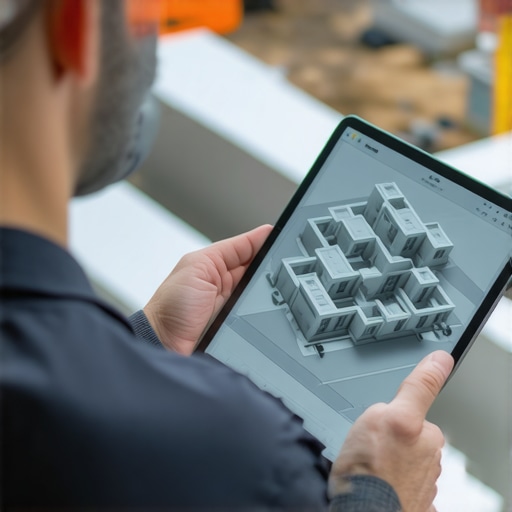
I was standing in the dark basement of a 1920s textile mill turned luxury loft when I saw it. The homeowner thought it was just a hairline crack, a minor blemish on a historic facade. But when I put my borescope inside that fissure, the digital feed showed the structural steel was rusted to dust, literal flakes of iron oxide falling away like dead skin. The entire soldier course was hanging by a prayer and some old suction. That is the moment a project turns into a money pit. You see, the cost of masonry repair services isn’t just the labor or the pallet of brick; it is the unknown variables hiding behind the veneer. Digital twin masonry projects are changing that, acting as a structural x-ray that stops the bleeding before you even mix your first batch of mud.
“Water penetration is the single greatest threat to masonry durability.” – BIA Technical Note 7
In the old days, we relied on a hawk, a slicker, and gut instinct. My grandfather knew the tooth of the stone by feel, but even he couldn’t see the hydrostatic pressure building up behind a retaining wall because of a clogged weep hole. Today, we use digital models to map the physics of a building. When we talk about masonry rescue after disaster, we aren’t just slapping mortar on a wound. We are looking at the hydration heat of the concrete and the thermal expansion coefficients of the materials. Without a digital model, you are just guessing at how a metallic brick colors application will react to the UV load on a south-facing wall, and in this trade, a guess is just another word for a lawsuit.
The Geotechnical Reality of Masonry Failure
Whether you are dealing with brick column repair or a massive outdoor masonry fountain restoration, the physics remains the same: the ground always wins. Digital twins allow us to simulate soil heaving and settlement. In the world of forensic masonry, we look for the ‘crack whisper.’ A stair-step crack usually tells a story of a sinking footing, while a horizontal bulge screams that the wall is choking on water. By creating a digital twin, we can simulate how a structural arch restoration will handle the load before we ever pull the first keystone. We analyze the suction—the initial rate of absorption (IRA)—of the brick. If you butter a brick that’s too dry, it sucks the moisture right out of the mud, preventing the cementitious crystals from ever forming a proper bond. The result? A cold joint that will pop the first time the temperature drops.
The Micro-Physics of Historic Tuckpointing
When we move into historic tuckpointing, the chemistry becomes the star of the show. Many ‘handymen’ think they can fix a 19th-century wall with a bag of modern Portland cement. That is a death sentence for the building. High-strength cement is hard and brittle; old bricks are soft and breathable. When the sun hits that wall, the materials expand. If the mortar is harder than the brick, the brick will crush itself to pieces. We call this spalling. Through digital modeling, we can map the exact density of the existing masonry and specify a lime-based mortar—Type O or even a pure lime putty—that acts as a sacrificial element. The mortar should always be the weakest link, the part that fails so the brick doesn’t have to. It’s about the carbonation of lime, a slow dance with atmospheric CO2 that takes decades to fully harden, providing a flexibility that modern ‘lick-and-stick’ stone veneer repair simply cannot match.
“The architect should ensure that the masonry units are compatible with the mortar type to prevent structural distress.” – ASTM C270 Standards
The Anatomy of the Retaining Wall: A Digital Autopsy
Retaining wall weep hole cleaning sounds like a simple maintenance task, but it is the difference between a standing wall and a pile of rubble. Using digital models, we can visualize the hydrostatic pressure gradients. Imagine the weight of a saturated soil bed pushing against the back of those stones. If the drainage isn’t perfect, the water builds up, and the wall begins to ‘lean.’ By the time you see the tilt with your naked eye, the internal friction of the soil has already been lost. We use digital twins to plan the exact placement of geogrids and drainage aggregates, ensuring that the water has a clear path out. This isn’t just masonry; it’s hydraulic engineering with a trowel. When we perform a brick arch restoration, the digital model tells us exactly where the thrust lines are falling. If those lines move outside the middle third of the wall, you’ve got a collapse waiting to happen.
Preventing the ‘Wavy’ Disaster: The Digital Twin Advantage
Why do modern masonry projects fail while the Romans’ work still stands? It comes down to the base and the bond. Digital models help us calculate the exact compaction needed for a sub-base. In the case of outdoor masonry fountain restoration, we have to account for constant moisture and the vibration of pumps. We look for ‘honeycombing’ in the concrete pours and use digital sensors to ensure the ‘mud’ stays at the right temperature during the cure. If the mortar ‘burns’ because it dried too fast in the sun, you lose the crystalline structure that gives it strength. We avoid ‘flash setting’ by pre-wetting the units, ensuring the suction is controlled. This level of detail is why digital twin masonry projects are the only way to guarantee that you do it once, rather than doing it twice. In this business, if you aren’t looking at the micro-physics of the bond, you aren’t a mason; you’re just a guy playing in the dirt.