
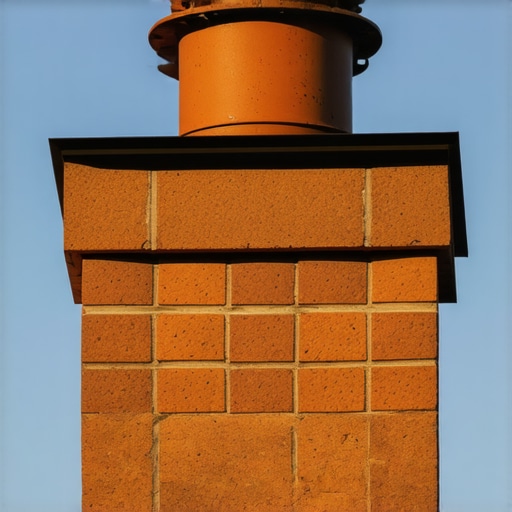
Look at the top of your house. Most homeowners see a chimney as a permanent, unchanging monolith of stone and mortar. I see a porous vertical straw that is actively trying to digest itself. After thirty years of structural masonry inspection, I’ve realized that 90% of chimney failures don’t start with the bricks; they start at the very top, with a failing crown. A chimney crown is meant to be a roof, but most builders treat it like a sidewalk. They slap some leftover ‘mud’—standard mortar—on top and call it a day. That is a recipe for disaster. If that crown isn’t protected by a high-performance waterproof membrane, the freeze-thaw cycle will turn your expensive masonry into a pile of rubble faster than you can write a check for repairs.
The Lesson of the Ringing Brick
My mentor, a man who had more sand in his pockets than a beach and calluses as thick as a nickel, once taught me a lesson I’ve never forgotten. He’d take his trowel and tap a brick already set in a wall. If it didn’t ‘ring’ with a clear, high-pitched bell tone, he knew the bond was blown. ‘The mud is dead, kid,’ he’d growl. He was talking about the suction—the way a dry brick pulls moisture from the mortar to create a monolithic bond. When a chimney crown fails, that bond is the first thing to go. Moisture seeps into the microscopic pores of the mortar, and the ‘ring’ becomes a dull thud. That thud is the sound of your bank account draining into a future masonry restoration project. When I’m performing a structural masonry inspection, that dull sound is exactly what I’m listening for.
The Physics of the Freeze-Thaw Attack
In our climate, the enemy isn’t just water; it’s the physical expansion of that water. When water enters a pore in a standard cement wash, it’s harmless—until the temperature drops. At the moment of freezing, water expands by approximately 9% in volume. In a confined space like a microscopic capillary within a chimney crown, that 9% expansion generates thousands of pounds of internal pressure per square inch. This is the root cause of spalling. The face of the brick literally pops off because the ice behind it has nowhere to go. This is why a simple mortar wash is insufficient. Standard mortar is brittle. It has zero tensile strength to resist these internal forces. You need something that doesn’t just sit there but actually moves with the masonry. This is where fiber-reinforced mortars and elastomeric membranes come into play.
“The chimney crown should be designed to shed water and provide a drip edge to prevent water from running down the vertical face of the chimney.” – BIA Technical Note 18A
The ‘Lick-and-Stick’ Fallacy and Crown Integrity
Modern construction has given us the plague of ‘lick-and-stick’ stone veneer, but the same lazy mentality has infected chimney work. I’ve seen ‘professionals’ use thin-set or even tile grout to patch a crown. It’s a joke. A proper crown requires a structural thickness of at least three inches at its thinnest point, tapering toward the edges to create a ‘wash’—a slope that sheds water. If you don’t have a drip edge—a small undercut that forces water to fall away from the chimney face—the water will just hug the masonry and soak into the brick quoin repair you just paid for last year. Without a waterproof membrane, the cementitious crown will inevitably develop hairline shrinkage cracks during its hydration process. Those cracks are the entry points for the rot.
Why Waterproof Membranes are Non-Negotiable
A waterproof membrane is not ‘paint.’ It is a chemically engineered skin that is vapor-permeable but liquid-impermeable. Think of it like Gore-Tex for your house. It allows the masonry to ‘breathe’ out the moisture that inevitably gets trapped inside from the flue gases, while preventing rain from entering from the top. When we apply these membranes, we aren’t just ‘buttering’ the surface. We are creating a bridge over the inevitable cracks that form as the chimney settles. Standard chimney repair services often skip this step because it’s expensive and requires precision. But without it, your tuckpointing tools for DIY projects will be back out of the garage every spring. You’ll be chasing cracks until the day you sell the house.
“Mortar shall be specified by either proportion specifications or property specifications to ensure durability against environmental exposure.” – ASTM C270
Micro-Zoom: The Chemistry of Fiber-Reinforced Mortars
When I rebuild a crown before applying a membrane, I refuse to use basic Type N mortar. I use fiber-reinforced mortars. Why? Because the microscopic synthetic fibers act like thousands of tiny pieces of rebar crisscrossing the mix. During the hydration process—the chemical reaction where cement turns into stone—the mortar naturally wants to shrink. These fibers arrest that shrinkage, preventing the ‘honeycombing’ effect that weakens the structure. If you’re looking at a crown and see tiny, web-like cracks, you’re looking at a failure of the heat of hydration. The mix ‘burned’ because it dried too fast, or it lacked the internal reinforcement to hold itself together. A membrane applied over a honeycombed base is just a Band-Aid on a broken leg.
Tuckpointing vs. Repointing: The Forensic Difference
I see people using the terms ‘tuckpointing’ and ‘repointing’ interchangeably, and it drives me crazy. Repointing is the process of grinding out the old, decayed mud and replacing it with new mortar. Tuckpointing is an aesthetic technique where you use two different colors of mortar to create the illusion of a perfect, thin joint. If you have brick veneer detachment repair needs, you don’t need tuckpointing; you need structural repointing. You need to get the hawk and the slicker out, and you need to pack that mud deep into the joint. If you just ‘skin’ the joint—applying a thin layer over the old stuff—it will pop off in one season. I call that ‘shyster pointing.’ It looks good for the two weeks it takes for the contractor’s check to clear, then it falls apart.
The Critical Role of Chimney Flashing Repair
You can have the most beautiful, membrane-protected crown in the world, but if your chimney flashing repair was botched, your attic is still going to rot. The flashing is the transition between the vertical masonry and the horizontal roofline. It needs to be ‘let into’ a reglet—a groove cut into the brick. Most guys just caulk it and walk away. Caulk is a five-year solution for a fifty-year problem. When I’m doing a structural masonry inspection, I look for ‘cold joints’ where the flashing meets the brick. If there’s no counter-flashing tucked into a mortar joint, I know I’m looking at a leak. Water is relentless. It will find the one spot where the ‘butter’ didn’t reach and exploit it until your rafters are soft enough to poke a finger through.
Restoring the Soul of the Masonry
When we talk about brick wall restoration or brick quoin repair, we aren’t just talking about aesthetics. We are talking about the structural integrity of the home. A chimney is a massive weight. If the mortar at the top fails, water travels down the core. It can cause retaining wall block replacement issues if the chimney is part of a larger landscape feature, or lead to facade cleaning nightmares as efflorescence—that white, salty powder—is pushed out of the brick by migrating moisture. Don’t be fooled by a ‘handyman special.’ Real masonry work is about understanding the physics of suction, the chemistry of hydration, and the brutal reality of the freeze-thaw cycle. Buy a membrane, hire a pro who knows how to use a slicker, and stop the rot before it starts.