
The Forensic Scene: When a Hairline Crack Becomes a Structural Grave
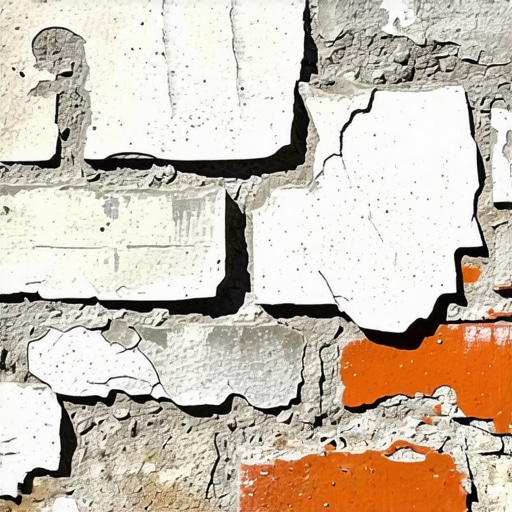
The homeowner thought it was just a hairline crack, a minor blemish on a century-old facade. But when I put my scope inside that fissure, I saw the structural steel was rusted to dust. The culprit wasn’t age, and it wasn’t the weather. It was a high-gloss, ‘industrial strength’ sealant applied just eighteen months prior. The wall was literally suffocating. Masonry is not a solid, inert block; it is a breathing, porous lung. When you slap a non-breathable film over historic brick, you aren’t protecting it—you are sealing its death warrant. This is the gritty reality of forensic masonry: most failures are man-made, born from a fundamental misunderstanding of how moisture moves through clay and lime. [IMAGE_PLACEHOLDER]
The Physics of Vapor Drive and Permeability
To understand why sealants peel, we have to micro-zoom into the capillary structure of the brick itself. A standard clay unit is riddled with millions of microscopic pores. These pores pull moisture from the earth and the atmosphere via capillary suction. In a healthy wall, that moisture travels to the surface and evaporates. This is vapor drive. When a contractor applies a film-forming sealant—often seen in botched stone facade restoration projects—they create a vapor barrier with a perm rating near zero. The liquid water still gets in through the microscopic cracks in the stone coping installation or the roofline, but it can no longer get out as vapor. As the sun hits the wall, that trapped water turns to gas, expanding and exerting massive pressure against the underside of the sealant. This is where the ‘lick-and-stick’ mentality fails. The pressure eventually exceeds the bond strength of the ‘mud’ or the coating, and the sealant peels away in ugly, translucent sheets, often taking the face of the brick with it.
“Water penetration is the single greatest threat to masonry durability, yet the improper application of surface coatings can accelerate decay by trapping moisture within the substrate.” – BIA Technical Note 7
The Sacrificial Principle: Why Mortar Matters
In the world of historic pointing styles, we live by the sacrificial principle. The mortar joint is designed to be the weakest link. It must be softer and more permeable than the masonry units themselves. This ensures that if the wall moves or if moisture builds up, the stress and salt crystallization (efflorescence) happen in the mortar, not the brick. When I perform tuck pointing services, I’m not just shoving new ‘mud’ into a gap. I’m matching the compressive strength of the original lime-based binder. If you use a modern, hard Portland cement on soft, handmade bricks, the bricks will shatter under thermal expansion. We see this often in chimneys where a chimney cap replacement was ignored, allowing water to saturate the stack. If that stack is then pointed with hard cement and coated in a ‘waterproof’ sealer, the winter freeze-thaw cycle will turn the entire structure into a pile of red dust within a few seasons. Water expands about 9% when it freezes, and if it’s trapped behind a hard shell, something has to give.
The Retaining Wall Disaster: Hydrostatic Pressure and Batter
Nothing reveals the incompetence of a ‘handyman special’ faster than a failing garden wall. I recently inspected a project requiring a retaining wall batter correction. The wall was leaning five degrees past vertical, threatening to crush a multi-million dollar patio. The installer had used mortarless masonry systems but forgot the retaining wall drainage upgrade. Without a proper gravel backfill and weep holes, the soil behind the wall became a heavy, liquefied slurry. This is hydrostatic pressure—the weight of standing water pushing against the masonry. No amount of metallic masonry finishes or aesthetic ‘slicker’ work can hold back the weight of the earth when it’s saturated. The fix isn’t more sealant; it’s a structural excavation and the installation of 12-inch perforated pipes to give that water a path of least resistance. You do it once, or you do it twice—and the second time always costs triple.
“The primary function of a masonry wall is to resist the penetration of water while allowing for the dissipation of internal moisture.” – ASTM C270 Standards
The Restoration Reality: Breathable Solutions
If you want to protect your investment, stop looking for a ‘magic coating’ in a bucket. True protection comes from mechanical integrity. This means ensuring your stone coping installation has the correct overhang and drip edge to shed water away from the facade. It means using self-leveling masonry lifts for foundation stabilization rather than just slapping epoxy in a crack. For those obsessed with the ‘wet look,’ the only acceptable option is a silane-siloxane penetrating water repellent. These aren’t film-formers; they work at a molecular level to line the pores of the brick with hydrophobic ‘hairs’ while leaving the pore itself open. This allows the wall to shed liquid water while remaining 100% vapor permeable. It’s the difference between wearing a plastic bag and wearing a Gore-Tex jacket. One keeps you dry but makes you sweat; the other lets you breathe. When we execute stone facade restoration, we focus on the chemistry of the stone’s ‘tooth’—the microscopic texture that allows the ‘mud’ to grab hold and stay there for the next century.
The Final Walkthrough: Preserving the Heritage
Cynicism in this trade comes from seeing the same mistakes repeated by people who think masonry is just stacking blocks. Whether it’s a soldier course over a window or a complex retaining wall batter correction, the physics remains the same. You cannot fight gravity, and you cannot win against water. You can only direct it. Before you allow anyone to ‘butter’ your bricks with a sealant, ask them about the perm rating. Ask them if they understand the hydration process of lime versus the flash-setting of Portland. If they look at you like you’re speaking Greek, show them the door. Your home is a legacy of craftsmanship; don’t let a $20 gallon of acrylic sealer turn it into a forensic crime scene.