
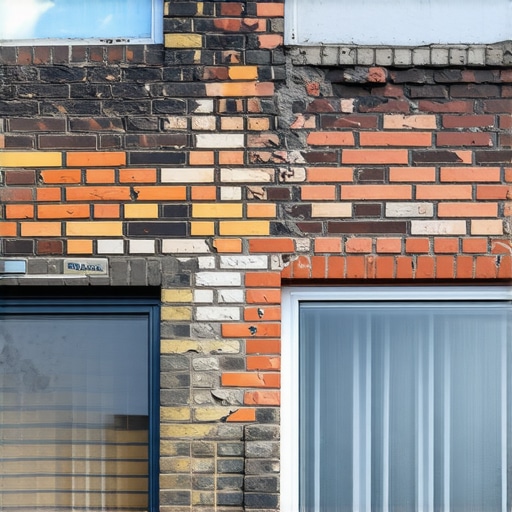
I walked onto a site last Tuesday where the so-called specialist had used a 40-grit blast on a late 19th-century facade. It looked like the building had been pelted with birdshot at point-blank range. The homeowner thought they were getting a fresh look, but instead, they had effectively sandpapered the life out of the masonry. The homeowner thought it was just a hairline crack. But when I put my scope inside, I saw the structural steel was rusted to dust. This wasn’t just a cosmetic failure; it was a forensic nightmare. By stripping the vitrified skin of the brick, that contractor had turned a historic barrier into a thirsty sponge, allowing water to migrate through the units and rot the structural lintels from the inside out.
The Physics of the Fire-Skin
To understand why the wrong grit is a death sentence, you have to understand the anatomy of a brick. When a brick is fired in a kiln, the intense heat creates a vitrified ‘fire-skin.’ This is a dense, glass-like outer layer that acts as the primary defense against moisture. Underneath that skin lies the core—a much softer, more porous clay. When a ‘cowboy’ contractor uses high-pressure sandblasting with an aggressive grit, they aren’t just removing dirt; they are performing a lobotomy on the brick’s structural integrity. Once that skin is gone, the brick’s ‘suction’—or its initial rate of absorption—skyrockets. In forensic terms, you’ve increased the surface area of the brick at a microscopic level, creating millions of tiny craters that trap water, soot, and pollutants.
“Abrasive cleaning methods can cause permanent damage to masonry units and mortar joints by removing the protective outer surface.” – BIA Technical Note 20
The Chemistry of Disaster: Efflorescence and Salt Migration
When you blast away the facade’s protection, you invite the demon of brick efflorescence removal into your life permanently. Efflorescence is that white, powdery salt that haunts damp walls. It happens when water dissolves internal salts and carries them to the surface. Without the fire-skin, the rate of evaporation increases, pulling more salts through the brick. If you try to clean this with more high-pressure water or the wrong chemical wash, you’re just feeding the beast. Professional masonry rescue after disaster involves identifying the specific salt—be it sodium sulfate or calcium carbonate—and using a neutralized approach that doesn’t further etch the surface.
The Sacrificial Principle: Mortar and Repointing
In historic restoration, we live by one rule: the mortar must be softer than the brick. This is the sacrificial principle. The mortar is meant to take the brunt of the movement and moisture, crumbling over decades so the brick doesn’t have to. When a building undergoes historic brickwork repointing, the biggest mistake is using modern Portland cement (Type S) on old, soft bricks. High-pressure cleaning often rakes out the old, soft lime mortar, and the ‘handyman’ replaces it with hard cement. Now, when the wall expands in the sun, the brick has nowhere to go. Since the mortar is harder than the brick, the brick faces pop off—a process we call spalling. For a proper mortar matching services, we analyze the original ‘mud’ to ensure the new brickwork pointing styles—whether it’s a weathered joint or flush pointing services—actually breathe with the building.
The Chimney and the Crown: Where Gravity Wins
The damage isn’t limited to the walls. Chimney structural repair is often the direct result of improper cleaning. When you use aggressive grit on a chimney, you destroy the vertical integrity of the soldier course and the chimney cap. A chimney crown repair becomes necessary because the blasted masonry no longer sheds water. Instead, moisture sits on the crown, seeps into the flue liner, and causes the masonry to ‘honeycomb’—a condition where the internal structure of the brick dissolves into a powdery mess. I’ve seen chimneys that look solid from the ground but are held together by little more than habit and gravity because the grit cleaning stripped the protective glaze off the bricks.
“Water penetration is the single greatest threat to masonry durability.” – BIA Technical Note 7
The Geotechnical Reality of Foundation Moisture
We can’t talk about facades without talking about what’s happening below grade. If you’ve blasted your facade and made it porous, you’ve increased the hydrostatic pressure on your basement walls. Foundation waterproofing isn’t just about the dirt side of the wall; it’s about the entire envelope. When water enters through a damaged upper facade, it travels down the wall cavity, pooling at the base. This leads to ‘cold joints’ in the concrete or stone foundation, where new water meets old, causing cracks that look like a stair-step through the brick wall restoration you just paid for. It’s a systemic failure triggered by a single afternoon of using the wrong cleaning media.
The Solution: Do It Once, or Do It Twice
True brick wall restoration requires a surgeon’s touch, not a sledgehammer. We use low-pressure ‘nebulous’ water mists or soft media like crushed walnut shells or calcium carbonate at pressures lower than your garden hose. This preserves the ‘tooth’ of the masonry while removing the atmospheric pollutants. When we ‘butter’ a joint during historic brickwork repointing, we aren’t just filling a hole; we are restoring a breathing, moving organism. If your contractor shows up with a gas-powered pressure washer and a bag of play sand, send them packing. In this trade, you either respect the chemistry of the stone, or the stone will eventually find its way back to the earth, usually taking your property value with it.