The Forensic Scene: When the Crust Conceals a Catastrophe
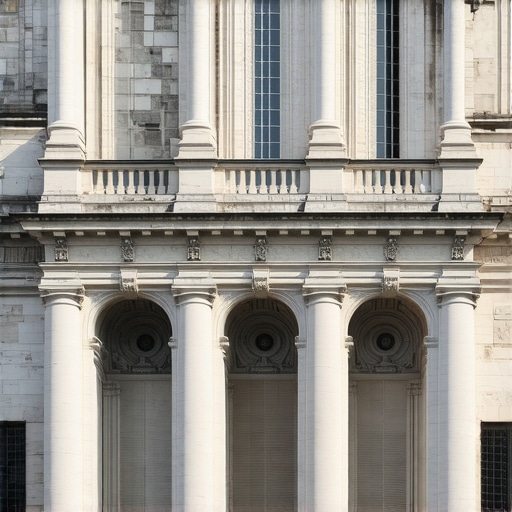
The homeowner thought it was just a hairline crack. But when I put my scope inside the cavity of that 1908 brownstone, I saw the structural steel was rusted to dust, expanded to three times its original thickness, and was literally Jacking the stone facade off the building’s face. From the street, the building just looked tired, covered in a century of coal soot and urban grime. Most ‘restoration’ outfits would have come in here with muriatic acid or high-pressure sandblasting, effectively skinning the building alive. They don’t understand the ‘fire-skin’—that microscopic, dense layer formed during the original kiln firing or the natural quarry-crust of the stone. Once you blast that away, you’ve opened a porous wound that will never heal. This is where the surgical precision of robotic lasers changes the game for stone facade restoration.
The Physics of Light vs. The Brutality of Chemicals
When we talk about cleaning a historic facade, we aren’t just talking about aesthetics; we are talking about vaporizing a harmful ‘sulfation crust’ that traps moisture and salts. Traditional chemical cleaning relies on reactions that can leave residual salts behind, leading to efflorescence or, worse, subflorescence—where salts crystallize *inside* the stone pores and blow the face off. Robotic lasers work through photothermal ablation. The 1064nm wavelength is absorbed by the dark carbon pollutants but reflected by the lighter-colored substrate of the limestone or marble. It’s a rhythmic pulse, a heartbeat of light that turns soot into gas without touching the delicate tooth of the stone. Unlike a pressure washer that forces gallons of water into the wall—water that will inevitably freeze and expand by 9% in the winter—lasers are a dry process. We avoid the freeze-thaw spalling that kills masonry in Northern climates. [IMAGE_PLACEHOLDER]
“Water penetration is the single greatest threat to masonry durability. The use of harsh chemicals can often increase the permeability of the unit, leading to accelerated decay.” – BIA Technical Note 7
The Art of Mortar Matching Services and the Sacrificial Joint
Once the laser has revealed the true color and condition of the units, we usually find the ‘mud’ is failing. Many modern masons want to grab a bag of Type S Portland cement and ‘butter’ those joints. That is a death sentence for historic brick. Historic units are soft; they need to breathe. If you put a hard, brittle mortar in a soft wall, the wall can’t expand and contract. Instead of the mortar failing—which is what it’s designed to do—the brick itself will crush and pop. My mortar matching services aren’t about just matching color with masonry staining; it’s about matching the compressive strength and vapor permeability. We use lime-based mixes that allow the wall to ‘wick’ moisture out through the joints. We use a hawk and a slicker to pack that mud deep into the joint, ensuring there is no honeycombing where water can hide. This is structural repointing at its most forensic level.
Failing Retaining Walls and the Hydrostatic Nightmare
It isn’t just about the vertical walls; we see the same ignorance in failing retaining wall repair. I’ve walked onto sites where a soldier course of brick was used as a cap on a retaining wall without any drip edge. The result? Water runs down the face, enters the back of the wall, and builds up hydrostatic pressure. Without retaining wall block replacement and proper drainage, that wall is just a slow-motion landslide. We see ‘handymen’ applying brickwork sealants application to these walls, thinking they are helping. In reality, they are creating a ‘vapor barrier’ that traps ground moisture inside the masonry. When the sun hits that wall, the moisture turns to steam, can’t escape the sealant, and the stone begins to delaminate. You don’t seal a historic wall; you manage its breathability.
“Let the mortar be made of three parts of pit sand and one part of lime… for the addition of the sand gives the mortar a greater strength.” – Vitruvius, De Architectura
The Chimney: The House’s Exhaust Pipe
A chimney sweep and repair job is often the first place we find the real rot. Chimneys are exposed to the elements on all four sides and subjected to extreme thermal shock. When the interior clay liner cracks, acidic condensation eats the mortar joints from the inside out. This is a foundation-level issue for the home’s safety. When we perform brick wall restoration on a chimney, we aren’t just looking at the surface; we are looking for the cold joint where the chimney meets the roofline. If that isn’t flashed and pointed with the right ‘mud,’ you’re just waiting for a leak that will rot your rafters. It’s about the chemistry of the soot meeting the chemistry of the lime. The robotic laser can even be used here to clean delicate terra cotta pots or ornate carvings that would be destroyed by a wire brush.