
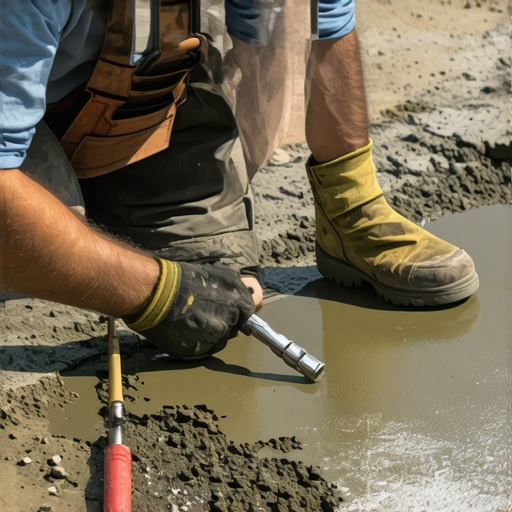
The Forensic Reality of the Hairline Fracture
I was standing on a suspended scaffold twelve stories up, looking at what the building manager described as a minor aesthetic issue. The homeowner—or in this case, the commercial property board—thought it was just a hairline crack. But when I put my scope inside that fissure during a commercial parapet wall repair inspection, the reality was grim. The internal structural brick ties replacement had been neglected for decades, and the structural steel was rusted to dust, expanding with a force that no amount of cosmetic ‘mud’ could contain. This is the world of forensic masonry: where what you see on the surface is rarely the truth of what’s happening in the substrate.
“Water penetration is the single greatest threat to masonry durability, leading to the corrosion of concealed steel and the eventual failure of the bond between repair materials and the original substrate.” – BIA Technical Note 7
The Physics of the Failure: Why Patches Pop
In our northern climate, we are fighting a constant war against the freeze-thaw cycle. When you perform a foundation crack repair or a stone coping installation, you aren’t just filling a hole; you are attempting to weld two different geological eras together. Water is a relentless wedge. When it finds its way behind a patch and freezes, it expands by approximately 9% in volume. If your repair material is a hard, impermeable Portland-based mix slapped over a softer, historic substrate, that expansion has nowhere to go. It will pop the face of your repair off, often taking a chunk of the original brick with it. This is why historic tuckpointing requires a deep understanding of the ‘sacrificial principle’—the mortar must be softer than the brick to allow for moisture migration and thermal movement.
The Crack Whisperer: Diagnosing the Movement
To understand if a patch will hold, you have to diagnose why the crack appeared in the first place. A stair-step crack in the mortar joints usually signals settlement or shifting in the footing. A horizontal crack, however, often points to hydrostatic pressure or, in the case of commercial smokestack repair, massive thermal expansion. If you don’t address the underlying movement, your patch is nothing more than a Band-Aid on a broken leg. When we look at brick veneer detachment repair, we often find that the original installers didn’t leave enough room for the brick to grow. Yes, brick grows as it absorbs moisture over decades, while the wooden frame of a house shrinks. Without proper expansion joints, the tension builds until the ‘tooth’ of the mortar shears off the ties.
The Chemistry of the ‘Tooth’: Surface Prep and Bonding Agents
The secret to a permanent bond isn’t in the bag of mix; it’s in the preparation of the ‘host.’ In my forty years of masonry repair services, I’ve seen thousands of patches fail because the installer didn’t understand the ‘suction’ of the stone. If you apply dry ‘mud’ to a dry, dusty surface, the host material will suck the moisture out of the repair mix before it has a chance to hydrate. This creates a cold joint—a literal wall of dust between the old and the new. To get a real bond, you need to ‘scabble’ the surface to create a mechanical profile. You want it looking like a mountain range under a microscope. Then, you ‘butter’ the surface with a slurry or a bonding agent that meets ASTM C1059 standards.
“Bonding agents used in exterior masonry repair must be non-re-emulsifiable to prevent the softening of the interface when exposed to subsequent moisture cycles.” – ASTM C1059/C1059M
Micro-Zooming: The Hydration Process
When we talk about tuck pointing services or facade cleaning prior to repair, we are managing the chemistry of hydration. Portland cement doesn’t ‘dry’; it cures through a chemical reaction that creates interlocking crystals. If you’re working in the heat and the mortar ‘flashes’—drying out too fast—those crystals never form. You’re left with a brittle, sandy mess that has no structural integrity. On a commercial parapet wall repair, where wind speeds and sun exposure are doubled, we often have to ‘tent’ the work area to keep the humidity high. We want that hydration to happen slowly, allowing the ‘honeycombing’ effect of the cement paste to weave itself into the pores of the original masonry.
Testing the Integrity: The Sound of Success
How do you know if it held? I don’t trust my eyes; I trust my ears. I take a small masonry hammer and lightly tap the cured patch. If it ‘rings’ with a high-pitched, solid thud, the bond is monolithic. If it sounds ‘hollow’ or ‘clack-y,’ you have delamination. It’s a cold joint. In the world of high-stakes commercial smokestack repair, we might even perform a pull-off test, epoxying a puck to the surface and using a hydraulic ram to see exactly how many PSI it takes to rip that patch off. If the brick breaks before the bond does, I’ve done my job. If the patch pops off clean, the contractor didn’t prep the surface properly.
When to Panic: Recognizing Structural Crisis
Not every crack is a DIY project. If you see a crack that is wider at the top than the bottom, your foundation is rotating. If you see ‘soldier course’ bricks (bricks standing vertically) leaning outward, your structural brick ties replacement is now an emergency. Don’t let a ‘handyman’ with a tube of caulk tell you it’s fine. Caulk traps water. Trapped water destroys buildings. You need a professional who understands the difference between a cosmetic facade cleaning and a structural restoration. Do it once, do it right, or you’ll be paying me to tear it all out and start over in three years.