
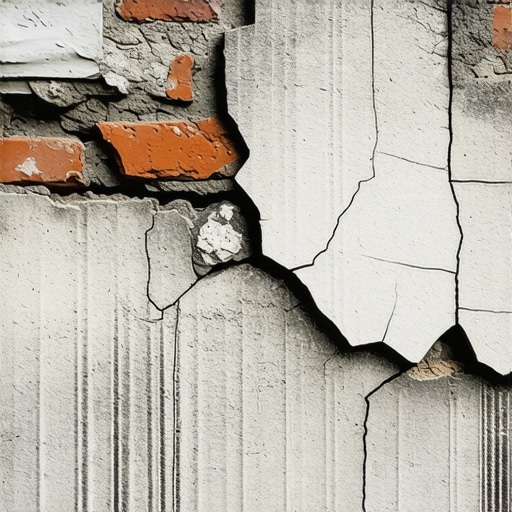
The Deception of the Hairline Fracture
The homeowner pointed to a thin, vertical line tracing the mortar joint of a brick quoin and called it a ‘settlement crack.’ They wanted a quick patch, a smear of fresh mud to hide the blemish before the house went on the market. But when I slid my fiber-optic scope into a weep hole near the base of that brick quoin repair, the reality was grim. Behind that face brick, the steel lintels and wall ties weren’t just oxidized—they were gone, reduced to a pile of orange dust. This wasn’t a settlement issue; it was a total failure of the building’s moisture management system. This is the reality of many masonry repair services quotes you receive today: they address the symptom while the skeleton of the building rots in silence.
The Physics of the ‘Sacrificial’ Mortar
To understand why a cheap quote is often a death sentence for your masonry, you have to understand the chemistry of the wall. In pre-war masonry, the mortar was never meant to be a permanent, impenetrable stone. It was designed to be sacrificial. The mortar must be softer and more permeable than the unit it surrounds. When you see brick arch restoration performed with modern Portland cement on 19th-century clay bricks, you are witnessing a slow-motion car crash. Portland cement is too hard; it lacks the ‘autogenous healing’ properties of lime. When the wall shifts, the hard cement doesn’t yield—it forces the brick to snap. This is how you end up needing brick spalling prevention. The face of the brick literally pops off because the moisture trapped inside has nowhere to go but out the front, taking the clay with it.
“Water penetration is the single greatest threat to masonry durability. Proper drainage and moisture control are essential to prevent the deterioration of masonry units and mortar joints.” – BIA Technical Note 7
The Freeze-Thaw Nightmare: Why Weatherproofing Fails
In our climate, the enemy is the 9%. That is the exact volume increase of water when it transitions from liquid to ice. If your tuckpointing weatherproofing doesn’t account for vapor permeability, you are essentially gift-wrapping your home in plastic. When moisture gets behind a non-breathable sealant, it saturates the core of the masonry. When the first deep freeze hits, that water expands with thousands of pounds of pressure per square inch. This is the primary driver of tuck pointing services being required prematurely. If your contractor isn’t talking about the ‘perm rating’ of the material they are applying, they aren’t weatherproofing; they’re creating a pressure cooker. This is especially critical in commercial smokestack repair, where the thermal gradients are extreme and the moisture drive is constant.
The Hidden Cost of Retaining Wall Failures
I recently inspected a series of modular retaining walls that were leaning like the Tower of Pisa. The quote the owner had accepted for ‘repair’ involved just pushing the blocks back and adding more retaining wall capstone replacement for ‘aesthetic weight.’ It’s a joke. A retaining wall is a dam that holds back earth instead of water. The failure almost always lies in the hydrostatic pressure building up behind the wall because of a clogged or nonexistent drainage tile. Without a 12-inch chimney of clean gravel and a 4-inch perforated pipe, no amount of capstone is going to hold back the weight of saturated soil. You do it once with the right geotechnical base, or you do it twice with a cheap contractor who will be out of business by the time the wall bows again.
“Mortar shall be specified by either proportion or property specifications. The selection should be based on the compressive strength and bond strength required for the specific masonry assembly.” – ASTM C270 Standard Specification
BIM and the Future of Forensic Masonry
We are moving away from the era of ‘guess and check.’ In complex BIM masonry projects, we now use digital modeling to predict how moisture and thermal loads will interact with a building’s envelope. This isn’t just for skyscrapers; it informs how we approach brick arch restoration on residential landmarks. We look at the ‘tooth’ of the substrate and the suction of the existing brick to ensure the new mortar bond is chemical, not just mechanical. If you are hiring a mason and they aren’t talking about the ‘suction rate’ of your bricks or the moisture content of the substrate, they are just buttering bread, not building a legacy. Real masonry requires an understanding of the hydration process—how the tricalcium silicate in the cement reacts with water to form a crystalline structure that locks into the pores of the brick. If it dries too fast, it ‘burns,’ leaving you with a brittle, sandy mess that will wash out in five years.
When to Walk Away from a Quote
If a quote for masonry repair services is significantly lower than the others, look at the equipment list. Are they using a ‘slicker’ to pack the joints tight, or are they just ‘shining’ the surface with a wet brush? Are they grinding out the old joints to a full depth of 3/4 inch, or are they ‘over-pointing’—smearing a thin layer of new mud over the old, failing mortar? Over-pointing is the hallmark of the ‘lick-and-stick’ artist. It looks great for a month, but because it has no depth, it has no mechanical bond. Within one season of thermal expansion, it will flake off like old paint. Demand to see the ‘hawk’ and the ‘slicker.’ Demand to know the mortar type. If they can’t tell you why they’re using Type O instead of Type S, show them the door. Your home’s structural integrity is worth more than a ‘handyman special.’