
The Forensic Scene: Behind the Hairline Fracture
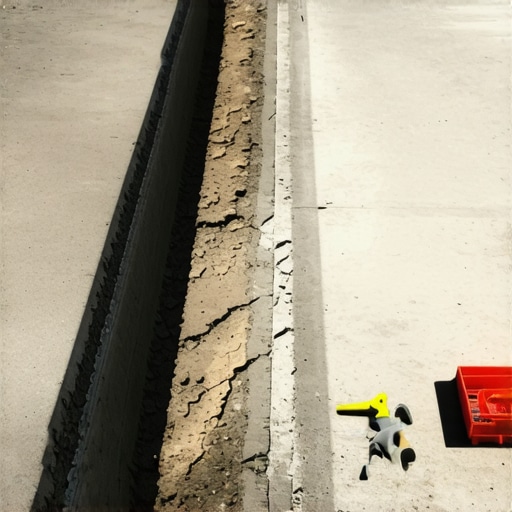
The homeowner thought it was just a hairline crack along the edge of the terrace. They called me in because the ‘quick fix’ they’d applied the previous summer—a high-end self-leveling compound—was peeling off in sheets like a bad sunburn. But when I put my scope into the void behind the facade, the reality was much grimmer. I saw the structural steel was rusted to dust, oxidized by months of trapped moisture that the leveler had funneled directly into the core of the masonry. This wasn’t just a cosmetic failure; it was a slow-motion structural execution. The contractor had tried to fight physics with a liquid, and on a seven-degree exterior slope, gravity never loses that fight. They had ignored the fundamental laws of thixotropy and hydrostatic pressure, thinking a bag of polymer-modified ‘magic’ could replace the patient art of foundation crack repair and proper drainage.
The Physics of the Flow: Why ‘Level’ is the Enemy of ‘Sloped’
Self-leveling compounds are engineered for one specific purpose: to reach a state of equilibrium under the influence of gravity on a horizontal plane. They are designed with a low yield stress, meaning they flow easily until they find ‘level.’ When you introduce these materials to a steep exterior slope, you aren’t just asking them to bond; you are asking them to defy their own molecular programming. On a slope, the material doesn’t sit; it migrates. It thins out at the high point and pools at the low point, creating a wedge-shaped layer that is structurally inconsistent. This migration creates honeycombing—voids in the material where the aggregate has separated from the cementitious paste. When you’re dealing with cracked brick wall repair or trying to stabilize a leaning structure, these voids become reservoirs for the freeze-thaw cycle.
“Water penetration is the single greatest threat to masonry durability, particularly when materials of varying densities and porosities are layered inappropriately.” – BIA Technical Note 7
In the North, where the freeze-thaw cycle is a relentless hammer, that 9% expansion of freezing water trapped behind a thin, brittle layer of self-leveler will pop the face right off your brickwork. I’ve seen brick column repair jobs where the ‘slicker’ was used to try and hide the transition, only to have the entire soldier course heave outward because the moisture had nowhere to go. On a slope, you don’t need leveling; you need contouring. You need a material with high green strength—the ability to stay where it’s ‘buttered’—rather than something that wants to run for the gutters.
The Chemical Mismatch: Modern Polymers vs. Historic Substrates
A major issue with these ‘lick-and-stick’ solutions on slopes is the bond-breaker effect. Most self-levelers are packed with polymers to increase flexibility, but these polymers often create a vapor-impermeable skin. If you are working with historic brick salvage or older clay units, these materials need to breathe. The ‘tooth’ of an old brick is porous; it sucks the moisture out of the ‘mud’ to create a mechanical bond. When you slap a synthetic leveler over it, you’re essentially putting a plastic bag over a living lung. The moisture rising from the earth via capillary action hits that polymer barrier and stops. It then rots the brick from the inside out. This is why sustainable masonry materials, such as lime-based mortars, are making a comeback. They allow for vapor exchange, ensuring that the substrate stays dry even if the exterior gets lashed by a Nor’easter.
Foundation Helical Pier Installation: The Only Real Cure for Slope Failure
When a slope is steep enough to cause significant masonry separation, no amount of ‘mud’ or leveler will save it. This is a geotechnical failure, not a cosmetic one. I often see homeowners try to patch a retaining wall that is clearly rotating. If the wall is leaning, you’re looking at retaining wall block replacement at a minimum, but more likely, you need foundation helical pier installation. These piers are screwed deep into the load-bearing strata of the soil, providing a literal anchor that prevents the entire slope from sliding. Once the structure is stabilized with piers, you can then move to tuckpointing curved walls or repairing the facade. Trying to ‘level’ a wall that is still moving is like trying to paint a moving train; you’re wasting time and money.
The Art of the ‘Butter’ and the ‘Slicker’
Proper repair on a slope requires a stiff mix—what we call ‘dry pack’ or ‘stiff mud.’ You want the consistency of peanut butter, not soup. When tuckpointing curved walls on a hillside terrace, you have to hand-tool every joint. You ‘butter’ the back of the replacement unit, press it into place, and use a ‘slicker’ or jointer tool to strike the joint so it sheds water downward. This is the opposite of self-leveling. It is deliberate, manual water management.
“The use of high-strength mortars on soft, historic masonry units leads to irreversible damage of the brick units due to differential thermal expansion.” – ASTM C270 Standards
This ASTM warning is doubly true on slopes. The thermal expansion on a south-facing sloped wall is intense. The sun hits the masonry at a more direct angle, causing the units to expand. If you’ve used a rigid, non-breathable leveler, the brick will crush itself against the patch, leading to ‘spalling’ where the face of the brick simply falls off, leaving a soft, orange mess behind.
Strategic Drainage and Modular Masonry Construction
Modern modular masonry construction often tries to bypass these issues with weep holes and rain screens, but on a steep slope, these systems must be oversized. Hydrostatic pressure—the weight of water sitting in the soil behind a wall—is the primary cause of foundation crack repair calls. If you use a self-leveler to ‘seal’ the surface, you are often sealing the very exit points the water needs. Instead of a leveler, a professional would look at brickwork sealants application using silane-siloxane breathables. These aren’t films; they are penetrating treatments that change the surface tension of the masonry so water beads off, but vapor can still escape from the inside. This is how you protect a cracked brick wall repair for the long haul.
The Bottom Line: Do It Once or Do It Twice
The cynical part of me loves self-leveling compounds because they guarantee I’ll have work in three years when the whole mess fails. But the craftsman in me hates seeing good historic brick salvage destroyed by laziness. If you have a steep slope, forget the ‘magic’ bag. Look at the soil, look at the drainage, and use materials that respect the physics of the site. Whether it’s retaining wall block replacement or a complex foundation crack repair, the goal is to work with gravity, not against it. Stop looking for a level surface where one isn’t meant to be, and start focusing on a durable one. Mastery isn’t about finding the easiest way to finish a job; it’s about finding the way that ensures you never have to come back. Every time I see a ‘cold joint’ where a leveler met a traditional mortar, I see a future crack. Avoid the shortcut, buy the right mud, and remember: the trowel is mightier than the pour-can.