
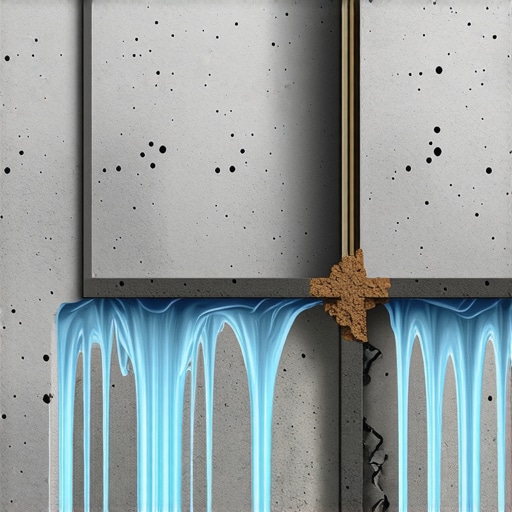
The Whispering Wall: A Forensic Account of Foundation Failure
The homeowner thought it was just a hairline crack, a silver thread running horizontally along the third course of his basement wall. But when I put my scope inside that void, I didn’t see solid concrete; I saw the structural steel was rusted to dust, flakes of oxidized iron piling up like dead leaves in the hollow core of the blocks. The wall wasn’t just cracked; it was breathing, bowing under the invisible weight of a saturated soil mass that had nowhere else to go. This wasn’t a job for a bucket of waterproof paint from a big-box store. This was a forensic intervention into the very physics of moisture migration.
The Anatomy of a Sponge: Why Concrete Blocks Fail
To understand why your basement feels like a cavern, you have to look at the ‘tooth’ of the Concrete Masonry Unit (CMU). A standard 8x8x16 block isn’t a solid barrier; it’s a porous network of aggregate and portland cement. Through a process called capillary suction, these blocks act like a wick, pulling water from the damp earth and transporting it to the interior face. When we talk about masonry water damage repair, we aren’t just looking at the surface; we’re looking at the hydrostatic pressure—the sheer weight of water—pressing against the exterior. In northern climates, this is exacerbated by the freeze-thaw cycle. When water gets trapped in those pores and freezes, it expands by roughly 9%, creating internal micro-fractures. Eventually, the face of the block pops off—a condition we call spalling. If you see spalled concrete steps repair needs nearby, it’s a telltale sign that your foundation is next.
“Water penetration is the single greatest threat to masonry durability. The primary defense against water penetration is the combination of proper design, quality materials, and superior workmanship.” – BIA Technical Note 7
The Physics of Seepage and the Soil-Structure Interface
The problem often starts with the ‘batter’ or the angle of the earth. When I perform a retaining wall batter correction, I’m looking at how the lateral earth pressure interacts with the masonry. If your foundation wall is acting as a retaining wall without proper drainage, it’s going to fail. In the trade, we talk about the ‘mud’—the mortar—and its suction. If the mortar was too dry when it was ‘buttered’ onto the blocks, it never formed a proper bond, creating a ‘cold joint’ where water can bypass the barrier entirely. Masonry waterproofing solutions must address the root cause: the lack of a functional drainage plane. We are now using digital twin masonry projects to model these pressure points before we even pick up a slicker. By creating a 3D digital replica of the structure, we can simulate how a 100-year rain event will impact the hydrostatic load on a specific wall section.
Restoration vs. The Band-Aid
Many ‘handyman specials’ involve slapping a layer of crystalline waterproof coating on the inside. That’s a death sentence for the block. It traps the water inside the masonry, leading to internal honeycombing where the cement paste dissolves, leaving only loose aggregate. The real fix involves managing the water before it hits the block. This might mean retaining wall capstone replacement to redirect surface runoff or a full-scale excavation to apply a fluid-applied membrane and a dimple board. When we are filling those hollow cores to regain structural integrity, we use concrete pump masonry mixes specifically engineered for high flow and low shrinkage. We don’t just dump ‘mud’ down the holes; we ensure the grout reaches every corner to encapsulate the new rebar.
“Load-bearing concrete masonry units shall be manufactured from portland cement, water, and mineral aggregates… and must meet minimum compressive strength requirements to resist lateral loads.” – ASTM C90 Standard Specification
Beyond the Foundation: The Holistic Masonry System
Water doesn’t just come from the ground. I’ve seen foundations saturated because of a failure 30 feet up. Chimney leak detection is a critical part of a forensic foundation audit. A cracked crown or a rusted chimney damper repair issue can allow gallons of water to pour down the internal flue or the wall cavity, manifesting as a wet spot in the basement. Similarly, a commercial parapet wall repair at the roofline can be the culprit for moisture migrating down through the building’s ‘veins.’ We look for the soldier course—those bricks stood on end—which often lack proper flashing and act as a funnel for rainwater. When we repair these, we use a hawk and trowel to ensure every joint is ‘struck’ perfectly, creating a weather-shingled profile that sheds water away from the core.
The Forensic Verdict: Do It Once, or Do It Twice
If you see white, fuzzy powder on your walls, that’s efflorescence—the salt left behind after water evaporates. It’s the wall’s way of crying for help. To stop the seepage, you must respect the chemistry of the material. You can’t use a hard, modern cement to patch an old, soft lime-based block. The patch must be ‘sacrificial’—softer than the host material—so it doesn’t cause further cracking. Whether you’re looking at a retaining wall capstone replacement or a deep-foundation injection, the goal is the same: redirect the energy. Water is an undefeated champion; you don’t beat it, you just convince it to go somewhere else. Skip the ‘lick-and-stick’ solutions and invest in the science of the stone.