
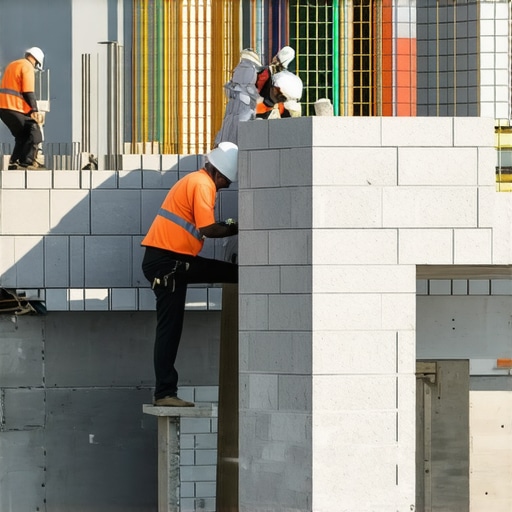
The Engineering of Efficiency: Why Interlocking Masonry is Winning the Ground War
I stood looking at a $50,000 retaining wall that lay in a pile of rubble because the contractor forgot one thing: drainage. It was a modular system, the kind designed for speed, yet it failed because the installer treated it like a stack of Legos rather than a structural engineering challenge. The soil behind that wall had saturated during a spring thaw, and the resulting hydrostatic pressure turned the backfill into a liquid battering ram. As a third-generation mason, I have seen more ‘speed-built’ failures than I care to count. But when done right, modular masonry interlocking systems aren’t just a shortcut; they are a superior way to manage the brutal physics of the earth. Today, we are looking at the ‘tooth’ of the modern modular unit and how it interfaces with the raw reality of the freeze-thaw cycle.
“Water penetration is the single greatest threat to masonry durability, regardless of the assembly type or age.” – BIA Technical Note 7
The Physics of the Interlock: Beyond the Mud
In the old days, we relied on ‘mud’—the mortar—to do two things: level the course and bond the units. In traditional historic brickwork repointing, the mortar is the sacrificial lamb, softer than the brick so it absorbs the stress of movement. Modular interlocking systems flip this script. These units are engineered with a mechanical key—a tongue-and-groove or a pin system—that relies on gravity and interfacial friction. When you are buttering a joint in a traditional soldier course, you are creating a chemical bond. In modular systems, you are creating a structural lock. The ‘tooth’ of a high-quality modular block is designed to resist lateral earth pressure. We often use advanced masonry adhesives to supplement this mechanical lock, especially on the capstones or the top soldier course of a wall where gravity doesn’t provide enough downward force. This adhesive isn’t just glue; it is a high-solids polyurethane that remains flexible, allowing the wall to ‘breathe’ and shift without the brick veneer detachment repair nightmares we see in rigid systems.
The Geotechnical Reality: Why Your Base is Your Fate
Whether you are performing concrete flatwork services or stacking modular units, the soil is your boss. In the North, the freeze-thaw cycle is a relentless beast. Water expands by 9% when it turns to ice. If your modular system is backed by clay instead of 3/4-inch clean crushed stone, that expansion will push your wall out of plumb until it’s a ‘wavy’ mess. Freeze-thaw damage restoration often starts with digging out the sins of the previous contractor. You need a drainage chimney behind every modular wall. This isn’t optional. Without it, the water gets trapped, the pressure builds, and the interlocking pins will eventually shear. I have seen 12-inch thick modular blocks snapped like crackers because the brickwork sealants application on the front face prevented the wall from draining, while the back was being hammered by ice lenses. True brick wall restoration in a modern context requires understanding that a wall is a filter, not a dam.
“The design and construction of masonry structures shall provide for the control of moisture and the thermal expansion of materials.” – ASTM C1314 Standard
Micro-Zooming into the Chemistry: Advanced Adhesives and Sealants
When we talk about brick veneer detachment repair or securing a modular façade, we have to look at the molecular level. Modern masonry adhesives are designed to create a covalent bond with the concrete aggregate. Unlike the ‘lick-and-stick’ mortars of the 90s, these adhesives don’t ‘burn’ or flash-set in the sun. They require a specific moisture content in the block—what we call the ‘suction.’ If the block is too dry, it sucks the life out of the adhesive; too wet, and it won’t grab. For patio stone realignment, we use these adhesives to lock the perimeter units, creating a rigid frame for a flexible system. Then we look at brickwork sealants application. A common mistake is using a non-breathable film-forming sealer. This is masonry suicide. It traps vapor behind the surface. When the temperature drops, that vapor freezes and causes spalling—where the face of the stone literally pops off. You need a silane-siloxane penetrating sealer that allows vapor transmission while repelling liquid water. It’s the difference between wearing a raincoat and wearing a plastic bag.
The Forensic Scene: Repairing the ‘Handyman Special’
I recently inspected a chimney that needed a chimney heat shield installation. The homeowner had tried to save a few bucks by having a generalist do some historic pointing styles on the exterior. They used Type S Portland cement on 19th-century soft-fired clay bricks. The result was a disaster. The hard cement didn’t budge, so the bricks had to. Every single brick had a vertical crack through the center. This is why historic brickwork repointing is a specialty. You have to match the compressive strength of the mortar to the brick. In modular systems, we face the same issue with patio stone realignment. If the base wasn’t compacted in 2-inch ‘lifts’ with a plate compactor, the pavers will eventually dive. You’ll see honeycombing in the sub-base, and eventually, the whole ‘interlocking’ system becomes a trip hazard. Speed shouldn’t mean skipping the slicker or the compactor. You do it once, or you do it twice—and the second time always costs three times as much because you’re paying for the demolition of the first mistake.
Conclusion: The Master’s Final Word on Modular Systems
Modular masonry interlocking systems are the future of the trade, but they require more brains than brawn. You have to respect the concrete flatwork services that go into the footer. You have to understand the chemistry of advanced masonry adhesives. And you must never, ever underestimate the power of moving water. Whether you are doing brick veneer detachment repair or a full-scale commercial build, remember that the ‘tooth’ of your stone is only as good as the ground it stands on. Don’t be the guy whose wall I’m inspecting for a forensic report in five years. Build it for the next hundred years, not just until the check clears.