Is Your Brick Wall Cracking? 4 Pro Fixes to Use in 2026
Is Your Brick Wall Cracking? 4 Pro Fixes to Use in 2026
The homeowner called me out because of what she described as a hairline fracture near the corner of her 1920s bungalow. She thought a bit of caulk would hide the shame. But when I slid my fiber-optic scope into the void behind the soldier course, the truth was uglier than a wet bag of slag. The structural steel lintel had rusted to a point of total exfoliation, expanding to three times its original thickness and jack-hammering the masonry from the inside out. This wasn’t a cosmetic flaw; it was a slow-motion explosion. Most modern ‘masons’ would have just buttered over the gap with some hard Portland mud and cashed the check, but that’s how you kill a building. By 2026, we are seeing the cumulative failure of these quick-fix patches, and it’s time to look at the forensic reality of why your walls are splitting at the seams.
1. Structural Repointing: More Than Just Cosmetic Mud
When we talk about structural repointing, we aren’t just talking about making the wall look pretty for the neighbors. We are talking about the sacrificial nature of mortar. In the old world, the mortar was designed to be softer than the brick. Why? Because you want the moisture to evaporate through the joints, not the faces. If you use a modern Type S mortar—which is harder than the back of a shovel—on soft, kiln-fired antique bricks, the brick becomes the weakest link. During the freeze-thaw cycles we’re seeing more of lately, the trapped water expands by 9%, and because the hard mortar won’t budge, the face of your brick pops off. That’s spalling, and it’s a death sentence for your facade.
“Water penetration is the single greatest threat to masonry durability. Proper mortar selection and joint preparation are the primary defenses against moisture-related structural decay.” – BIA Technical Note 7
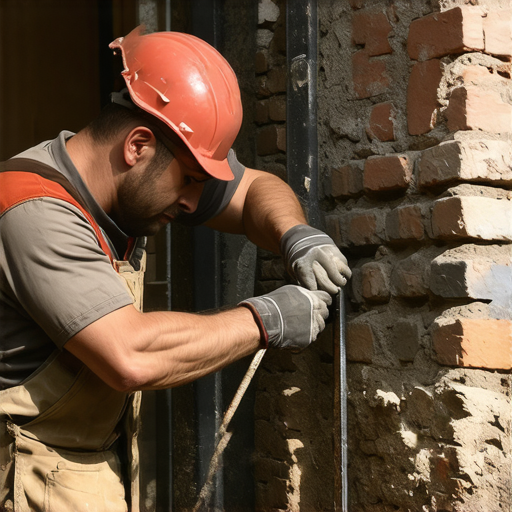
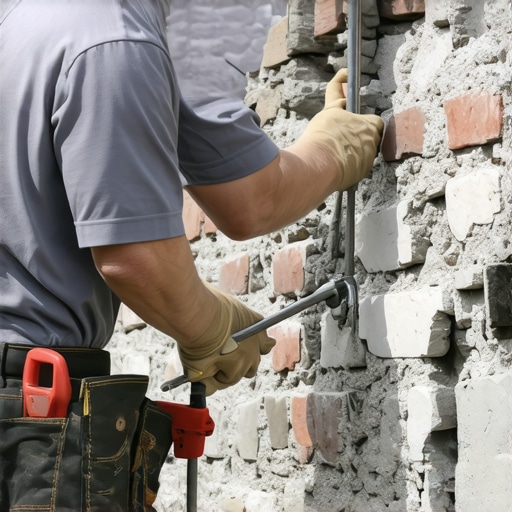
For a true structural repointing service in 2026, we use a hawk and a slicker to drive the mud deep into the bed joints, sometimes up to two inches deep. We don’t just smear it on. We look for the ‘suction’—that moment the dry brick pulls the moisture from the mortar, creating a mechanical bond that locks the units together. This isn’t a job for a handyman with a bag of premix; it requires an understanding of the carbonation process where lime mortar slowly absorbs CO2 to turn back into stone over decades.
2. Retaining Wall Weep Hole Cleaning and Hydrostatic Relief
I’ve seen $100,000 retaining walls tilt five degrees in a single season because the weep holes were plugged with silt and spider webs. Physics doesn’t care about your budget. Hydrostatic pressure is the weight of the water trapped in the soil behind the wall. When that soil saturates, the pressure increases exponentially. If your retaining wall weep hole cleaning isn’t part of your annual maintenance, you’re basically building a dam that isn’t designed to hold water. We use high-pressure air and specialized snakes to clear these arteries. Without them, the wall develops horizontal cracks—a clear sign of structural bowing. You’ll see honeycombing at the base where the fines in the concrete have washed out, leaving a porous, crumbling mess that’s ripe for a total collapse. In 2026, climate shifts mean heavier, more concentrated rainfall; your drainage needs to be surgical.
3. Chimney Interior Parging and Crown Repair
The chimney is the most abused part of any structure. It’s attacked by acidic flue gases from the inside and sleet from the outside. I’ve performed countless chimney leak detection jobs where the owner was convinced the roof was leaking. Nope. It was the chimney crown—the concrete cap at the top. Most ‘pros’ just pour a thin layer of mortar up there that cracks within a year. A real chimney crown repair involves a reinforced, overhanging slab that sheds water away from the masonry. If the interior of your flue looks like a cavern, you need chimney interior parging. We apply a smooth coat of refractory mortar to the smoke chamber to improve draft and seal up cracks that could otherwise lead to a house fire. It’s about thermal dynamics; you want the heat to go up, not sideways into your floor joists.
“Mortar for unit masonry must be selected based on the physical properties of the masonry units and the environmental exposure conditions to ensure long-term performance.” – ASTM C270 Standard
4. The Art of Masonry Joint Sand Repair and Water Features
Even your patio isn’t safe from the physics of the earth. People see a wavy driveway and think ‘bad pavers.’ No, it’s a bad base and failed masonry joint sand repair. The sand between pavers isn’t just there to look nice; it provides inter-lock through friction. When that sand washes out, the pavers shift, creating ‘cold joints’ where the structure is no longer unified. This is especially critical in outdoor masonry fountain restoration. Fountains are constant-moisture environments. You have to use specialized hydraulic cements and mineral-based sealers that allow the stone to breathe while keeping the water in the basin. If you trap moisture inside a stone fountain with a cheap silicone sealer, the stone will literally rot from the inside out through a process called subflorescence—where salt crystals grow inside the pores and shatter the mineral structure.
In 2026, the ‘pro fix’ isn’t a bucket of epoxy. It’s a return to forensic fundamentals. Whether it’s commercial smokestack repair using high-heat specialty mortars or a simple full repointing services job on a residential gable, the goal is the same: manage the water, respect the chemistry of the material, and never trust a man who doesn’t know the difference between lime and Portland. If you see a stair-step crack, don’t wait. The earth is always moving, and your mortar is the only thing standing between a stable home and a pile of expensive rubble.