5 Robotic Masonry Repair Mistakes Homeowners Make in 2026
The Ghost in the Machine: Why 2026’s Tech Can’t Replace a Mason’s Eye
My Uncle Silas didn’t own a laser level, and he certainly didn’t own a drone. What he had was a 1954 Marshalltown slicker and a thumb that could measure the suction of a clay brick better than any hygrometer on the market today. I remember him standing over a half-built wall, his eyes narrowing as he ran a rough finger over the tooth of the stone. He’d say, ‘The mud talks to you, boy. If you aren’t listening, the wall is going to scream later.’ He was right. By the time a wall screams, it’s usually in the form of a ten-ton collapse. Today, in 2026, I see homeowners buying consumer-grade robotic masonry kits at big-box stores, thinking that because a machine is laying the mud, the physics of the earth has somehow been suspended. It hasn’t. Whether you are using a self-leveling masonry lift or a rusted shovel, the rules of moisture and movement remain the same.
“Mortar should always be weaker than the masonry units it binds, acting as a sacrificial element that allows for moisture movement and thermal expansion without fracturing the stone itself.” — ASTM C270 Standard Specification
1. The Fatal Reliance on Self-Leveling Masonry Lifts
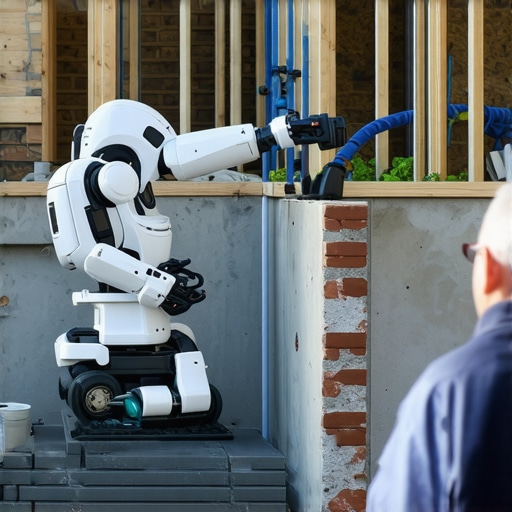
The biggest mistake I see in this new era is the blind trust in self-leveling masonry lifts. Homeowners believe these hydraulic assist systems automatically account for substrate settlement. They don’t. You can have a robot that places a brick with sub-millimeter precision, but if that robot is sitting on a foot of uncompacted silt or clay that hasn’t seen a plate compactor in its life, that wall is doomed. The physics of hydrostatic pressure doesn’t care about your software. When the soil heaves during the first deep freeze—because water expands by 9% when it turns to ice—it will lift that perfectly level wall and snap it like a dry twig. I’ve performed professional masonry restoration on walls that were ‘perfectly’ built by machines, only to find they lacked the control joints necessary for the soil’s specific geotechnical profile. A machine sees a line; a mason sees the way the land breathes.
2. The ‘Lick-and-Stick’ Stone Veneer Repair Trap
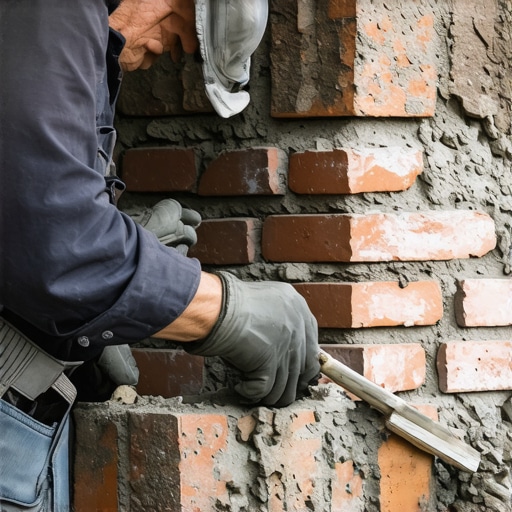
We are seeing an epidemic of failing stone veneer repair jobs. In 2026, people are using ‘smart’ adhesives that promise a permanent bond. The problem is that these adhesives often create a vapor barrier where there shouldn’t be one. When you butter a stone with a high-polymer modified mortar and slap it against a wall without a proper drainage plane, you are creating a moisture sandwich. In our Northern climate, that trapped water enters a relentless freeze-thaw cycle. The moisture gets behind the veneer, freezes, and pops the stone clean off, often taking the wire lath and the house wrap with it. Forensic inspection reveals honeycombing in the mortar bed where the robot failed to achieve 100% coverage, leaving tiny pockets for water to pool. If you don’t have a weep screed at the bottom of that wall, you aren’t building a home; you’re building a vertical pond.
3. The Illusion of Drone Chimney Inspections
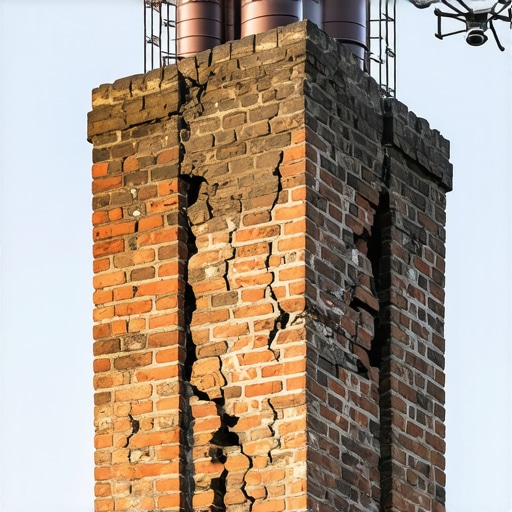
I get calls every week from folks who had a drone chimney inspection and were told everything was ‘fine’ because the high-res photos showed no cracks. A drone can’t feel the suction. It can’t take a masonry hammer and tap the soldier course to hear that hollow ‘thud’ that indicates the flue liner has detached from the masonry shell. A 4K camera won’t tell you that the tuckpointing weatherproofing applied five years ago was actually a silicone-based sealer that has caused the brick to spall from the inside out. When we do chimney repair services, we aren’t just looking for cracks; we are looking for the chemical breakdown of the brick’s face. If the drone doesn’t see the white powder of efflorescence, it misses the primary symptom of salt migration and internal moisture distress.
“Water penetration is the single greatest threat to masonry durability, and its management is the primary goal of all flashing and drainage systems.” — BIA Technical Note 7
4. Mortarless Masonry Systems and the Thermal Shock Error
2026 has seen a surge in mortarless masonry systems. These are the ‘LEGOs for adults’ of the construction world. While they are great for speed, they are terrible for thermal management if the homeowner ignores the expansion coefficients. Masonry is a thermal mass; it grows in the sun and shrinks in the cold. Without the ‘give’ of a traditional Type N or Type O mortar, these interlocking systems can lock up. When the temperature swings sixty degrees in twelve hours, the internal stress has nowhere to go. I’ve walked onto sites where the outdoor masonry fountain restoration was done with these systems, and the entire structure had sheared at the base because the homeowner didn’t account for the ‘flash setting’ of the base material. You need a hawk and a trowel in the hands of someone who knows how to mix a batch of mud that can move.
5. Neglecting Retaining Wall Weep Hole Cleaning
Even the most advanced concrete patch or self-leveling lift won’t save a retaining wall if the weep holes are clogged. I see ‘smart’ homes where the sensors detect a tilt in the wall, but by then, it’s too late. The homeowner has spent thousands on aesthetic professional masonry restoration but hasn’t spent ten minutes on retaining wall weep hole cleaning. Behind that wall is a massive buildup of hydrostatic pressure. Thousands of pounds of water-saturated soil are pushing against that masonry. If the water can’t get out, the wall will bow. I’ve seen soldier courses pushed out six inches past the foundation line because a bit of debris and calcification blocked the drainage. It’s not high-tech, and it’s not sexy, but a clear weep hole is the difference between a wall that lasts a century and one that ends up as a pile of expensive rubble in your neighbor’s yard.
The Forensic Reality: Why Humans Still Matter
When I’m called in for a forensic structural inspection, I’m not just looking at what’s there; I’m looking at what’s missing. I’m looking for the cold joint where a robot was paused for a battery swap and the mortar began to ‘skin over,’ preventing a chemical bond with the next course. I’m looking for the honeycombing in a concrete patch that was applied too thick in a single lift. Masonry isn’t just about stacking units; it’s about managing the invisible forces of chemistry and physics. The hydration process of Portland cement is a complex dance of calcium silicate hydrate crystals interlocking. If you don’t understand the rate of that hydration, you’re just playing with expensive mud. Whether you’re doing an outdoor masonry fountain restoration or a full chimney rebuild, remember: the machine is a tool, but the mason is the mind. Don’t let 2026’s gadgets blind you to the ancient truths of stone and lime.