Is Stone Veneer Over Brick Peeling? 4 Proven 2026 Fixes
The Forensic Scene: When Luxury Peels Like an Orange
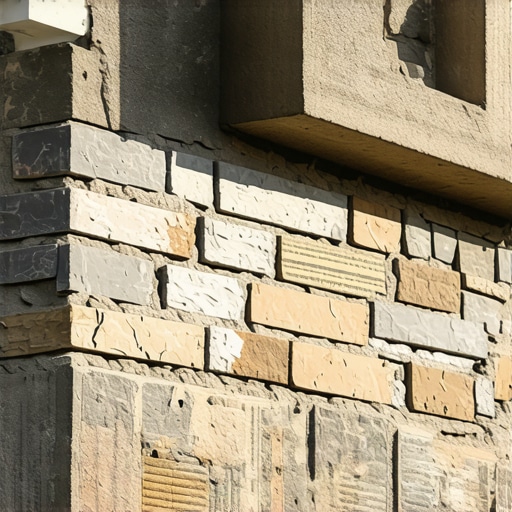
The homeowner thought it was just a hairline crack, a minor cosmetic grievance on a million-dollar facade. But when I slid my 4mm fiber-optic scope into the gap behind that expensive ‘dry-stack’ stone veneer, I didn’t see a solid structural bond. I saw a graveyard of masonry. The original 1920s brick substrate was no longer a wall; it was a slurry of wet, orange silt. The ‘lick-and-stick’ stone had created a vapor-tight tomb, trapping decades of moisture and forcing the historic brick to undergo subflorescence—a process where salt crystals grow inside the pores of the brick, literally exploding it from the inside out. This is the reality of modern veneer failures: it is rarely a stone problem, and almost always a chemistry problem.
The Physics of the Failure: Why 2026 Standards Demand Better
To understand why your stone veneer is peeling, we have to look at the ‘tooth’ of the substrate. Old-world brick wall restoration requires a deep understanding of suction. When a mason ‘butters’ a stone and slaps it onto an old brick wall without proper preparation, they are ignoring the law of thermal expansion. In our forensic inspections, we see the ‘cold joint’—a failure where the new mortar never actually married the old brick. The moisture gets in through a faulty stone coping installation at the roofline, travels down via gravity, and hits the ‘dew point’ behind the stone. In a freeze-thaw climate, that water expands by 9%, acting like a hydraulic jack that pops the stone right off the wall.
“Water penetration is the single greatest threat to masonry durability. Without a managed drainage plane, veneer systems are destined for interfacial delamination.” – BIA Technical Note 7
Fix 1: High-Performance Fiber-Reinforced Mortars
The first line of defense in 2026 is moving away from standard Type S ‘mud’ and toward fiber-reinforced mortars. These aren’t your grandfather’s mixes. We are talking about engineered cements infused with alkali-resistant glass fibers that create a three-dimensional matrix. This matrix acts like internal rebar at a microscopic level. When we perform stone veneer repair, we use these mortars to bridge the gap between the rigid stone and the slightly more flexible brick. The fibers arrest micro-cracks before they become ‘zipper cracks,’ ensuring that the bond remains intact even as the building undergoes natural thermal cycling. We no longer just ‘stick’ the stone; we mechanically and chemically fuse it to the substrate.
Fix 2: 3D Printed Masonry Repairs and Structural Infill
In cases where the underlying brick has turned to dust, we can’t just slap more mortar on it. That’s where 3D printed masonry repairs come into play. Using LiDAR scanning, we map the voids behind the peeling stone. We then print bespoke ceramic or polymer-modified cementitious inserts that fit perfectly into the decayed areas of the wall. This restores the structural integrity without the massive weight of traditional replacement. This technology is a game-changer for historic masonry preservation, allowing us to save walls that would have otherwise been condemned. It provides a stable ‘shelf’ for the new veneer to sit on, transferring the load back to the foundation where it belongs.
Fix 3: Mortarless Masonry Systems and Rainscreen Tech
If the wall is in a high-moisture zone, we often recommend mortarless masonry systems. This involves a mechanical track system where stones are clipped into place rather than glued. This creates a built-in drainage plane—a ‘rainscreen’—that allows the wall to breathe. If water gets behind the stone, it simply runs down the back of the track and exits through weep holes at the bottom. This prevents the hydrostatic pressure that causes foundation slab jacking issues in the long term. By removing the ‘mud’ from the equation, we remove the primary failure point of the system. It’s a move toward ‘dry’ construction that mirrors the longevity of ancient stone-stacking techniques.
“The selection of mortar for restoration must prioritize a lower compressive strength than the masonry units to ensure the mortar acts as the sacrificial element.” – ASTM C270 Standards
Fix 4: Advanced Commercial Tuckpointing and Vapor-Open Stripping
Sometimes the only fix is to go backward. Commercial tuckpointing in 2026 involves more than just a grinder and a hawk. We use vacuum-shrouded precision tools to strip away the non-breathable sealants that caused the peeling in the first place. For historic homes, we use ‘Vapor-Open’ lime putties. Unlike Portland cement, which is hard and brittle, lime is ‘self-healing.’ If a small crack forms, moisture reacts with the unhydrated lime to form new calcite crystals, effectively sealing the crack. This is the cornerstone of historic masonry preservation. Once the brick can breathe again, we re-apply the stone using a ‘vented’ buttering technique that ensures no air pockets—and thus no water traps—exist behind the stone.
[image_placeholder]
Protecting the Asset: Beyond the Aesthetics
A peeling stone veneer is a ‘check engine light’ for your home’s structural health. If you ignore it, the next step isn’t just a fallen stone; it’s a failing chimney that needs a chimney sweep and repair expert to stabilize the flue, or worse, a foundation that requires foundation slab jacking because of saturated soils. When you see a soldier course of bricks beginning to lean or ‘honeycombing’ in your mortar joints, the time for ‘handyman fixes’ has passed. You need a forensic approach that respects the chemistry of the materials. Do it once, do it right, or prepare to watch your investment crumble into the flower beds.
![Is White Dust Ruining Your Bricks? 4 Efflorescence Fixes [2026]](https://masonryrescue.com/wp-content/uploads/2026/04/Is-White-Dust-Ruining-Your-Bricks-4-Efflorescence-Fixes-2026.jpeg)