
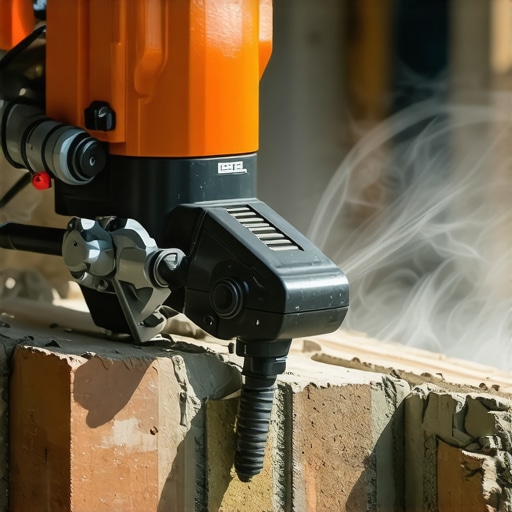
The Forensic Reality: A Boroscope Into the Void
I recently stood before a 1914 Flemish bond facade that looked, from the sidewalk, like a reasonably well-maintained piece of history. The homeowner had been told by a cut-rate contractor that the ‘hairline’ cracks were just settling. I didn’t buy it. I pulled out my boroscope and slipped it into a weeping joint where the mortar had gone soft. What I saw inside was a structural nightmare: the internal wall ties—those critical steel tendons holding the outer wythe to the inner structure—were rusted to orange dust. This wasn’t just a cosmetic issue; the wall was ‘floating,’ held up by little more than gravity and hope. This is where the difference between a ‘smear job’ and forensic mortar repointing services becomes the difference between a standing house and a pile of expensive rubble. Most guys will slap a concrete patch over a crack and call it a day, but they don’t understand the physics of suction or the chemistry of the bond.
“The depth of the repointing mortar should be at least two to two-and-a-half times the thickness of the joint to ensure mechanical stability and weather resistance.” – International Masonry Institute (IMI) Restoration Guide
The Physics of the ‘Mud’: Why Consistency Fails by Hand
Traditional masonry is an art of the hawk and trowel, but when you are dealing with hundreds of linear feet of joints, human error is the silent killer. When you ‘butter’ a brick by hand, the density of the mud—our trade term for mortar—varies with every scoop. If the mason gets tired or the sun starts beating down on the mortar board, the water-to-cement ratio shifts. This leads to honeycombing, where air pockets are trapped behind the surface. These pockets are magnets for water. In a freeze-thaw climate, that water expands by 9%, and the next thing you know, the face of your expensive brick is popping off in a process called spalling. Modern tuckpointing machines, specifically pneumatic and electric auger systems, have changed the game by forcing the mortar into the joint at a constant, high pressure. This ensures the mortar reaches the very back of the raked-out joint, eliminating the voids that hand-tooling often leaves behind.
AI Masonry Assessment and the Digital Trowel
We are entering an era where AI masonry assessment is no longer science fiction. Before we even mix a batch of fiber-reinforced mortars, we can use lidar and thermal imaging to map the heat loss through joints. This tells us exactly where the mortar has become porous. When we combine this data with modern delivery systems, we can calibrate the machine to the specific density of the existing substrate. Whether we are performing a brick paver driveway repair or a complex retaining wall installation, the goal is the same: matching the modulus of elasticity. If you put a mortar that is too hard (like modern Portland cement) into a wall made of soft, pre-war bricks, the mortar will destroy the brick. The brick must always be the strongest element; the mortar is the sacrificial lamb. Sustainable masonry materials, such as natural hydraulic limes, are now being engineered with fibers to provide the breathability of the old world with the tensile strength of the new.
“Mortar should always be weaker than the masonry units it binds to accommodate thermal movement without fracturing the units themselves.” – ASTM C270 Standard Specification for Mortar for Unit Masonry
The ‘Slicker’ and the Finish: Achieving the Perfect Profile
The beauty of a tuckpointing machine isn’t just in the fill; it’s in the strike. After the machine has injected a dense, continuous bead of mud into the joint, we use a slicker or a jointer tool to compress the face. This compaction is critical. It closes the ‘pores’ of the mortar, creating a skin that sheds water. In high-end projects, like an outdoor kitchen masonry build or a chimney where aesthetics matter as much as function, we might even apply metallic masonry finishes to the joints to catch the light, but the structural integrity comes first. Even a chimney damper repair requires an understanding of how the masonry surrounding the flue reacts to heat. If the joints are unevenly filled, the thermal expansion will be lopsided, leading to vertical ‘stair-step’ cracking that can compromise the entire stack. This is why we treat every joint like a structural weld.
The Scam of the ‘Quick Fix’
I’ve spent thirty years cleaning up after ‘handyman specials.’ These are the guys who use a grinder to cut shallow grooves, never reaching the required one-inch depth, and then ‘point’ over the top of old, crumbling lime. This creates a cold joint—a layer of new mortar that never truly bonds to the old. It looks great for six months, but after one winter, it peels off like a scab. A professional machine-driven process ensures that the new material is hydraulically bonded to the original core. Whether it’s a simple concrete patch on a walkway or a massive retaining wall installation, the principles of geotechnical stability don’t change. You either do it once with the right chemistry and pressure, or you do it twice and pay me double to fix it. The ‘tooth’ of the joint must be clean, the ‘suction’ must be managed by pre-wetting the brick, and the delivery must be precise. That is the only way to ensure a wall stands for another century.