
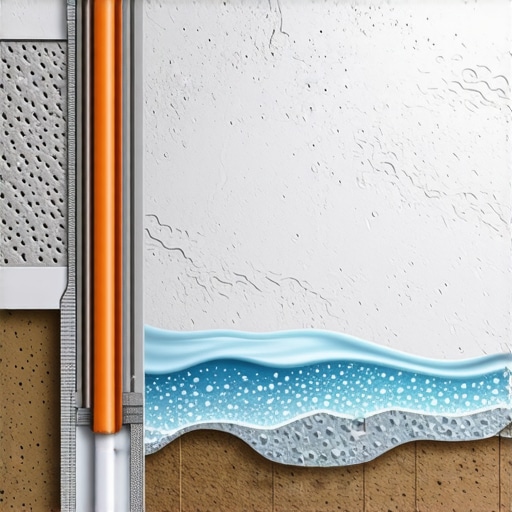
The Forensic Scene: When a Hairline Crack Becomes a Structural Grave
The homeowner in that 1920s Tudor thought it was just a hairline crack, a minor blemish on a century of service. They called me in because they wanted to paint the basement. But when I put my scope inside that vertical fissure in the concrete masonry unit restoration project, I didn’t see solid aggregate. I saw structural steel that had been reduced to orange dust, flake by agonizing flake. The salt-heavy groundwater had been leaching through the wall for decades, performing a slow-motion chemical lobotomy on the foundation’s strength. This wasn’t a job for a bucket of waterproof paint; this was a forensic rescue mission. Most folks think a basement leak is just a nuisance, but to a third-generation mason, it’s the smell of a building’s slow death. When the ‘tooth’ of the mortar is gone and the suction of the block is replaced by saturated rot, you aren’t just looking at water; you’re looking at physics turned predatory.
“Water penetration is the single greatest threat to masonry durability.” – BIA Technical Note 7
The Physics of the Push: Hydrostatic Pressure and Soil Heaving
To understand why your basement is weeping, you have to understand the sheer weight of the earth. In the freeze-thaw belts of the North, water expands 9% the moment it turns to ice. That expansion happens inside the pores of your brick wall restoration projects or against the exterior face of your foundation. It creates a hydraulic ram effect. Hydrostatic pressure is the literal weight of the water column in the soil pushing against your walls. If you have a high water table, that pressure can reach hundreds of pounds per square foot. When the soil becomes saturated, it loses its load-bearing capacity and begins to ‘heave.’ If your mason didn’t account for this with proper drainage, that pressure will find every ‘cold joint’ or microscopic void in your masonry repair services work. We’re talking about the molecular level here—the capillary rise of water through the microscopic tubes in the mortar, pulled upward by surface tension like juice through a straw.
The Band-Aid vs. The Cure: Why Surface Treatments Fail
I see it every day: a ‘handyman special’ where someone smeared a thick layer of epoxy over a crack or used a ‘lick-and-stick’ stone veneer to hide a damp corner. That’s a death sentence for the wall. Masonry needs to breathe. When you trap moisture inside a concrete masonry unit restoration with an impermeable membrane on the wrong side, you’re just creating a pressure cooker. The water still gets in—it always does—but now it can’t get out. It sits there, dissolving the lime in the mortar through a process called carbonation, turning your structural support into a mushy, white powder known as efflorescence. Professional stone wall repair requires more than just mud; it requires a path for that water to escape. Whether it’s a French drain at the footing or a dimpled membrane that allows for a ‘weep hole’ effect, if you don’t control the flow, the flow will control you.
The Restoration Reality: Tuckpointing and the Sacrificial Mortar
In historic brick wall restoration, we follow the ‘sacrificial principle.’ Your mortar should always be softer than your brick. If you use a modern, high-strength Portland cement on a 19th-century brick, the brick will be the first thing to break during a freeze-thaw cycle. This is why tuckpointing isn’t just about making things look pretty with a slicker; it’s about material science. We use Type O or Type N lime-based mortars that allow for ‘autogenous healing’—where the lime actually migrates into small cracks and reseals them over time. When we perform masonry repair services, we aren’t just ‘buttering’ the bricks; we are matching the porosity and the thermal expansion coefficient of the original structure. Using a hawk and a trowel to pack that mud deep into the joint ensures that we restore the structural integrity without creating a rigid point of failure.
“Mortar should be designed to be weaker than the masonry units so that any cracks occur in the mortar joints, where they can be easily repaired.” – ASTM C270 Standard Specification
Advanced Diagnostics: AI Masonry Assessment and 3D Solutions
We’ve come a long way from my grandfather tapping a brick to hear it ‘ring.’ Today, we use AI masonry assessment to map the thermal signatures of a facade. This tech allows us to see exactly where the moisture is trapped behind the face before a single brick is pulled. We can identify the precise location of a failing soldier course or a rusted lintel. And while I’m a traditionalist at heart, 3D printed masonry repairs are starting to show promise for replicating complex, ornamental stone wall repair pieces that would otherwise be lost to time. These technologies allow us to pinpoint the ‘honeycombing’ in a poured concrete wall or the voids in a brick paver driveway repair before the entire surface collapses. It’s about being a surgeon rather than a butcher.
Spalled Concrete and the Hardscape Truth
Look at your front porch. If you see the surface peeling off in thin flakes, that’s spalled concrete steps repair territory. This happens because water got into the top inch of the pour, froze, and popped the face off. It usually means the concrete was ‘over-tooled’—the finisher worked too much water to the surface, weakening the top layer. The same goes for your outdoor kitchen masonry build or your brick paver driveway repair. If the base isn’t compacted to 95% Proctor density with at least six inches of crushed stone, those pavers are going to sink and hold water. Once they hold water, the freeze-thaw cycle starts its work, and within three winters, you’ve got a wavy mess that looks like a roller coaster. You do it once with the right drainage, or you do it twice and pay me double the second time.
When to Panic: Identifying Structural Distress
Not every crack is a catastrophe, but you need to know the difference. A stair-step crack following the mortar joints is usually a sign of settlement—the house is finding its ‘seat.’ But a horizontal crack? That’s the red alert. A horizontal crack means the wall is bowing inward under the weight of saturated soil. The ‘tie-backs’ or the lateral strength of the wall has failed. If you see that, you don’t call a painter; you call a forensic mason. We might use helical piers or structural I-beams to stabilize the mass, but the priority is always stopping the water first. Whether it’s concrete masonry unit restoration or a complex stone wall repair, the goal is the same: management of the elements. In this business, you don’t fight nature; you just try to outsmart it for a few generations.