AI Masonry Assessment: 3 Hidden Risks It Finds in 2026
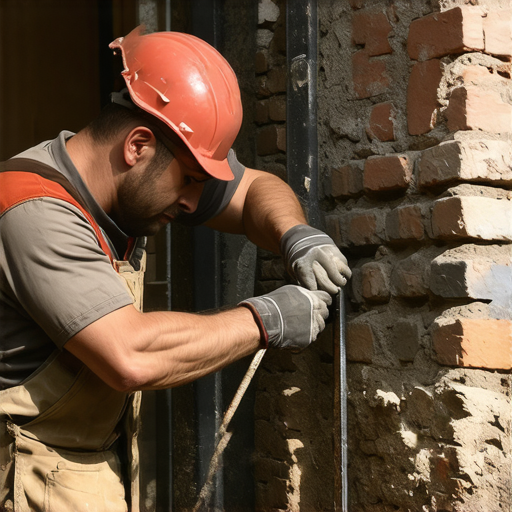
I remember a call I took last November in the dead of a biting sleet storm. The homeowner, a tech executive who thought he knew it all, pointed at a hairline fracture running through a soldier course above his garage. ‘Just needs a little caulk, right?’ he asked, holding a tube of cheap silicone. I didn’t answer. I pulled out my thermal imaging rig and a high-frequency ultrasonic probe. What I saw on the screen wasn’t just a crack; it was a ghost. The steel lintel behind that brick was so bloated with iron oxide that it had expanded three-quarters of an inch, acting like a hydraulic jack lifting the entire facade. That ‘minor’ crack was actually the only thing keeping five tons of masonry from pancaking onto his Tesla. This is the reality of forensic masonry in 2026: what the human eye misses, the physics of decay reveals through AI-assisted diagnostics.
The Molecular Crowbar: Why Brick Lintel Replacement Can’t Be Ignored
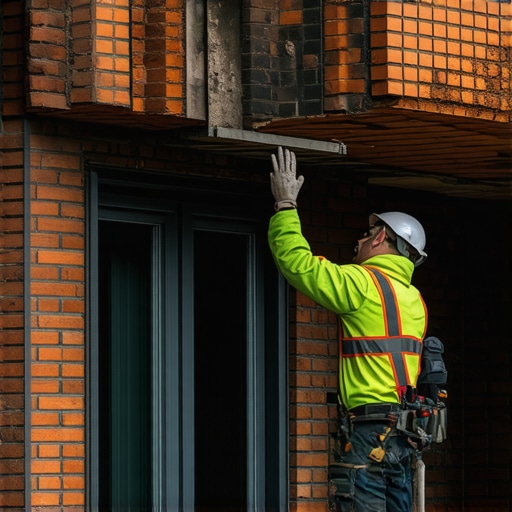
When we talk about brick lintel replacement, we aren’t just talking about swapping out a piece of rusted metal. We are fighting the relentless chemistry of oxidation. In the freezing climates of the North, where moisture becomes a weapon, a steel lintel without proper flashing is a ticking time bomb. Steel, when it oxidizes, can expand up to ten times its original thickness. This phenomenon, often called ‘rust bursting,’ exerts thousands of pounds of pressure per square inch against the surrounding masonry.
“Water penetration is the single greatest threat to masonry durability, leading to corrosion of embedded metals and subsequent structural displacement.” – BIA Technical Note 7
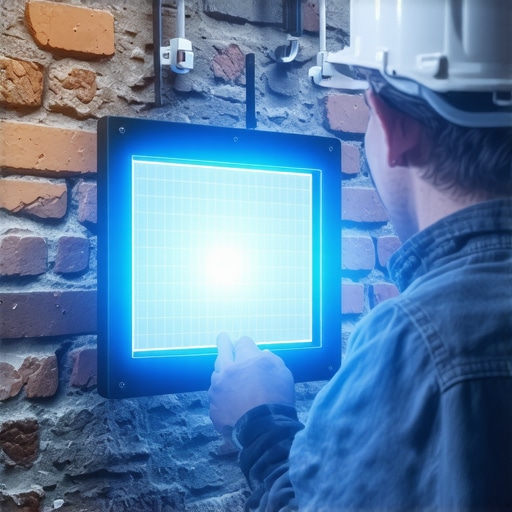
AI assessments in 2026 now use predictive modeling to calculate the exact rate of this expansion based on local humidity and salt exposure. If your lintel is ‘bleeding’—leaving those tell-tale orange streaks down your brickwork—the structural integrity of the opening is already compromised. We don’t just slap in a new angle iron anymore; we look at the ‘tooth’ of the surrounding bed joints and ensure emergency masonry repair protocols are met before the wall reaches its tipping point.
The Ghost in the Wall: Brick Veneer Detachment Repair
Modern ‘lick-and-stick’ or even traditional brick veneer often hides a terrifying secret: failing wall ties. In the old days, we relied on heavy-gauge corrugated ties nailed into the studs. Today, many contractors rush the job, ‘buttering’ the brick but failing to secure the veneer to the structural frame. This leads to a ‘dead air’ space where moisture traps and cycles through freeze-thaw. In 2026, AI-driven LIDAR scans can detect a ‘bulge’ in a wall as small as two millimeters over a fifty-foot span. That subtle bowing is the first sign that brick veneer detachment repair is necessary. When the ties fail, the wall is no longer a structural unit; it is a curtain of heavy stone waiting for a heavy wind or a minor tremor to pull it down. We use advanced masonry adhesives and helical ties to stitch these walls back to the core without tearing the whole house apart, but the diagnostic stage is where the real work happens. If you wait until you can see the gap with your eyes, you’re already too late.
The Sacrificial Joint: Structural Repointing and Material Science
One of the biggest crimes I see in this trade is the use of Type S Portland cement on 19th-century soft-fired bricks. It’s a death sentence for the building. High-strength modern mortars are too hard; they don’t ‘breathe’ and they don’t move. When the temperature drops and the moisture in the wall expands by 9%, the hard mortar won’t give. Instead, the face of the brick pops off—we call this spalling.
“Mortar should always be weaker than the masonry units it binds, acting as a sacrificial element that allows for thermal expansion and moisture migration.” – ASTM C270 Standards
Structural repointing must respect the ‘historic pointing styles’ of the original era. In 2026, we use AI to analyze the mineral composition of the original ‘mud’ to match the lime-to-sand ratio perfectly. We don’t just ‘grind and point.’ We use a ‘hawk’ and ‘slicker’ to pack the joints tight, ensuring the suction of the dry brick pulls the moisture from the mortar at a controlled rate. This prevents ‘flash setting’ and ‘honeycombing,’ which are the hallmarks of a botched tuckpointing cost estimation where the contractor cut corners on prep work.
The Future of Protection: Sealants and Fire-Rated Installations
As we move deeper into 2026, the application of brickwork sealants has become a high-tech endeavor. We no longer use surface-level films that trap moisture inside the wall. Instead, we use silane-siloxane penetrating breathables that chemically bond to the silica in the brick. This creates a hydrophobic barrier while still allowing water vapor to escape. For commercial projects, fire-rated masonry installation is now monitored by AI sensors embedded in the ‘cold joint’ of the pour to ensure no voids exist that could allow smoke or flame bypass. Whether it is a brick veneer installation on a new build or a historic restoration, the physics remains the same: gravity never sleeps, and water always wins unless you respect the craft. Don’t listen to a ‘handyman’ with a trowel and a dream. Listen to the stone. It’ll tell you exactly where it’s hurting if you know how to look.

![4 Geogrid Mistakes Ruining Retaining Walls [2026 Checklist]](https://masonryrescue.com/wp-content/uploads/2026/02/4-Geogrid-Mistakes-Ruining-Retaining-Walls-2026-Checklist.jpeg)