
The Forensic Reality of Commercial Masonry
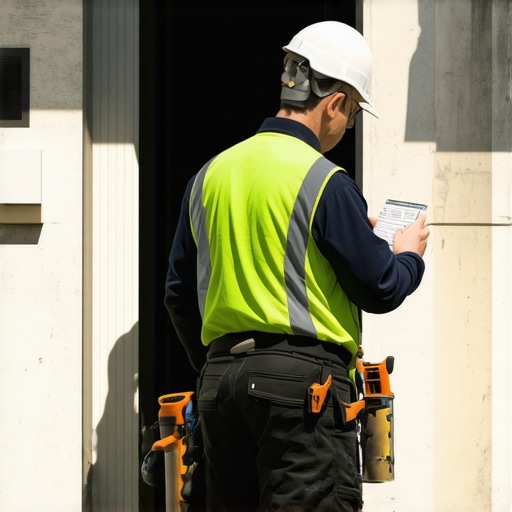
The call came in at 4:30 AM on a Tuesday. A property manager for a mid-rise hotel in the historic district reported a ‘minor debris issue’ on the sidewalk. When I arrived, I didn’t see debris; I saw a homicide scene where the victim was a hundred-year-old limestone cornice. A three-foot section of the stone balustrade had sheared off, plummeting four stories. When I got my scope into the void, the truth was laid bare: the steel outriggers were gone, replaced by a red, flaky ghost of oxidized iron. The homeowner or manager usually thinks a hairline crack is just a cosmetic blemish, but when I put my scope inside, I saw the structural steel was rusted to dust. This is the reality of masonry forensics. It is rarely the brick that fails first; it is the hidden system of ties, anchors, and moisture management that keeps the facade from becoming a gravity-powered weapon.
The Physics of the Facade: Why Commercial Buildings Fail
To understand structural masonry inspection, you have to understand the ‘breathing’ of a building. A commercial facade is a living organism of thermal expansion and contraction. In a 200-foot run of masonry, the ‘Coefficient of Thermal Expansion’ dictates that the wall will grow and shrink significantly between a summer afternoon and a winter night. If your original builders didn’t account for this with proper control joints, the building will create its own joints in the form of jagged, vertical cracks. This is particularly dangerous in brick veneer detachment repair scenarios where the masonry skin begins to pull away from the backup wall because the corrugated ties have snapped under the stress of unyielding movement.
“Water penetration is the single greatest threat to masonry durability. Moisture ingress leads to the corrosion of metal reinforcements and the devastating effects of freeze-thaw cycles.” – BIA Technical Note 7
In the world of crumbling mortar joint repair, we often see the catastrophic results of using the wrong ‘mud.’ A common ‘handyman special’ involves slapping Type S mortar—a high-strength, Portland-heavy mix—into a joint on a building built in 1910. This is a fundamental violation of masonry physics. Historic bricks are often softer than modern ones. Mortar must always be the ‘sacrificial lamb’ of the wall. It must be more permeable and softer than the masonry units themselves. When you use a hard, brittle mortar, moisture gets trapped in the brick. When the temperature drops, that water expands by 9%, and because it cannot escape through the hard mortar, it exerts internal pressure on the brick face. This leads to spalling, where the face of the brick literally pops off, leaving a soft, orange core exposed to the elements. This is why we insist on sustainable block cutting and traditional lime-based mixes for restoration; they allow for the migration of water vapor, preventing the slow-motion explosion of the facade.
The Checklist: A Forensic Guide to Longevity
1. The Sub-Grade Foundation and Soil Stability
Before you look at the roof, look at the dirt. In many commercial districts, shifting water tables or poor soil compaction lead to differential settlement. If you see a stair-step crack following the mortar joints, the building is telling you its feet are moving. This is where foundation helical pier installation becomes the only permanent cure. We drive these steel shafts deep into the load-bearing strata, essentially putting the building on stilts. Don’t be fooled by a quick concrete patch over a settlement crack; you’re just putting a band-aid on a broken leg. You must stabilize the gravity-load path before you worry about the aesthetics of the skin.
2. Stone Balustrade Restoration and Ornamentation
Nothing says ‘prestige’ like a stone balustrade, and nothing is more dangerous when neglected. These elements are highly exposed to weather on all four sides. We look for ‘calcium bloom’ or efflorescence, which indicates that water is washing through the stone, leaching out minerals. In a proper stone balustrade restoration, we don’t just point the joints; we check the internal dowels. Many older buildings used iron pins to hold these stones. As water enters, those pins rust and expand—a process called ‘oxide jacking’—which can split a three-hundred-pound stone like a piece of firewood. Replacing these with stainless steel or threaded bronze is the only way to ensure the public’s safety below.
3. The Chimney and Roofline Integrity
The chimney is the most abused part of any commercial structure. It sits in the path of the highest winds and the most extreme temperature shifts. Chimney damper repair is often just the beginning. We frequently find that the ‘soldier course’ of bricks at the top has lost its bond because the flue gases have combined with moisture to form a mild sulfuric acid, eating the mortar from the inside out. A forensic inspection involves checking the ‘wash’ or the concrete cap at the top. If that cap has a crack, water is funneling directly into the heart of the masonry stack. [placeholder_1]
“The selection of mortar for restoration must prioritize vapor permeability over compressive strength to ensure the longevity of the masonry unit.” – ASTM C270 Standards
4. Horizontal Surfaces and Drainage
Whether it’s a brick paver driveway repair or a commercial plaza, the physics remains the same: the base is everything. Most ‘wavy’ or sinking paver installations fail because the contractor used a ‘cold joint’ in the sub-base or failed to provide a 1:50 slope for drainage. Water that sits under a paver will eventually liquefy the bedding sand, causing the pavers to shift under the weight of commercial vehicles. In modern BIM masonry projects, we now model the exact drainage flow and compaction requirements digitally before a single brick is laid, ensuring that hydrostatic pressure never has a chance to build up behind the facade or under the feet.
Practical Steps for the Property Manager
Stop looking for the cheapest bid and start looking for the most detailed scope of work. If a contractor doesn’t mention ‘weep holes’ or ‘flashing’ when discussing crumbling mortar joint repair, walk away. They are just ‘buttering’ the joints with a ‘slicker’ and hiding the problem. A real mason knows that the ‘tooth’ of the joint must be cleaned out to a depth of at least 3/4 of an inch before new mud is applied. Anything less is just a ‘smear job’ that will peel off in two seasons. We use a ‘hawk’ and a ‘trowel’ to push the mortar deep into the void, ensuring a mechanical bond that will last another fifty years. This isn’t just maintenance; it’s the preservation of a legacy. Every time you ignore a ‘honeycombing’ section of concrete or a detached brick veneer, you’re inviting the forensic inspector to your door—and by then, the bill will have an extra zero on the end.