
The Ghost in the Limestone: A Forensic Look at Masonry Decay
The homeowner thought it was just a hairline crack, a minor blemish on a pristine limestone portico. But when I put my scope inside that fissure, the reality was a gut-punch. I saw the structural steel was rusted to dust, expanded to three times its original thickness, acting like a slow-motion hydraulic jack pushing the facade apart. This is the hidden tragedy of porous stone. Whether it is Indiana limestone, soft Ohio sandstone, or even certain types of travertine, these materials are not the inert blocks of the earth we imagine them to be. They are living, breathing sponges. When you fail to understand the chemistry of porous stone sealers, you aren’t just letting a bit of rain in; you are inviting a molecular wrecking ball into your home’s skeleton.
The Physics of the Pore: Why Stones ‘Breathe’
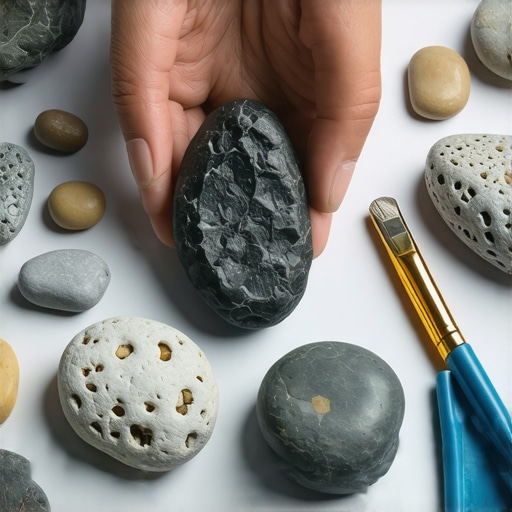
To understand why you need a sealer, you have to micro-zoom into the lithology. Stone like sandstone is held together by a matrix of silica or calcium carbonate. Between these grains are microscopic voids called pores. Through a process known as capillary suction, these pores can pull water upward against the force of gravity, sometimes dozens of feet. In a freeze-thaw climate, this is a death sentence. Water expands 9% when it turns to ice. If that water is trapped in a pore and cannot escape, it creates internal pressure that exceeds the tensile strength of the stone. This is how spalling starts—the face of the stone simply pops off, leaving a raw, crumbling mess. This is where tuckpointing weatherproofing becomes the first line of defense, ensuring that the joints aren’t acting as open funnels for moisture.
“Water penetration is the single greatest threat to masonry durability.” – BIA Technical Note 7
The Great Sealer Deception: Film-Formers vs. Penetrants
I see it every week: some ‘handyman special’ has coated a beautiful fieldstone wall in a thick, glossy acrylic. It looks great for six months. Then it starts to turn milky white. That is moisture trapped behind a plastic film. Most big-box store sealers are film-formers. They sit on top of the stone, blocking the pores. This is a fatal mistake for porous masonry. Stone must have vapor permeability. It needs to ‘sweat’ out the moisture that inevitably gets in from the ground or the roof. If you seal the surface with a non-breathable coating, you create an osmotic trap. The water enters the stone as a liquid, cannot escape as a vapor, and destroys the stone from the inside out. For re-pointing services on historic structures, we never use these ‘glazed donut’ coatings. We use penetrating sealers—specifically silanes and siloxanes. These molecules are small enough to travel deep into the pore structure. They don’t block the pore; they line it with a hydrophobic coating that changes the surface tension. Water beads up on the outside, but vapor can still escape from the inside. It’s like GORE-TEX for your house.
The Chemistry of the Bond
When we talk about porous stone sealers, we are talking about chemical reactions. A high-quality silane sealer reacts with the silica in the stone to form a covalent bond. This isn’t something that just sits on the surface waiting to be washed away. It becomes part of the stone’s mineral structure. This is critical when performing a chimney rebuild services or chimney interior parging. Chimneys are the most exposed part of any structure. They deal with thermal shock, acidic flue gases, and driving rain. If you use a cheap ‘mud’ (mortar) without proper weatherproofing, the chimney will be a pile of rubble in a decade. I always recommend fiber-reinforced mortars in these high-stress zones to bridge the gap between structural rigidity and thermal movement.
The Modern Diagnostic: AI and Forensics
We are moving past the era of just ‘tapping a brick’ to see if it’s sound. Today, an AI masonry assessment can analyze high-resolution thermal imaging to find moisture pockets behind the stone that the naked eye misses. We look for ‘honeycombing’—voids in the concrete or stone where water has leached out the binders. This technology allows for a much more accurate tuckpointing cost estimation because we know exactly where the ‘cold joints’ are and where the mortar has lost its ‘tooth’ or suction. It’s no longer about guessing; it’s about forensic precision.
“The durability of a masonry wall is inversely proportional to the amount of trapped water within its core.” – ASTM C1364 Standard for Architectural Cast Stone
Correction and Foundation: The Long Game
Sometimes the stone isn’t the only thing failing. I’ve seen retaining wall batter correction jobs where the entire wall was leaning three inches because the ‘slicker’ (the person finishing the joints) did a beautiful job on the outside, but the contractor forgot the weep holes on the inside. Hydrostatic pressure is a beast that no sealer can stop. It will push a wall over regardless of how waterproof the stone face is. In those cases, we look toward self-healing concrete foundations and advanced drainage systems before we even think about the aesthetic finish. You have to fix the skeleton before you worry about the skin.
How to Choose: The Professional’s Checklist
If you are standing in an aisle trying to choose a sealer, look for these three things. First, the ‘Solids Content.’ Anything under 10% is basically expensive water. You want 15-40% active solids for serious protection. Second, check the ‘Vapor Transmission Rate.’ If it’s not at least 90% breathable, put it back. Third, consider the ‘Salt Resistance.’ If you live near a road that gets salted in winter, your stone is at risk of subflorescence—salt crystals growing inside the stone and exploding the pores. A high-end sealer will block those salts from entering. When we ‘butter’ a piece of stone for a soldier course or a lintel, we are thinking about the next fifty years, not the next fifty days. Do not settle for a ‘handyman’ fix on a master-built home. Treat the stone with the respect it earned over the millions of years it took to form.