
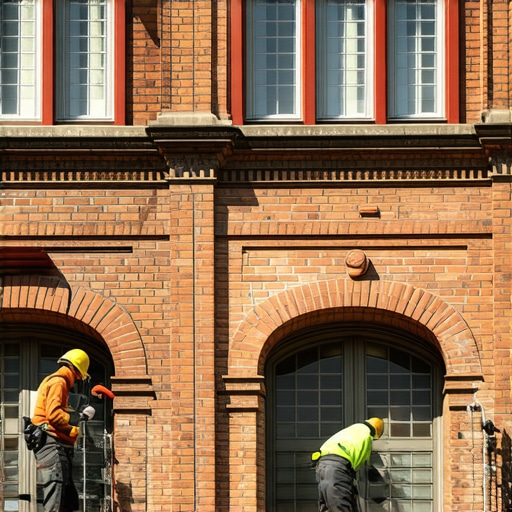
The Forensic Reality of a Hairline Crack
The homeowner thought it was just a hairline crack, a minor aesthetic blemish on a century-old brick facade. But when I put my scope inside that fissure, I saw the structural steel lintel was rusted to dust, expanding with a force that was literally exploding the surrounding masonry from the inside out. This is the reality of forensic masonry inspection: what you see on the surface is rarely the full story. For those of us who have spent decades with a hawk and trowel, we know that a building’s survival depends entirely on the health of its joints. When people ask why mortar repointing services are the best investment for old buildings, they are usually looking for a cosmetic answer. The real answer lies in the gritty physics of moisture migration and the sacrificial nature of lime-based mud.
The Chemistry of Breathability: Why Old Brick is Different
Before the mid-1940s, bricks were fired in kilns that produced a softer, more porous product than the rock-hard modular units we see today. These historic bricks were designed to work in a mass-wall system, where the wall acts like a sponge, soaking up rain and then breathing it back out as vapor. The mortar used was almost always a lime-and-sand mixture. In the world of masonry forensics, we understand the ‘sacrificial principle.’ This means the mortar must be softer and more permeable than the brick itself. If the wall moves or the water freezes, the mortar should be the part that cracks or erodes, not the brick. When a modern ‘handyman’ smears hard Portland cement into these joints, he creates a tomb. The water gets trapped, freezes, and because it has nowhere to go, it blows the face off the brick—a process known as spalling. This is why specialized mortar repointing services are not just a luxury; they are a preservation necessity.
“Water penetration is the single greatest threat to masonry durability. Proper mortar selection and joint profile are the first lines of defense.” – BIA Technical Note 7
The Mechanics of Mortar Repointing Services
True repointing is a surgical procedure. It starts with the removal of the failing mud, usually to a depth of twice the width of the joint. You don’t just ‘lick-and-stick’ new material over the old; you have to create a clean ‘tooth’ for the new mortar to grab. We use a slicker to pack the joint in lifts, ensuring there are no voids where water can pool. This isn’t just about appearance; it’s about restoring the capillary path that allows the building to shed moisture. While we’re at it, we often look at the concrete pump masonry mixes used in modern additions to ensure they aren’t exerting too much pressure on the original structure. [IMAGE_PLACEHOLDER] If you have a historic property, the last thing you want is a cold joint between the old lime-based core and a new, rigid concrete infill. They expand at different rates, and in the heat of a summer sun, that expansion can lead to catastrophic shearing.
Modern Failures: From Retaining Walls to Modular Systems
I see it every day in my forensic work: modular retaining walls that look great for three years and then start to lean like the Tower of Pisa. Usually, it’s a lack of retaining wall reinforcement or a total failure of the drainage system. People think that because they are using mortarless masonry systems, they can skip the geotechnical basics. They are wrong. Hydrostatic pressure is a silent killer. When I’m called in for a retaining wall block replacement, it’s rarely the block’s fault. It’s the soil behind it. We’ve moved toward green roofing masonry integration in many urban areas, which adds an incredible amount of weight and moisture to the top of old structures. Without proper fire-rated masonry installation and structural beefing-up, you’re just asking for a collapse. You need to understand the ‘suction’ of the substrate before you ever mix a bag of mud.
“The joints must be filled with mortar that is less durable than the stone itself, so that the mortar may be renewed without injury to the stones.” – Vitruvius, De Architectura
The Art of Masonry Cleaning and Maintenance
Once the structural integrity is restored through mortar repointing services, the next step is often masonry cleaning. But here’s where the ‘lick-and-stick’ crews ruin everything. They blast the brick with high-pressure water or harsh acids, stripping away the ‘fire-skin’ of the brick. Once that skin is gone, the brick is vulnerable to everything the environment throws at it. A master mason uses gentle chemical rotors or low-pressure mists to lift the carbon crust without damaging the underlying silicate structure. This is especially critical when dealing with brick veneer installation on older homes where the original facade was never meant to be covered. You have to ensure that the new veneer doesn’t trap moisture against the old structural wythe, leading to hidden rot in the wall ties.
The Verdict: Do It Once, or Do It Twice
In this trade, you’re either a craftsman or a scavenger. Investing in high-quality tuckpointing and repointing is about more than just curb appeal; it’s about the physics of the ‘Soldier Course’ and the ‘Header.’ It’s about ensuring that the efflorescence you see on the surface isn’t a symptom of a deeper, more systemic failure of the masonry’s internal drainage. Whether you’re dealing with modular retaining walls or a 19th-century chimney, the rules of gravity and moisture remain the same. Don’t let a cheap fix turn into a total teardown. Respect the mud, respect the stone, and for heaven’s sake, keep the Portland cement away from your historic brick.