3 Reasons Tuckpointing Machine Services Beat Hand Tools in 2026
The Anatomy of a Failing Facade: A Forensic Perspective
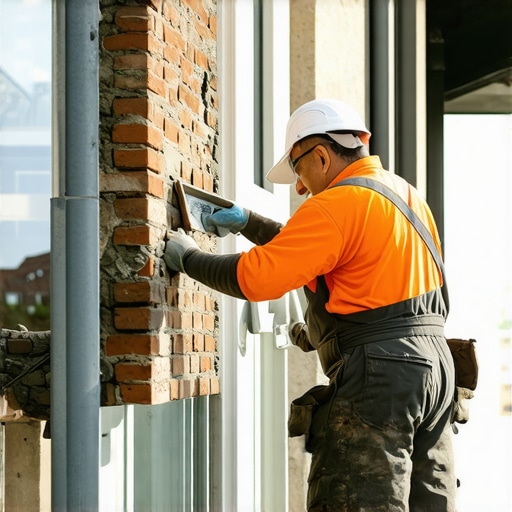
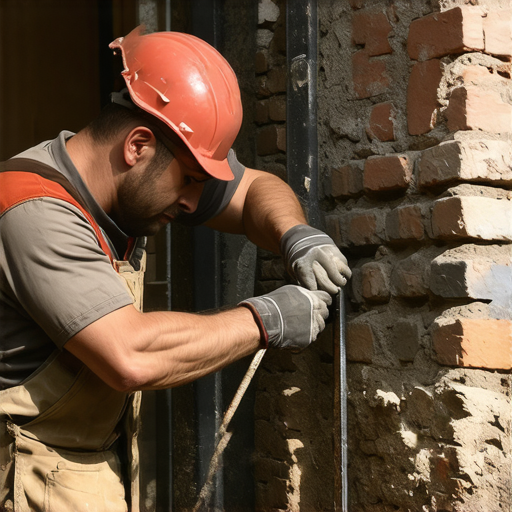
The homeowner told me it was just a hairline crack, a minor blemish on a 1920s Tudor chimney. But when I slid my fiber-optic scope into the void where the mortar had turned to dust, the reality was grimmer. The structural steel lintels were rusted to the point of exfoliation, expanding with enough force to lift three courses of brick. This wasn’t a job for a quick ‘smear-and-go’ contractor. This was a masonry rescue after disaster in the making. As a third-generation mason, I’ve spent decades with a hawk and slicker in my hands, but the landscape of 2026 has changed. We are no longer just fighting gravity; we are fighting the accelerated decay caused by extreme freeze-thaw cycles and the legacy of poor 20th-century repairs. The transition to robotic masonry repair and specialized tuckpointing machines isn’t just about speed; it’s about the physics of the bond and the preservation of historic pointing styles.
“Water penetration is the single greatest threat to masonry durability. Proper joint preparation and mortar compaction are essential to mitigate this risk.” – BIA Technical Note 7
1. Precision Depth and the Eliminating of Honeycombing
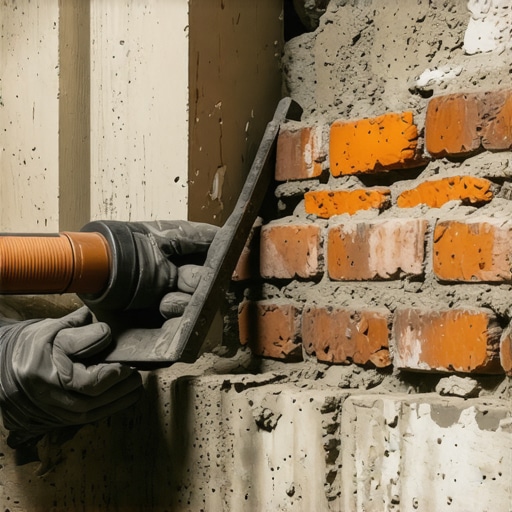
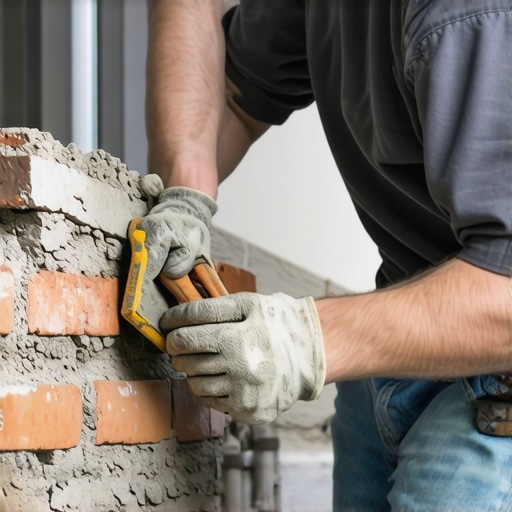
When you use a hand trowel to butter a joint, you are limited by the physical reach of the tool and the consistency of the ‘mud’ you’ve mixed. In chimney structural repair, depth is everything. A machine-injected mortar system utilizes a continuous-feed screw that drives the material into the deepest recesses of the joint. This eliminates honeycombing—those hidden air pockets where water loves to sit and wait for a cold November night to freeze and expand by 9%. In the old days, we’d try to pack it in layers, but human fatigue leads to ‘cold joints’ where the new mortar doesn’t quite fuse with the layer beneath it. By 2026, robotic systems can maintain a constant PSI, ensuring that the brick column repair you’re doing today won’t be a pile of rubble in five years. The ‘tooth’ of the stone or brick requires a mechanical bond that hand-packing simply cannot replicate with the same density. When we talk about modular masonry construction, the tolerances are so tight that a millimeter of deviation in joint depth can throw off the entire thermal envelope of a building.
2. Advanced Material Compatibility and Sustainable Masonry
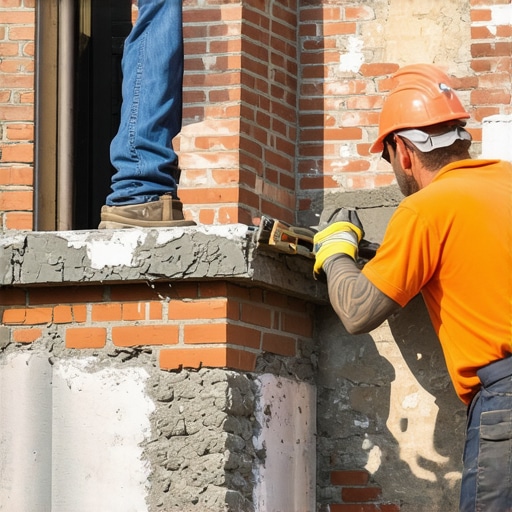
The biggest crime in masonry restoration is the use of modern Portland cement on historic, soft-fired bricks. I’ve seen it a thousand times: a ‘handyman’ uses Type S mortar on a 19th-century facade, and within two winters, the faces of the bricks are popping off like bottle caps. This is because the mortar was harder than the brick, violating the sacrificial principle of masonry. In 2026, sustainable masonry materials like hydraulic lime and carbon-sequestering aggregates require precise moisture control to hydrate correctly. Tuckpointing machines allow us to use these sensitive mixes without the ‘flash setting’ that occurs when a dry brick sucks the life out of a hand-applied joint. Before we even start, a proper masonry damage assessment involves testing the suction of the unit. Machines can be calibrated to the specific flow rate required for these historic pointing styles, ensuring the masonry cleaning phase doesn’t reveal a crumbling mess. We aren’t just filling gaps; we are restoring the breathability of the wall.
“Mortar should be weaker than the masonry units so that any cracks occur in the mortar joints, which are easier to repair than the units themselves.” – ASTM C270 Standard Specification
3. Managing Hydrostatic Pressure in Modern Infrastructure
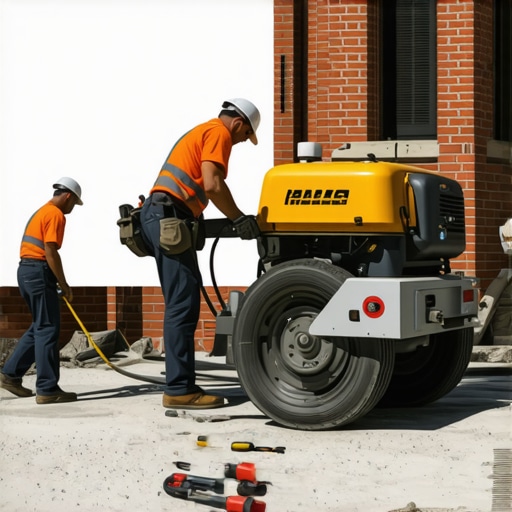
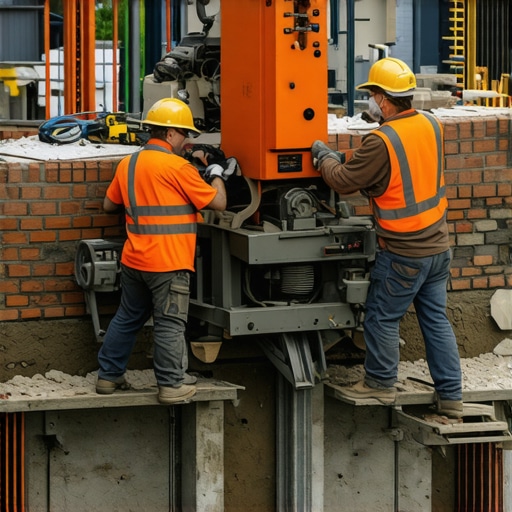
Whether we are dealing with modular retaining walls or the base of a high-rise, the physics of water movement remains our primary adversary. Manual pointing often leaves ‘ledges’—microscopic shelves where water can sit. A machine-driven jointer tool, however, creates a perfectly consistent profile that sheds water with surgical precision. In 2026, we also integrate sensors into our robotic masonry repair units that can detect the moisture levels within the substrate. If the wall is too damp, the machine alerts us before we trap that moisture behind a new joint. This level of forensic data is impossible to achieve with a manual slicker. In the context of masonry rescue after disaster, where speed is critical to prevent total collapse, machines allow us to stabilize hundreds of linear feet of joints in the time it would take a traditional crew to set up their scaffolding. We are seeing this increasingly in the repair of brick column repair projects where the structural load demands zero margin for error. Doing it once is cheaper than doing it twice, and in this economy, the ‘old world’ way is sometimes the wrong world way if it ignores the chemistry of the bond.
The Final Strike: Why the Human Eye Still Matters
Don’t get me wrong; I still carry my grandfather’s trowel in my kit. It reminds me of the ‘ring’ a good brick makes when it’s solid. But for the heavy lifting of chimney structural repair and large-scale restoration, the machine is the only way to ensure the longevity of the structure. We use the machine for the injection and the density, but we use the human eye for the final strike, the aesthetic finish that respects the original mason’s intent. When you combine the forensic analysis of a masonry damage assessment with the power of robotic application, you get a wall that can actually withstand another century of abuse. Don’t let a ‘lick-and-stick’ specialist ruin your heritage. Demand a repair that respects the physics of the stone.