4 Brick Column Repair Signs to Check Before 2026 Storms
The Forensic Scene: Beneath the ‘Perfect’ Facade
I remember a job in late 2023, a massive Georgian estate where the owner complained about a ‘dusting’ of red powder on his porch. From the driveway, the four-foot-thick brick columns looked like the Parthenon—unshakable. But when I took my borescope and slid it into a weeping head joint, the reality was a nightmare. The interior wasn’t solid masonry; it was a graveyard of honeycombing concrete and rusted rebar that looked like burnt toast. The ‘red powder’ was the brick literally exhaling its own soul because the structural steel was expanding with such force it was grinding the clay to dust from the inside out. With the 2026 storm cycle predicted to bring unprecedented wind-driven rain and rapid temperature swings, these silent killers in your brick columns aren’t just aesthetic flaws—they are structural countdowns.
“Water penetration is the single greatest threat to masonry durability. Moisture within a masonry system can lead to efflorescence, spalling, and the corrosion of embedded metals.” – BIA Technical Note 7
1. The Stair-Step Fracture: A Tale of Soil Plasticity
When you see a crack following the mortar joints in a diagonal ‘stair-step’ pattern, you aren’t just looking at a bad mud mix. You are looking at a geotechnical failure. Brick columns exert a concentrated point load on the soil. If your foundation was poured during a dry spell, the 2026 storms will introduce a ‘hydrostatic surge’ that causes the clay soils to swell. This is the physics of heave. Conversely, if the soil saturates and loses its bearing capacity, the column begins a slow-motion dive into the earth. This is where foundation underpinning becomes the only permanent cure. I’ve seen handymen try to ‘patch’ these cracks with caulk. That’s like putting a Band-Aid on a compound fracture. The crack is a symptom of the column’s base moving at a different rate than the porch or the roof it supports. We monitor these using crack gauges that measure movement to the millimeter, because once that cold joint at the base opens up, you’re inviting the 2026 freeze-thaw cycles to finish the job.
2. Rust Jacking and the Death of the Soldier Course
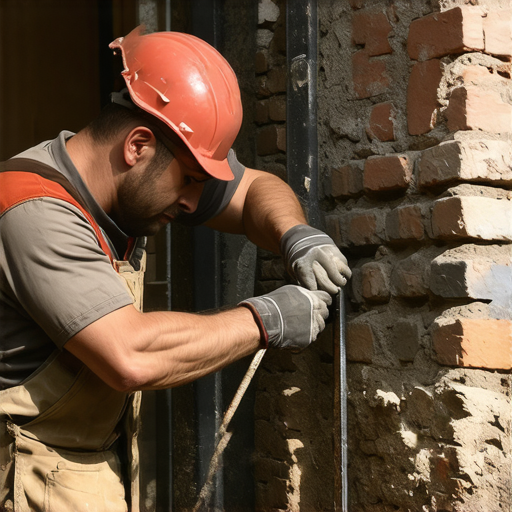
Most modern columns use a brick lintel or internal structural brick ties to stay plumb. But here’s the chemistry: when steel is exposed to moisture, it oxidizes. This isn’t just a color change; rust takes up to ten times the volume of the original steel. This is ‘oxide jacking.’ It creates an internal pressure that can reach 10,000 PSI—far greater than the 2,500 PSI compressive strength of your average residential brick. If you see your soldier course (those vertical bricks often at the top of a column) starting to tilt outward or ‘smile,’ the steel is exploding inside. Structural brick ties replacement is the only way to save it. You have to surgically remove the bricks, grind the rust to white metal, treat it with a zinc-rich primer, or replace the steel entirely before the next heavy gale turns that column into a projectile. This is why drone chimney inspections and high-angle column checks are becoming mandatory; we need to see the ‘top-down’ saturation levels before the storms hit.
“Mortar should always be weaker than the masonry units it bonds, serving as a sacrificial element that accommodates movement and moisture.” – ASTM C270 Standards
3. Efflorescence and the Osmotic Pressure Trap
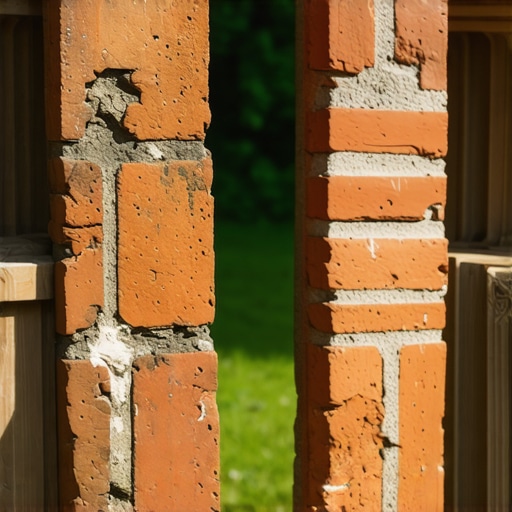
That white, salty crust on your brickwork? That’s efflorescence. Most homeowners think it’s just ‘basement salt.’ To a forensic mason, it’s a warning of a ‘wicking’ crisis. Water is being pulled through the brick via capillary suction. As the water evaporates, it leaves behind minerals. But here’s the micro-zoom: there is a secondary stage called sub-florescence. This is when the salts crystallize below the surface. This creates osmotic pressure that literally pops the face off the brick—a process we call spalling. If your mason used a high-strength Portland cement on a historic brick (Pre-1940s), you are in trouble. The hard cement won’t let the brick breathe, so the moisture stays trapped in the clay. During a 2026 freeze, that water expands by 9%, and your brick face will fall off like a scab. We solve this by using sustainable tuckpointing mortars—lime-based ‘breathable’ mixes that allow the moisture to escape through the mortar joint rather than the brick. This is the ‘Sacrificial Principle’ of masonry.
4. The Capstone Failure and Internal Saturation
The top of your column is its only umbrella. If your chimney cap replacement or column cap is cracked, every drop of rain in 2026 will be funneled directly into the core of the masonry. I’ve opened columns that were so saturated inside they had a honeycombing effect in the backup block—the concrete had literally dissolved into a mushy paste. This is why masonry waterproofing solutions aren’t just about spraying a sealer on the outside; it’s about ensuring the ‘crown’ is shed-ing water away from the core. We also look at retaining wall drainage upgrade techniques when columns are integrated into landscape walls. If the retaining wall weep hole cleaning hasn’t been done, the hydrostatic pressure from the soil behind the wall will push the column out of plumb. You can’t just ‘butter‘ some new mortar into the joints and call it a day; you have to fix the drainage physics first. Using a slicker to create a concave joint is great for shedding water, but if the cap is cracked, the joint style won’t save you.
The Forensic Verdict: Act Before the Clouds Gather
By the time we reach the 2026 storm season, the contractors who actually know how to mix ‘mud‘ and use a hawk correctly will be booked out for years. If you see vertical cracks, white salt deposits, or a tilting cap, you are looking at a structural liability. Modern ‘lick-and-stick’ stone veneer has taught people that masonry is just a wallpaper. It’s not. It’s a load-bearing system governed by the laws of thermal expansion, moisture migration, and gravity. Don’t wait for the ‘ringing’ sound of a failing brick to become the sound of a porch collapsing. Inspect the historic pointing styles of your home, ensure your brick lintel replacement is handled by an expert, and for God’s sake, keep those weep holes clear. Do it once, or do it twice—the choice usually depends on how much you respect the physics of the stone.

![5 Retaining Wall Geogrid Installation Mistakes to Avoid [2026]](https://masonryrescue.com/wp-content/uploads/2026/04/5-Retaining-Wall-Geogrid-Installation-Mistakes-to-Avoid-2026.jpeg)