4 Brick Lintel Replacement Signs to Save Your 2026 Windows
The Forensic Scene: Behind the Hairline Fracture
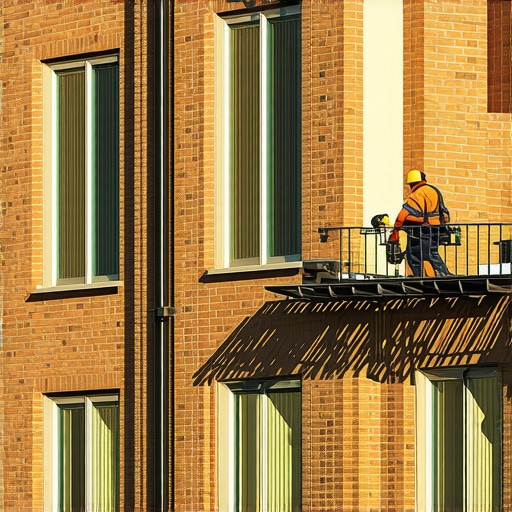
The homeowner stood on the porch, pointing at a thin, diagonal line running from the corner of a second-story window. “It’s just a hairline crack, right?” they asked. I didn’t answer immediately. I took out my fiberscope, threaded it through a weep hole, and turned on the monitor. What we saw wasn’t just a crack; it was a structural autopsy. The steel lintel—the horizontal beam supporting the weight of the brick above the window—had rusted to the point of delamination. Flakes of oxidized iron, looking like burnt puff pastry, were prying the soldier course of bricks upward. This wasn’t just a cosmetic issue; it was a slow-motion explosion. If they waited until their scheduled 2026 window replacement, the weight of the facade would likely collapse onto the new frames, shattering the glass and the budget in one stroke. In historic masonry preservation, what you don’t see is usually what breaks you.
“Corrosion of steel lintels is a primary cause of masonry cracking around openings. As steel oxidizes, it can expand to several times its original thickness, exerting tremendous upward pressure on the masonry.” – BIA Technical Note 18B
The Physics of Oxide Jacking and Freeze-Thaw Cycles
In the harsh freeze-thaw climates of the North, the battle between water and steel is constant. When water penetrates the mortar joints—often because of failed tuckpointing brick walls or hairline fissures—it hits the cold steel lintel. In the winter, that water freezes, expanding by 9% and widening the gap. But the real killer is the chemical reaction. When iron meets oxygen and moisture, it creates iron oxide (rust). This isn’t just a surface stain; it’s a physical expansion known as ‘oxide jacking.’ The rust occupies up to six times the volume of the original steel. This force is enough to lift thousands of pounds of masonry. This is why masonry damage assessment is critical before you even think about ordering new windows. If your lintel is ‘smiling’ (deflecting downward) or the bricks are ‘heaving’ (pushing upward), the structural integrity of the opening is compromised.
Sign 1: The ‘Smiling’ Lintel (Deflection)
When you look at the top edge of your window, it should be a perfectly level line. If you see a slight sag in the middle—a ‘smile’—that is the steel failing under the load. This happens when the lintel was undersized for the span or when the sustainable block cutting techniques of the past didn’t account for modern dead loads. Once a lintel starts to deflect, the bricks above it lose their ‘tooth’—the mechanical bond provided by the mud (mortar). This can lead to a catastrophic failure where the entire triangular section of brick above the window, known as the masonry arch effect, begins to shift downward. If you see this, you aren’t just looking at a lintel replacement; you are looking at potential foundation wall bowing repair if the load path has been redirected improperly.
Sign 2: Stair-Step Cracking and Masonry Birdsmouth Cuts
Look at the corners. If you see cracks that look like a set of stairs moving up and away from the window, the lintel is no longer supporting the load. This is often where we have to perform masonry birdsmouth cuts to integrate new flashing or structural supports. The mortar repointing services you hire should know that simply smearing new mud into these cracks is like putting a bandage on a broken leg. You have to relieve the pressure. We use high-performance mortar mixes specifically designed to match the compressive strength of the existing brick. If you use a modern, hard Portland cement on soft, historic brick, the brick will lose its face in the next freeze cycle because it can’t breathe.
“Mortar should always be weaker than the masonry units so that it acts as a sacrificial element, allowing for thermal expansion and moisture movement.” – ASTM C270 Standard Specification
Sign 3: Brick Efflorescence and Spalling
If you see a white, powdery substance on the bricks around the lintel, that’s brick efflorescence removal territory. But the powder itself isn’t the problem; it’s the salt left behind by evaporating water. It tells me that water is trapped behind the brick, likely sitting on the lintel because the original installer forgot the flashing or the weep holes. Eventually, this leads to spalling—where the face of the brick literally pops off. I’ve seen green roofing masonry integration projects fail because they didn’t account for this increased moisture load. When the brick face pops, the core is exposed to the elements, and the rate of decay triples. You need to butter those replacement bricks with a soft lime-based mortar to ensure the wall can move without shattering.
Sign 4: The Separation Gap
Take a slicker or a small tool and see if there is a gap between the top of the window frame and the bottom of the steel. If the steel has rusted and expanded, it often crushes the window frame. If there is a visible gap where the soldier course has lifted, you are looking at a lintel that has failed its primary mission. In 2026, when you try to install a square window into a crushed or warped opening, it won’t fit. You’ll end up with a cold joint where air and water can pour into your home. Proper masonry damage assessment involves checking the levelness of the lintel and the condition of the bearing points—the 4 to 6 inches on either side where the lintel rests on the wall. If those bearing points are crushed, the whole wall needs to be shored up before the lintel can be cut out.
Conclusion: Do it Once, or Do it Twice
Masonry is about patience and physics. You can’t rush the mud, and you can’t ignore the steel. If you are planning window upgrades, look up. If the bricks are screaming, listen to them. Replacing a lintel now might cost a few thousand, but replacing a collapsed facade and a broken 2026 window will cost ten times that. Don’t let a ‘handyman special’ smear some caulk over a structural failure. Get a hawk and trowel in the hands of someone who knows the difference between a Type N and a Type O mortar, and save your home from the silent pressure of the rust.

![Stop Retaining Wall Leans with 3 Pro Reinforcement Fixes [2026]](https://masonryrescue.com/wp-content/uploads/2026/03/Stop-Retaining-Wall-Leans-with-3-Pro-Reinforcement-Fixes-2026.jpeg)