Stop 2026 Grout Failure with These 4 Porous Stone Fixes
The Autopsy of a ‘Clean’ Facade
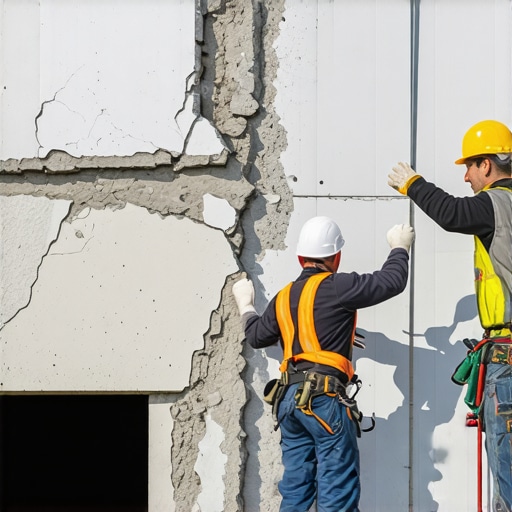
I recently walked a site where a homeowner was boasting about a ‘fresh’ restoration on a 1928 sandstone manor. From the curb, it looked sharp—sharp enough to fool a realtor, anyway. But as I pulled my inspection mirror and ran my hand along the water table course, the truth bit back. The ‘contractor’ had used a high-strength, non-shrink Portland grout on soft, porous sedimentary stone. I could hear the stone gasping. When I applied a slight pressure with my masonry hammer, a three-foot section of the stone face simply delaminated, falling to the grass in a heap of dust and regret. The grout was intact, but the stone was dead. This wasn’t a repair; it was a forensic scene in the making. The hard grout had acted as a vapor barrier, trapping moisture behind the surface. In our climate, where the thermometer swings like a pendulum, that trapped water hit the 32-degree mark and underwent its inevitable 9% volumetric expansion. It didn’t just crack the grout; it detonated the stone from the inside out.
The Physics of the Porous: Why Standard Grout Fails
When we talk about concrete masonry unit restoration or fixing a brick column repair, we are playing a game of hydrothermal physics. Porous stones like limestone, sandstone, and even certain old-world bricks have a high rate of absorption. They breathe. They take in moisture through capillary action and release it through evaporation. Modern grouts are designed to be impermeable, but when you slap that onto a porous substrate, you create a ‘cold joint’ of thermal incompatibility. The stone expands at one rate; the grout expands at another. Eventually, the bond breaks, and you’re left looking for foundation crack repair experts because the moisture has migrated into the core of the structure.
“The most common cause of masonry failure is the use of materials with incompatible thermal expansion coefficients.” – BIA Technical Note 20
Fix 1: The Sacrificial Lamb Principle (Lime-Based Mortars)
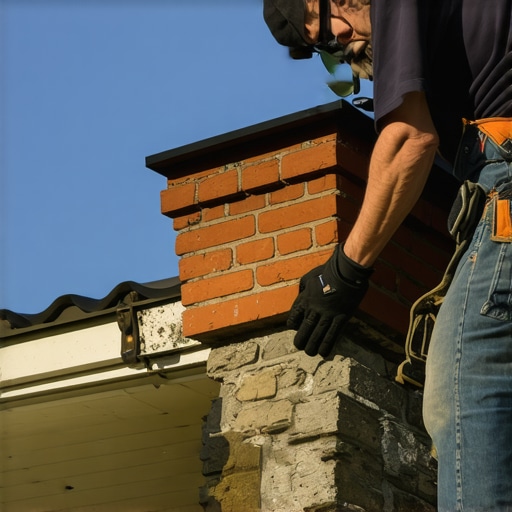
In the world of forensic masonry, we follow one Golden Rule: The mortar must be weaker than the masonry unit. If there is movement or stress, we want the joint to crack, not the stone. This is why concrete masonry unit restoration in historic contexts requires Type O or even pure lime putty. These materials are ‘self-healing.’ As carbon dioxide from the air reacts with the lime, it slowly reforms into calcium carbonate, effectively knitting small fissures back together. This is the ancient precursor to modern self-healing concrete foundations. By using a vapor-permeable ‘mud,’ you allow the stone to shed water. If you’ve noticed your chimney acting up, don’t just look at the chimney damper repair; look at the mortar. If it’s harder than the brick, your chimney is a ticking time bomb of spalling faces.
Fix 2: Sub-Surface Stabilization and Helical Intervention
Sometimes grout failure isn’t a material problem; it’s a tectonic one. If your stone walls are shearing, you aren’t looking at a grout fix—you’re looking at a structural migration. I’ve seen retaining wall batter correction jobs where the ‘fix’ was more grout, only for the wall to tip another two inches the following spring. You have to address the soil. This is where foundation helical pier installation becomes the only real cure. By driving steel piers down to load-bearing strata, we stop the ‘heave and sink’ that stresses the joints. Once the structure is pinned, you can perform foundation slab jacking to level the flatwork. Without this, new grout is just lipstick on a corpse. Concrete flatwork services often fail because they ignore the sub-base compaction, leading to the ‘wavy’ patio syndrome that no amount of sealant can hide.
Fix 3: Managing the Hydrostatic Nightmare
Water is the only element that can turn a mountain into sand, and your home is no different. When grout fails at the base of a wall, it’s often due to hydrostatic pressure—water sitting against the foundation with nowhere to go. We see this constantly in retaining wall batter correction. If the ‘weep holes’ are clogged or non-existent, the water pressure will pop the grout lines like a cork. To fix this, you need a multi-stage defense. First, brickwork sealants application must be silane-siloxane based. These are ‘breathable’ sealants. They don’t form a plastic film; they chemically bond to the pores, allowing vapor out but stopping liquid water from entering. It’s the difference between wearing a raincoat and wearing a plastic bag. One keeps you dry; the other makes you sweat until you drown.
Fix 4: Deep-Joint Repointing and Mechanical Toothing
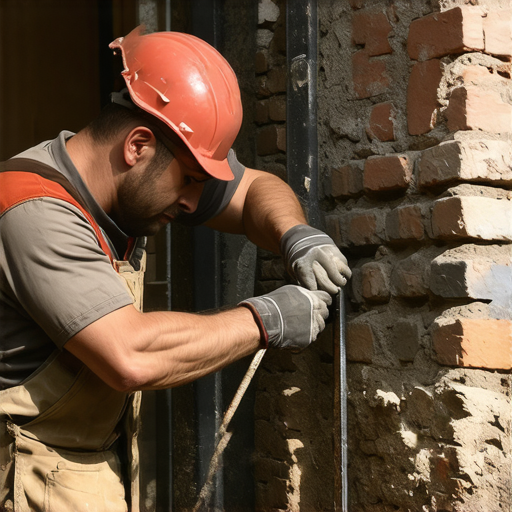
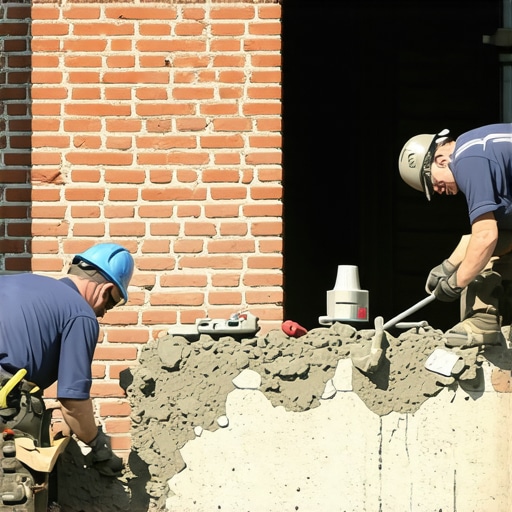
You can’t just ‘butter’ the joints. I see handymen ‘slicking’ new mud over old, loose debris all the time. That’s a ‘lick-and-stick’ job that won’t last a single winter. Real foundation crack repair or joint restoration requires grinding out the old material to a depth of at least twice the width of the joint. You need to expose clean, ‘toothy’ stone so the new mortar has something to grab. We call this the ‘suction’ of the stone. If the stone is too dry, it will suck the moisture out of the mortar too fast—a process called ‘flash setting’—and the mud will crumble like a dry biscuit. You have to pre-wet the masonry, bringing it to a ‘saturated surface dry’ state. Only then do you pack the mud in layers, firmly striking it with a jointer tool to densify the surface.
“Mortar should always be weaker than the masonry units it binds.” – ASTM C270
The Truth About ‘Self-Healing’ and Modern Tech
We are seeing a surge in self-healing concrete foundations that use calcifying bacteria to plug micro-cracks. While that’s great for new builds, for the 2026 outlook on existing porous stone, the ‘tech’ is actually found in going backward. We are returning to high-calcium lime and natural hydraulic limes (NHL). These materials handle the ‘movement’ of the earth far better than the rigid, brittle mixes of the 1990s. If you are looking at brick column repair, especially for load-bearing pillars, you cannot afford a brittle failure. A brittle failure is sudden; a ductile failure (using soft mortar) gives you a warning. I’d rather see a hairline crack in a soft joint than a shattered stone in a hard one. Whether you are dealing with concrete flatwork services or a complex foundation slab jacking project, remember: masonry is a living, breathing assembly. Treat it like a rock, and it will break. Treat it like a sponge, and it will last a century.
{“@context”:”https://schema.org”,”@type”:”HowTo”,”name”:”How to Fix Porous Stone Grout Failure”,”step”:[{“@type”:”HowToStep”,”text”:”Identify if the masonry unit is softer than the existing grout. If the stone is spalling, the grout is too hard.”},{“@type”:”HowToStep”,”text”:”Grind out failing joints to a depth of twice the joint width using a diamond blade or vacuum-shrouded grinder.”},{“@type”:”HowToStep”,”text”:”Pre-hydrate the stone to prevent ‘flash setting’ of the new mortar.”},{“@type”:”HowToStep”,”text”:”Apply a lime-based, vapor-permeable mortar (Type N or O) in 1/4 inch lifts, compacting each layer.”},{“@type”:”HowToStep”,”text”:”Finish the joint with a slicker or jointer tool to ensure a water-shedding profile.”}]}
This article really highlights how critical it is to consider the material properties when doing masonry repairs, especially with porous stones. I’ve seen many projects where ignoring the importance of vapor-permeable mortars leads to disaster down the line. The part about lime-based mortars being self-healing and more compatible with historic materials resonated with me. I once worked on restoring a limestone façade, and using modern impermeable grout caused extensive damage. It’s fascinating how returning to traditional materials like NHL and lime mortars can offer a more sustainable and long-lasting solution, especially in climate zones prone to freeze-thaw cycles. Have others noticed a shift back to these old techniques in recent restoration projects? What’s been your experience with their performance compared to modern synthetic mixes? It seems clear that respecting the natural movement and breathability of masonry is key to preventing more of these failures.