Stop Sinking Pavers: 4 Driveway Repair Fixes for 2026
The Sinking Driveway: A Forensic Autopsy of the ‘Wavy’ Surface
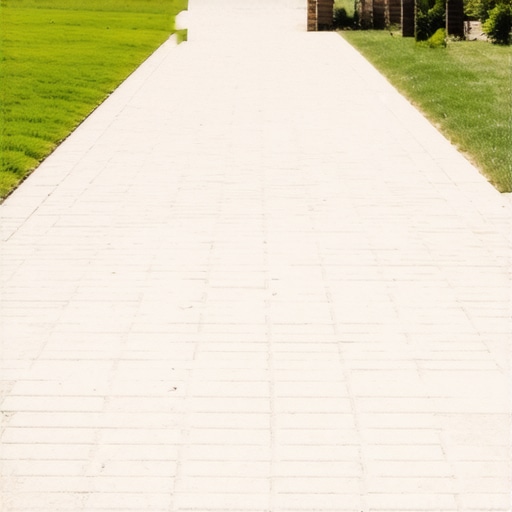
You pull into your driveway, and it feels like navigating a lunar landscape. That undulating, ‘wavy’ pattern isn’t an artistic choice; it’s a structural failure written in stone. I’ve spent thirty years inspecting these disasters, and it’s almost never the stone’s fault. It’s the invisible world beneath the surface. I stood looking at a $60,000 driveway in a high-end development last year that lay in a state of total upheaval because the contractor forgot the cardinal rule of masonry: water always wins. They built beautiful modular retaining walls to flank the drive but neglected the hydrostatic relief. The result? A driveway that looked like a tectonic plate shift within eighteen months.
In the trade, we talk about the ‘tooth’ of the material—how well one layer grips the next. When you see pavers dipping and diving, that tooth has been filed down by poor physics. Most ‘lick-and-stick’ crews today throw down some sand, vibrate the pavers, and collect a check. They don’t understand the Proctor density or the CBR (California Bearing Ratio) of the sub-soil. If you’re in a freeze-thaw climate, you’re fighting a battle against the 9% expansion of water. If that water is trapped in your base, your driveway is nothing more than a slow-motion explosion. We’re moving into 2026, and the tech has changed, but the physics of dirt and stone remain the same. Here is the forensic reality of why your pavers are sinking and how to fix them for the long haul.
“The physical requirements for interlocking concrete pavers include a minimum compressive strength of 8,000 psi and a maximum absorption of 5%.” – ASTM C936
Fix 1: The Geogrid and Sub-Base Reinforcement
When a driveway sinks, the ‘mud’—what we call the base material—has failed. Most residential drives use a 4-inch base. That’s a joke. For 2026 standards, we’re looking at 8 to 12 inches of angular crushed stone. Notice I said angular. Round stones, like pea gravel, act like ball bearings. They roll under pressure. Angular stones lock together, a process called ‘interlock,’ which distributes the load of a 5,000-pound SUV across a larger surface area.
The real secret is the Geogrid. This is a high-tensile polymer mesh that we lay between the sub-grade (the dirt) and the sub-base (the stone). It creates a ‘bridge’ effect. Imagine walking on snow with boots versus snowshoes. The geogrid is the snowshoe for your cars. It prevents the heavy gravel from being driven down into the soft clay soil over time. This is especially critical if you are integrating modular retaining walls near the driveway edges. Without that lateral reinforcement, the entire system ‘creeps’ outward, opening up joints and letting more water in.
Fix 2: Self-Healing Sub-Bases and Advanced Chemistry
We are seeing a massive shift toward self-healing concrete foundations as a rigid base for high-end paver installs. I know what you’re thinking: ‘Concrete cracks.’ Yes, it does. But new bio-based or crystalline admixtures in the concrete can actually seal hairline fractures when water enters. When water hits the unhydrated cement or the specialized bacteria in the mix, it triggers a reaction that fills the crack with calcium carbonate.
If you aren’t going the rigid route, you must address brick efflorescence removal before it starts. Efflorescence is that white, powdery salt that haunts new masonry. It’s caused by water moving through the stone and bringing salts to the surface. In 2026, we’re using BIM masonry projects—Building Information Modeling—to map out the exact drainage gradients of a driveway before the first shovel hits the ground. This ensures that water never sits long enough to initiate the capillary action that causes efflorescence or the dreaded frost heave.
“Moisture expansion of clay brick and thermal contraction of the concrete masonry unit must be accommodated in the design.” – BIA Technical Note 18
Fix 3: Permeable Systems and Hydrostatic Relief
The old way was to pitch the driveway toward the street and hope for the best. The 2026 way is permeable masonry. Instead of a solid surface that forces water to run off, we use mortarless masonry systems with wide joints filled with fine, clean stone. This allows the water to drop straight through the surface into a massive stone reservoir underground. This relieves the hydrostatic pressure that would otherwise push your pavers up from below during a deep freeze.
Think of it as a commercial smokestack repair mentality applied to your home. On those big stacks, we deal with massive thermal and pressure shifts. Your driveway is no different. It’s a living structure. If you have an older home, you might also be looking at stone balustrade restoration or tuckpointing brick walls nearby. If your driveway is sinking, check the ‘slicker’ work on your adjacent walls. If the mortar is crumbling, it’s a sign that the entire site’s moisture management is failing. You can’t fix a driveway in a vacuum.
Fix 4: Polymer Stabilization and Joint Integrity
The final fix involves the ‘butter’—not the mortar, but the joint sand. In the old days, we used play sand. The rain washed it out, ants built nests in it, and weeds turned your driveway into a garden. Today, we use high-performance polymeric sand. This is a mix of fine sand and binders that, when wetted, turn into a flexible, rubber-like grout.
This sand prevents ‘bridge-over’ where the pavers only touch at the top. You want full-depth joint saturation. If the joints are empty, the pavers can tilt (tip-out), which leads to ‘honeycombing’ of the base material as sand from the surface migrates downward into the voids of the gravel. For professional masonry restoration, we often have to power-wash out the old, dead sand and ‘re-butter’ the joints with a stabilization agent that can handle the torque of modern electric vehicles, which are significantly heavier than their gas counterparts.
The Forensic Conclusion: Do It Once or Do It Twice
I’ve seen enough ‘handyman specials’ to know that trying to save $2,000 on the base will cost you $20,000 in repairs five years later. Whether you’re looking at a foundation repair or just a 20-foot stretch of pavers, the rules of the Master Mason apply. You need to respect the suction of the earth. You need to understand that the ‘cold joint’ between your driveway and your garage floor is a primary entry point for destruction. Don’t let a contractor talk you into a ‘thin-set’ over an old asphalt drive. That’s a recipe for a disaster. True masonry restoration is about digging deep, literally, and ensuring the skeleton of the project is as strong as the skin. If you’re planning a project for 2026, look for crews using BIM masonry projects software and don’t be afraid to ask about their compaction testing. Your driveway shouldn’t be a temporary surface; it should be a legacy.
![Why Your 2026 Chimney Needs a Heat Shield [Safety Update]](https://masonryrescue.com/wp-content/uploads/2026/04/Why-Your-2026-Chimney-Needs-a-Heat-Shield-Safety-Update.jpeg)

![3 Reasons to Install a Chimney Heat Shield in 2026 [Pro Tips]](https://masonryrescue.com/wp-content/uploads/2026/03/3-Reasons-to-Install-a-Chimney-Heat-Shield-in-2026-Pro-Tips.jpeg)