
Why Most Concrete Patches Fail After the First Freeze
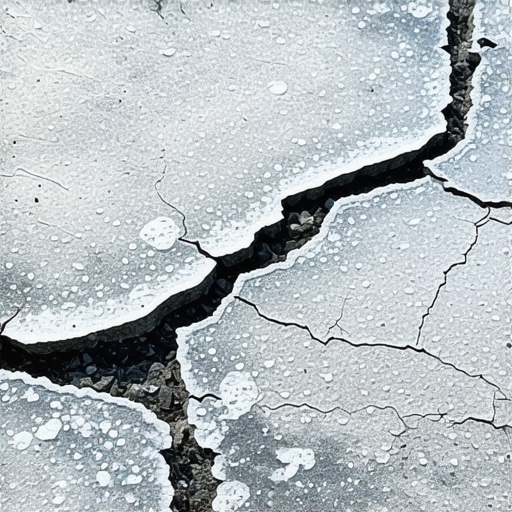
It is a scene we see every April at RSI (Restoration Specialists Inc.). A property owner or facility manager walks out to their loading dock, driveway, or parking structure to inspect the repairs they made just a few months prior. In October, that patch looked perfect – smooth, gray, and rock-solid. But as the snow melts, they find the patch has “popped,” leaving behind a crumbling mess of gravel and dried resin. This is the “Spring Surprise,” and in the Midwest, it is as predictable as the changing seasons.
My name is Daniel Lephardt, and at RSI, we specialize in the high-stakes world of exterior restoration. We’ve seen thousands of failed repairs, and almost all of them share a common denominator: they were installed without accounting for the “50-degree cliff” or the brutal physics of the freeze-thaw cycle. Just as someone starting a new health journey might spend hours researching what is the keto diet to ensure their body reacts correctly to new fuel, a masonry professional must understand how concrete chemistry reacts to the cold.
In this guide, we are going to dive deep into the science of why standard repairs fail and how we, as professionals, ensure a bond that lasts for decades, not just until the first frost. If you’ve ever wondered why DIY concrete patches often peel away, the answer lies in the chemistry of the cure.
II. The Science of the “50-Degree Cliff”
Most off-the-shelf concrete repair kits are based on epoxy resins or polymer-modified cements. These materials rely on an exothermic reaction to harden. This means the chemicals must generate their own internal heat to create the molecular chains that result in a structural bond. However, these materials have a biological-like sensitivity to temperature. We often say standard epoxies act like lizards: they move fast and efficiently in the heat, but they “sleep” or become completely sluggish when the temperature drops.
The “50-degree cliff” is the point at which most standard repair resins simply stop working. When the ambient temperature or, more importantly, the substrate temperature (the temperature of the concrete slab itself) falls below 50°F, the chemical reaction slows to a crawl. If it hits 40°F, the reaction often stops entirely. The material might feel “tacky” or even look hard to the naked eye, but it has failed to achieve its intended cross-linking density. It remains a “sticky, gummy mess” at the molecular level, lacking the structural integrity to hold up to traffic or weather.
Just as tracking macros on keto is essential for maintaining a state of ketosis, tracking the temperature of your materials and your concrete is essential for a permanent repair. If you apply a standard 70°F-rated epoxy to a 45°F slab, you aren’t making a repair; you’re just creating a temporary plug that will fail the moment it is stressed.
III. Thermal Movement and the “Feathering” Trap
One of the biggest misconceptions about concrete is that it is a static, unmoving block of stone. In reality, concrete is a dynamic material that breathes, expands, and contracts. In the heat of a Midwest summer, a 100-foot slab can expand significantly; in the dead of winter, it shrinks. This is known as thermal expansion and contraction.
The most common mistake we see in failed repairs is “feathering.” This is the practice of spreading the repair material thin at the edges to make it flush with the surrounding concrete. While this looks aesthetically pleasing for a few weeks, it is a recipe for disaster. Because the patch and the original concrete have different “coefficients of thermal expansion” (they grow and shrink at different rates), the thin, feathered edge is the first point of failure. As the slab shrinks in the cold, it pulls away from the patch, and those paper-thin edges simply snap off.
Planning a repair without considering this movement is like trying a gluten free keto meal plan without checking the nutritional labels; it looks right on the surface, but the hidden mechanics will cause the system to fail. To prevent this, professionals use a technique called “saw-cutting” or “vertical edging.” We never feather. We cut a clean, 90-degree edge into the concrete so the patch has a thick “shoulder” to lean on. For more on this, see our guide on Sanding vs. Grinding: Preparing Concrete for a Permanent Bond.
IV. The Amine Blush Nightmare
If the cold doesn’t kill your patch, the humidity might. In the late fall and early spring, we often deal with high moisture levels in the air. When certain epoxies cure in cool, damp conditions, they undergo a chemical side-effect known as “Amine Blush.” This is a waxy, oily film that migrates to the surface of the curing epoxy.
Amine blush is a nightmare for two reasons. First, it makes the patch look blotchy and unfinished. Second, and more importantly, it acts as a “bond-breaker.” If you intended to apply a secondary sealant, a traffic coating, or another layer of mortar over that patch, the amine blush will prevent it from ever sticking. It’s like trying to tape something to a piece of wax paper.
Think of amine blush like a poorly formulated keto electrolyte supplement – it sounds like it’s part of the process, but it actually creates an imbalance that prevents the entire system from functioning. If you touch a patch and it feels greasy or “soapy” after it should have cured, you are looking at a failed repair that will likely peel before the year is out.
V. The Freeze-Thaw Cycle: Nature’s Sledgehammer
The ultimate test for any masonry work in the Midwest is the freeze-thaw cycle. This is the primary cause of “popped” or “spalled” concrete. The physics are simple but devastating: when water freezes, it expands by approximately 9% in volume.
When a patch isn’t perfectly bonded – perhaps due to the 50-degree cliff or a feathered edge – microscopic gaps form between the repair material and the original slab. During a winter rain or snowmelt, water seeps into these gaps. When the temperature drops overnight, that water turns to ice. That 9% expansion acts like a hydraulic wedge, slowly prying the patch away from the substrate. After twenty or thirty of these cycles in a single winter, the patch is completely delaminated. It sits in the hole like a loose tooth until a snowplow or a heavy vehicle tires catches the edge and rips it out.
Just as intermittent fasting keto meal plan strategies require discipline to avoid “cheating” and ruining progress, concrete repair requires the discipline of ensuring a 100% moisture-tight bond. If you leave even a pinhole for water to enter, nature’s sledgehammer will find it. For specific advice on stairs, check out our guide to patching concrete steps for winter safety.
VI. Professional Solutions: Changing the Chemistry
So, how do we at RSI make repairs in the middle of a Chicago or Milwaukee winter? We don’t use the kits you find at a big-box hardware store. Those kits are the “fast food” of the masonry world – convenient, but ultimately lacking the “healthy fats” your concrete needs to survive.
Instead, we use industrial-grade, low-temperature formulas. These are specialized polyaspartic or methyl methacrylate (MMA) resins that can cure in as little as 20 minutes, even when the temperature is 20°F. We also heavily utilize fiber-reinforced mortars. These contain thousands of tiny synthetic or steel fibers that act like internal rebar, holding the patch together even if the surrounding concrete moves. Finding the right concrete “recipe” is as critical as finding keto diet recipes that actually taste good – you need the right ingredients to make the results sustainable.
When we are fixing driveway holes with industrial-grade concrete patches, we aren’t just filling a hole; we are re-engineering the surface. We also look for best electrolytes for keto equivalents in our admixtures – accelerants and bonding agents that ensure the chemical reaction completes before the frost can interfere.
VII. Step-by-Step: How to Make a Patch Last
If you must attempt a repair in cool weather, you need to follow a strict professional protocol. Starting your repair with a cold substrate is as ineffective as looking for low carb breakfast ideas at a pancake house; you’re setting yourself up for a struggle. Follow this checklist:
- Condition Your Materials: Keep your resins and mortars inside a heated building (at least 70°F) for 24 hours before use. Never use “cold” material.
- Deep Grinding: Don’t just wire-brush the surface. Use a diamond grinder to get down to “bright” concrete. You need an open pore structure for the bond.
- The Bone-Dry Rule: Use a propane torch to dry the area. If there is even a hint of moisture in the concrete pores, the resin won’t penetrate.
- Eliminate Feather Edges: Use a circular saw with a diamond blade to cut a 1/2-inch deep vertical perimeter around the repair area.
- Choose the Right Recipe: If it’s below 50°F, stop. Unless you have a specific low-temp catalyst, your “healthy fats” (the resins) won’t work.
Remember, using the wrong material is often worse than doing nothing at all. As we discuss in our article on why standard caulk is the worst choice for repairing concrete cracks, the wrong “ingredients” can actually trap moisture and accelerate the damage.
VIII. Conclusion: Winter is the Ultimate Judge
In the world of exterior restoration, winter is the ultimate judge of our work. It exposes every shortcut, every cold-joint, and every chemical failure. While a keto breakfast without eggs might be a challenge to pull off, a concrete repair in 40-degree weather is a scientific impossibility without the right professional-grade tools.
Don’t wait for the “Spring Surprise” to realize your repairs have failed. If you have a commercial property or a home that needs serious structural attention, let the experts at RSI handle the chemistry. We have the low-temp formulas and the fiber-reinforced mortars to ensure your property remains safe and sound through the harshest freeze-thaw cycles. Contact Daniel Lephardt and the RSI team today for a professional assessment before the next freeze hits.