3 Best Sealers to Prevent 2026 Porous Stone Salt Erosion
The Ghost in the Stone: A Forensic Look at Salt Decay
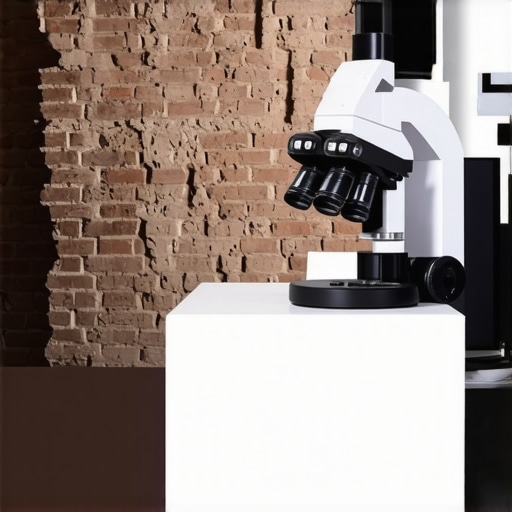
I remember a call I took last November on a coastal estate. The homeowner pointed to a hairline crack on a limestone pillar, dismissive, thinking it was just a cosmetic blemish that needed a bit of caulk. But stone doesn’t just crack for no reason. When I inserted my micro-scope into the fissure, I didn’t see solid substrate; I saw a cavern of orange dust where the structural steel reinforcements had been eaten alive by chloride ions. The salt hadn’t just sat on the surface; it had migrated deep into the molecular structure of the stone, dragging moisture with it and expanding until the stone literally choked on its own skeleton. This is the reality of porous stone erosion, and if you’re not preparing for the 2026 winter cycles now, your masonry is already on the clock.
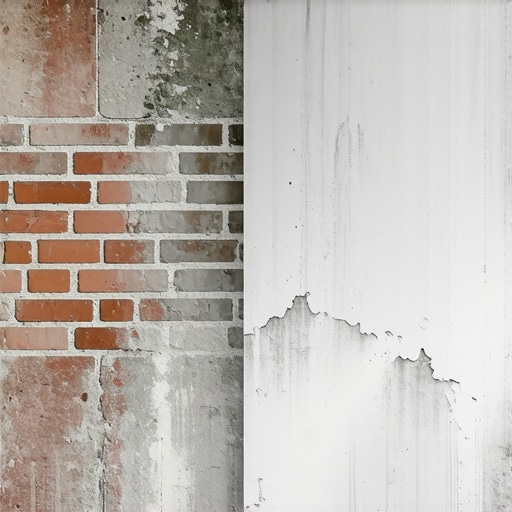
As a third-generation mason, I’ve spent decades watching the ‘lick-and-stick’ veneer era fail. Modern construction often ignores the fundamental physics of masonry. Stone is a living, breathing material with a complex network of capillaries. When you apply salt to melt ice, or when sea spray hits a facade, that salt dissolves into a solution. Through capillary suction, the stone drinks this brine. Once the water evaporates, the salt recrystallizes. This process, known as subflorescence, generates internal pressures that can exceed 100,000 PSI—far greater than the tensile strength of any natural stone. This is why we see spalling, where the face of the brick or stone simply pops off, leaving a soft, sandy mess behind.
“Water penetration is the single greatest threat to masonry durability, specifically when acting as a vehicle for soluble salts.” – BIA Technical Note 7
The Science of the Shield: Why Most Sealers Fail
Most big-box store sealers are ‘film-formers.’ They sit on top of the stone like a plastic wrap. To a layman, this looks great because water beads up. But to a forensic inspector, it’s a nightmare. A film-former plugs the pores, trapping internal moisture. When the temperature drops and that trapped water hits the freeze-thaw cycle, it expands by 9%, and since it can’t escape through the plastic film, it pushes the entire face of the stone off. For 2026, we are looking at advanced penetrating sealers that work through ‘covalent bonding’ rather than surface adhesion.
1. Deep-Penetrating Silane-Siloxane Blends
For high-traffic areas requiring concrete flatwork services or large-scale brick wall restoration, a high-solids Silane-Siloxane blend is the industry gold standard. Silanes have a tiny molecular structure, allowing them to penetrate deep into the ‘tooth’ of the stone. Siloxanes have a larger molecular weight and stay near the surface. Together, they create a hydrophobic barrier that doesn’t change the look of the stone but chemically alters the surface tension of the interior pores. This prevents the ‘wicking’ action of salt-laden water.
2. Fluorinated Polymer Breathable Barriers
When dealing with sensitive patio stone realignment projects or decorative facades, fluorinated polymers offer a unique advantage. These are ‘oleophobic’ as well as hydrophobic, meaning they repel oils and salts simultaneously. Unlike cheap acrylics, these allow for 100% vapor permeability. The stone can still ‘breathe’ out its internal moisture, but the salt molecules are too large to pass through the treated microscopic gateway. It is the difference between wearing a plastic bag and wearing a high-tech Gore-Tex jacket.
3. Nano-Lithium Densifiers with Salt-Repellent Additives
In cases of foundation waterproofing or older, crumbling substrates, we often turn to lithium-based densifiers. These react with the calcium hydroxide in the masonry to create calcium silicate hydrate (CSH)—the same stuff that gives concrete its strength. By densifying the stone from the inside out, we reduce the pore size so significantly that salt erosion can’t find a foothold. This is often a critical step before performing self-leveling masonry lifts on sinking slabs.
“The selection of a water repellent should be based on the substrate’s ability to maintain vapor transmission while resisting liquid water intake.” – ASTM C67/C67M Standard
Preparation: The Mud and the Meat
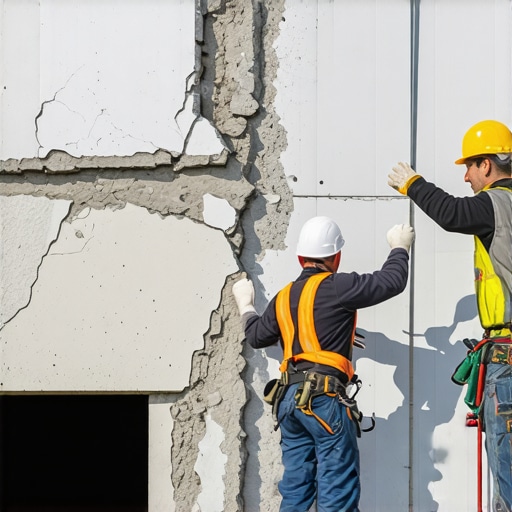
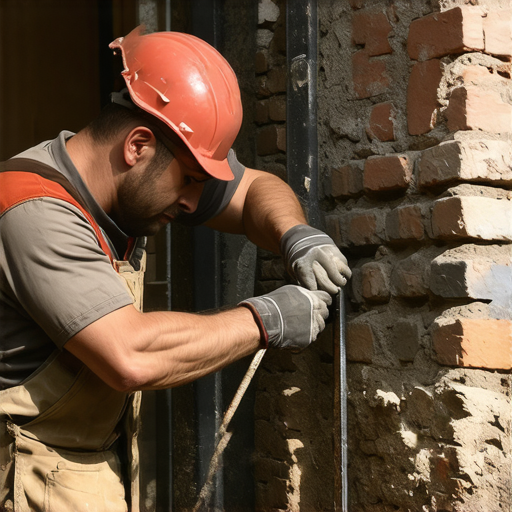
You cannot seal your way out of a structural problem. Before any sealer is applied, the substrate must be sound. This often requires professional re-pointing services or flush pointing services to ensure the mortar joints are not acting as open highways for water. If I see a ‘stair-step’ crack in a wall, a sealer is a waste of money. That wall needs cracked brick wall repair using fiber-reinforced mortars that can handle the slight movements of the earth without snapping like a dry twig. We use advanced masonry adhesives to secure loose veneers before the first drop of sealer ever touches the hawk or the brush.
When we talk about brick wall restoration, we are talking about chemistry. If you have an old building (Pre-1940), you cannot use modern Portland cement. You need a soft lime mortar. If you put a hard sealer over a soft brick with hard mortar, you’ve created a bomb. The brick will turn to powder inside its own shell. The goal is always the ‘sacrificial principle’—the mortar should be the weakest link, not the stone. Sealers are the final coat of armor on a well-built suit of mail.
The Verdict for 2026
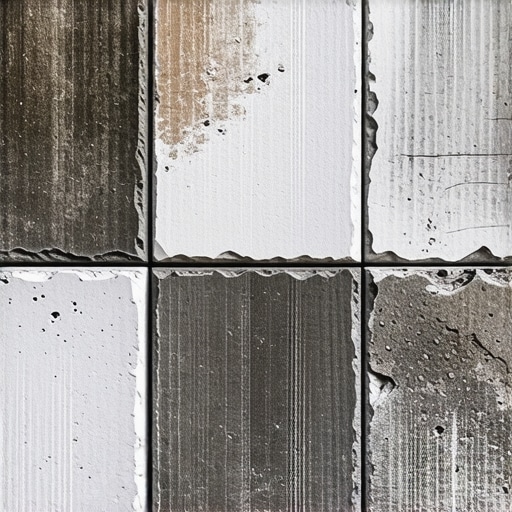
If you are looking at your driveway or your front stoop and seeing white powder (efflorescence) or ‘honeycombing’ in the concrete, the clock is ticking. Don’t wait for the ‘spall’ to happen. Clean the stone, ensure the joints are ‘buttered’ correctly by a pro, and apply a breathable, penetrating sealer. Do it once, or do it twice and pay me a lot more the second time to tear it all out. Masonry is about permanence, but only if you respect the physics of the water.