
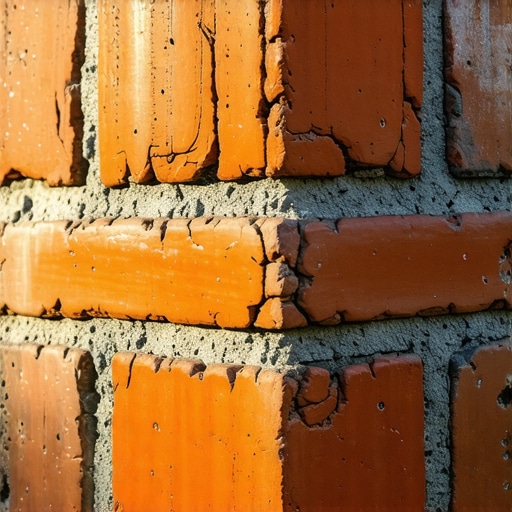
The Visual Failure of Modern Corners
You walk up to a property and something feels off. The walls look heavy, the lines are blurred, and the corners look like a jagged mountain range instead of a crisp, architectural edge. As a third-generation mason, I see it every single day. Most modern ‘bricklayers’ are just moving units for a paycheck; they have lost the art of the birdsmouth cut. When you are wrapping a brick around a non-ninety-degree angle, you cannot just ‘butter’ a fat joint and hope for the best. Without a birdsmouth—a specific notch cut into the brick to allow it to wrap around the corner—you end up with massive, ugly vertical head joints that look like a handyman special. It is the difference between a bespoke suit and a burlap sack.
“Water penetration is the single greatest threat to masonry durability. Proper detailing of joints and corners is the primary defense against moisture ingress.” – BIA Technical Note 7
My father’s mentor, a man who could smell a bad batch of lime from fifty paces, used to carry a small wooden square. He told me that if a shadow on a corner wasn’t a straight, razor-thin line at noon, the mason was a thief. He was right. A sloppy corner isn’t just an eyesore; it is a structural liability. When you have oversized joints because you failed to miter or birdsmouth your corners, you are creating a massive entry point for moisture. In our climate, where the freeze-thaw cycle is a relentless beast, that extra ‘mud’ in the corner holds water. When that water hits 32 degrees Fahrenheit, it expands by 9 percent. That expansion creates internal pressure that eventually pops the face off your brick—a process we call spalling. This is why masonry repair services are a billion-dollar industry built on the back of laziness.
The Micro-Physics of the Birdsmouth Cut
To understand why a birdsmouth cut is essential, we have to micro-zoom into the physics of the masonry unit. A standard brick has a specific ‘tooth’ or texture on its bed joints, designed to grab the mortar. When you turn a corner at an odd angle, say a 135-degree bay window, you expose the smooth, non-textured interior of the brick. If you do not cut a birdsmouth, you are trying to bond mortar to a surface that wasn’t meant to hold it. This creates a ‘cold joint’ where the bond is purely mechanical and incredibly weak. By cutting the birdsmouth, you create a recessed pocket that allows the mortar to key into the unit, creating a structural lock. This is critical for historic masonry preservation where we are dealing with softer, handmade bricks that rely on the ‘suction’ or Initial Rate of Absorption (IRA) to pull the cementitious paste into the pores of the clay.
Mortar Chemistry and the Sacrificial Principle
When I perform mortar matching services, I often find that people have tried to fix sloppy corners with modern Type S mortar. This is a death sentence for old brick. In the forensic world, we talk about the sacrificial principle. The mortar must always be softer and more vapor-permeable than the brick itself. If you use a high-strength Portland cement on a historic facade, the brick becomes the weakest link. When the wall moves—and it will move due to thermal expansion—the hard mortar won’t give. Instead, the brick will crack. For historic masonry preservation, we strictly use Type O or even pure lime putty. Lime is ‘self-healing.’ Through a process called carbonation, the lime reacts with CO2 in the air to reform into calcium carbonate, literally knitting small cracks back together over decades.
“Mortar should be designed based on the properties of the masonry units. A mortar that is too strong can cause irreversible damage to the masonry units through stress concentration.” – ASTM C270 Standards
Outdoor Kitchens and Fire-Rated Installs
The sloppy corner epidemic extends to the backyard. I recently inspected an outdoor kitchen masonry build where the homeowner was complaining of cracks only six months after the install. The culprit? They had built a fire-rated masonry installation using standard masonry techniques. When you are building a pizza oven or a fireplace, you are dealing with extreme thermal gradients. The interior of the brick might be 500 degrees while the exterior is 40. Without precise cuts like the birdsmouth to allow for uniform expansion, the ‘mud’ simply burns out and crumbles. This is also why chimney interior parging is so often done poorly. Masons just slap a layer of mortar on the inside without realizing that the parge coat needs to be a specific refractory mix to survive the flue gases and heat.
The Restoration Reality: Tuckpointing vs. Repointing
People use the term tuckpointing as a catch-all, but in the trade, it’s a specific aesthetic technique. Real tuckpointing involves using two different colors of mortar to create the illusion of a perfect, thin joint. What most people actually need is mortar repointing services—the physical removal of failing mortar and the installation of new ‘mud.’ If your corners are sloppy, we can sometimes hide the sins of the past with masonry staining, a process where we use breathable pigments to blend the mismatched bricks and joints, but it’s a cosmetic fix for a structural problem. If you are looking at an outdoor fireplace rebuild, don’t let the contractor tell you that fat joints are ‘rustic.’ Rustic is just a word used to sell incompetence. You want tight, clean lines that allow the masonry to breathe and move as a single monolithic unit.
How to Identify a Master Mason
If you are hiring for masonry repair services, look at their ‘hawk’ and their ‘slicker.’ A master mason treats his tools like a surgeon. If they show up with a bucket of pre-mix and a dirty trowel, send them packing. Ask them how they handle 135-degree corners. If they don’t mention a birdsmouth cut or show you a wet saw with a diamond blade, they aren’t masons; they are laborers. A real pro understands that the corner is the anchor of the wall. It’s where the ‘soldier course’ meets the ‘stretcher bond,’ and if that intersection isn’t perfect, the whole project is a failure. Do it once, do it right, or you’ll be calling me in five years to figure out why your ‘handyman special’ is laying in a heap of red dust on your driveway.