
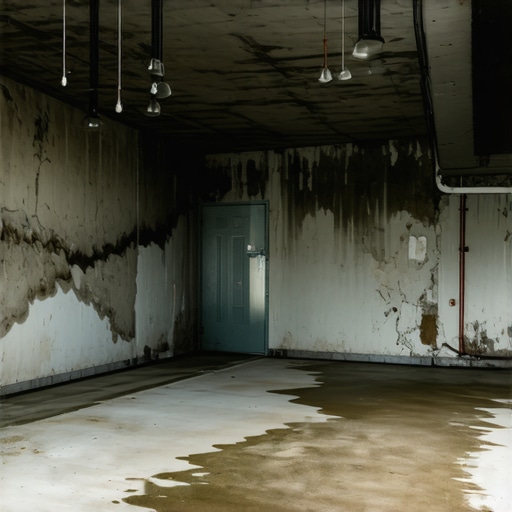
Why Your Basement Still Smells Musty After Waterproofing
As the Vice President of Basement Waterproofing Specialists and a certified CMI, CMS, and CRS, I have spent decades in the trenches – literally. I have seen every configuration of foundation failure, from hydrostatic pressure buckling a cinder block wall to the slow, insidious creep of efflorescence. However, one of the most common and frustrating calls I receive begins with a homeowner saying: “Mark, I spent over $10,000 on a full interior drainage system and a high-end sump pump, but why your basement still smells musty after waterproofing is the only question I can’t answer. Did the system fail?”
It is a valid concern. When you invest a significant portion of your home equity into a professional waterproofing solution, you expect a dry, fresh-smelling environment. But here is the technical reality: waterproofing and odor remediation are two different scientific disciplines. While your drainage system is designed to manage liquid water and prevent flooding, the “musty” smell is a biological byproduct known as Microbial Volatile Organic Compounds (MVOCs). These are gases produced by fungi, mold, and bacteria as they metabolize organic matter. If you are wondering why your basement still smells musty after waterproofing, you aren’t dealing with a leak; you are dealing with a gas and humidity problem that requires a deeper understanding of masonry physics.
Humidity vs. Liquid Water: The Vapor Barrier Gap
To understand the persistence of odors, we must differentiate between liquid water and water vapor. Most waterproofing systems – especially interior sub-floor drains – are designed to alleviate hydrostatic pressure. When the water table rises, the water enters the drainage channel and is pumped away. This stops the “flood,” but it doesn’t necessarily stop the “damp.”
Research into residential moisture dynamics shows that musty smells are almost always a result of high relative humidity, often driven by yard saturation. Even if your floor is bone-dry to the touch, the air in your basement could be sitting at 70% or 80% relative humidity. Concrete is a porous, hygroscopic material; it acts like a hard sponge. Through a process called capillary suction, moisture from the saturated earth outside your home is pulled through the microscopic pores of the foundation walls. As this moisture reaches the interior surface, it evaporates into the air, raising the humidity levels.
When the relative humidity exceeds 60%, mold and mildew spores – which are omnipresent in the environment – become active. They don’t need a puddle to grow; they only need high humidity and a food source (like the paper facing on drywall, dust, or wood framing). This is why the distinction between Exterior vs Interior Foundation Waterproofing is so critical. An interior system manages the water once it arrives, but it doesn’t always stop the vapor transmission through the walls themselves.
The “Memory” of Porous Materials
Another reason why your basement still smells musty after waterproofing is what I call “material memory.” If your basement was damp for five, ten, or twenty years before you waterproofed it, the organic materials within that space have “absorbed” the odor. Concrete, wood joists, and even the dust in your HVAC ducts have been colonized by MVOCs.
Concrete is particularly problematic. Even after a drainage system is installed, the slab and the rim joists may hold onto residual moisture for months. Fungi can thrive in limited airflow environments even after the primary liquid water source is removed. The “must” you smell is the legacy of years of moisture. If you didn’t perform a deep antimicrobial cleaning of the masonry surfaces after the waterproofing installation, the biological agents are still there, off-gassing into your living space. This is a common oversight in Foundation Waterproofing Failures; a sump pump is a mechanical tool, not a biological sanitizer.
The “SEO” of Home Maintenance: Ranking Your Basement’s Health
In my years of technical consulting, I’ve found that maintaining a home is a lot like maintaining a digital presence. Think of your basement’s air quality in terms of “ranking.” Just as a local seo software for agencies or a gmb ranking software helps a business stand out and perform in a crowded market, your basement needs specific “tools” to rank high in the category of healthy air. You wouldn’t use a ctr manipulation tool or an seo traffic bot to fake your way to the top of Google’s search results; those are shortcuts that eventually lead to a penalty. Similarly, you cannot use a scented candle or a plug-in air freshener to “fake” a dry basement. Those are the “black hat” tactics of home maintenance.
To achieve a sustainable, high-ranking environment for your family’s health, you need a Platinum AIO (All-In-One) approach to moisture management. This means looking beyond the pump. You need a Live Drive toward constant air exchange and moisture monitoring. Just as SEO requires constant updates and technical audits to maintain its position, your basement requires ongoing mechanical dehumidification and air filtration to ensure that the “musty” smell doesn’t outrank the fresh air coming from your upper floors.
Hidden Culprits: HVAC, Floor Drains, and Wall Cavities
If your humidity is under control and your walls are dry, but the smell persists, we have to look at the hidden “pockets” of the basement. During our 50-Point Masonry Check, we often find three specific culprits:
1. Dry Floor Drain Traps
Many basements have a floor drain connected to the sewer or a dry well. These drains have “P-traps” that are supposed to hold water to block sewer gases from entering the home. If you haven’t had water on the floor lately (because your new waterproofing system is working!), the water in that trap can evaporate. The resulting smell is often mistaken for “musty mold,” but it is actually sewer gas or stagnant water odors from the pipes.
2. The HVAC “Lung”
Your HVAC system acts as the lungs of the home. If your basement was damp for years, mold spores have likely settled inside the dark, cool environment of your ductwork. When the system turns on, it circulates those MVOCs throughout the house. If you waterproof the basement but don’t clean the ducts, the smell will remain as a ghost of the basement’s past.
3. Condensation on Cold-Water Pipes
In the summer, warm, humid air hits cold-water copper pipes and condenses. This dripping water can create small localized colonies of mold behind wall cavities or on top of insulation that the waterproofing system can’t reach. This is why insulation choice is so important; fiberglass batts act as a filter for mold spores and a sponge for condensation.
The Solution: A Three-Pronged Attack
So, how do we fix it? If you are asking why your basement still smells musty after waterproofing, you need to transition from “water management” to “air management.”
1. Industrial-Grade Mechanical Dehumidification
A “big box” store dehumidifier is rarely enough for a basement’s square footage and the sheer volume of vapor transmission through concrete. You need an industrial-grade unit (like a Santa Fe or Aprilaire) that is rated for low-temperature environments and can move hundreds of cubic feet of air per minute. We aim to keep the basement at a consistent 45-50% relative humidity.
2. Active Air Exchange
Basements are often “tight” environments with stagnant air. Stagnant air allows MVOCs to concentrate. Installing an Energy Recovery Ventilator (ERV) or a dedicated basement ventilation system ensures that stale, odorous air is exhausted out, and fresh, filtered air is brought in. This is the “Live Drive” of air quality management.
3. Surface Neutralization
You must treat the masonry. Using an EPA-registered antimicrobial wash on the concrete walls and floors will kill the biofilm that produces the odor. This is often more effective than painting, as we discuss in our guide on Why masonry waterproofing solutions are better than paint. Paint often just traps the moisture and the mold behind a thin film, leading to peeling and intensified odors later.
Conclusion: Don’t Settle for a Musty Basement
In conclusion, the reason why your basement still smells musty after waterproofing is usually not a failure of your drainage system, but rather a failure to address the gaseous and biological elements of a damp environment. Waterproofing is the first step – the foundation – but air quality management is the finishing touch. By addressing MVOCs, managing relative humidity with industrial tools, and ensuring your porous materials are neutralized, you can finally enjoy the space you invested so much to protect.
If your basement has been waterproofed but the odor persists for more than 30 days, it is time for a professional assessment. At Basement Waterproofing Specialists, we don’t just look for leaks; we look at the entire science of your home’s air and masonry health. Contact us today for a comprehensive evaluation.