
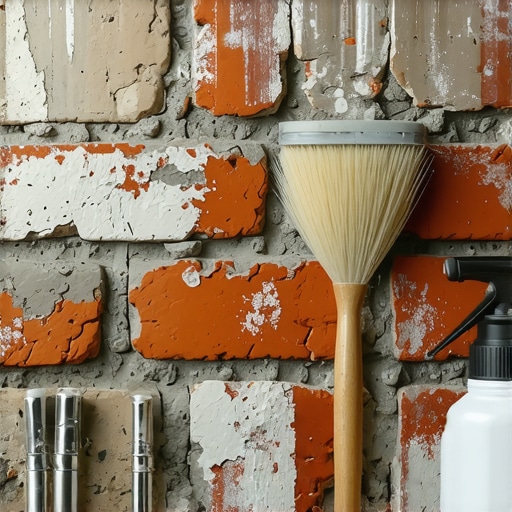
I have seen more history destroyed by a $200 pressure washer than by a century of acid rain. My mentor, a man who could feel the moisture content of a wall just by leaning his shoulder against it, used to tell me that a brick is like a living lung. It breathes, it moves, and it has a memory. If you choke it with the wrong sealant or scrub it with the wrong grit, you aren’t just cleaning it; you are executing it. Most people look at a weathered 19th-century facade and see dirt. I see the ‘fire-skin’—the vitrified outer layer of clay that was baked in a coal-fired kiln. Once you blast that skin off, the soft, pulpy interior of the brick is exposed to the elements, and the countdown to structural failure begins. This isn’t just about aesthetics; it’s about forensic material science. To understand how to clean historic masonry, you have to understand the chemistry of the kiln and the physics of capillary suction.
“The removal of the fired outer skin of the brick by sandblasting or high-pressure water cleaning will result in accelerated weathering and eventual disintegration of the brick unit.” – BIA Technical Note 20
The Anatomy of a Historic Brick
Before you even think about mixing a cleaning solution, you must perform a historic mortar analysis. Why? Because the brick and the mortar are in a symbiotic relationship. Pre-1940s bricks were generally fired at lower temperatures than modern modular units. This means they are softer and more porous. They rely on a soft, lime-based mortar to act as a sacrificial element. In this system, the ‘mud’—the mortar—is designed to be the weakest link. It’s where the moisture evaporates and where the salts (efflorescence) deposit. When some ‘handyman special’ contractor comes in and smears modern Type S Portland cement over these joints—a process often mislabeled as tuckpointing by the uninitiated—they create a tomb. The hard cement traps water inside the soft brick. When the freeze-thaw cycle hits, that trapped water expands by 9%, and the face of your historic brick pops off in a process we call spalling. I’ve seen commercial parapet wall repair jobs where the entire upper three courses were reduced to orange dust because someone thought ‘harder is better.’ It’s a tragedy written in calcium silicate.
The Physics of the Clean: Suction and Saturation
Cleaning historic brick is a game of management, not force. We look at the ‘tooth’ of the masonry. A high-suction brick will pull a cleaning chemical deep into its core, making it nearly impossible to rinse out. This leads to subflorescence—salts crystallizing inside the brick pores, shattering them from the inside out. This is why we always pre-wet the wall to the point of ‘SSD’ (Saturated Surface Dry). We fill the pores with clean water first, so the cleaning chemicals stay on the surface where they belong. If you’re dealing with a masonry rescue after disaster, such as smoke damage or heavy soot, you cannot just ‘butter’ on some acid and hope for the best. You need a surfactant-based approach that lifts the carbon without etching the clay. I often use drone chimney inspections to look at the crown and the upper flues before we even start, because the ‘smell’ of a damp chimney can tell you if you’re dealing with creosote bleed-through or just surface soot. If the soot is baked in, you’re looking at a chimney rebuild services situation, not a cleaning job.
The Chemical Warfare of Modern Cleaning
We avoid muriatic acid like the plague. It’s too hot, too aggressive, and it leaves behind chloride salts that cause ‘vanadium staining’ (those nasty green or yellow streaks you see on old buildings). Instead, we use proprietary restoration cleaners that are buffered. We are looking for a gentle chemical reaction that breaks the molecular bond of the dirt without disturbing the patina. The patina is the story of the building; it’s the mineral accumulation that gives the brick its character. If you strip it down to raw clay, the building looks naked, ‘new,’ and historically ‘wrong.’ When performing mortar repointing services, we often find that the cleaning process reveals the original mortar matching services needs. You might find that the original mason used crushed oyster shells or local river sand, which gives the ‘mud’ a specific texture and color that modern bagged mixes can’t touch.
“Water penetration is the single greatest threat to masonry durability.” – BIA Technical Note 7
The Micro-Zoom: Why Water Pressure Kills
Let’s talk about PSI. A standard garden hose is about 40-60 PSI. A professional pressure washer can hit 4000 PSI. For historic brick, anything over 400 PSI is a weapon. When you hit a soft brick with high pressure, you are performing a micro-abrasion. You are opening up the pores, increasing the surface area, and making the brick more thirsty for water in the future. It’s a vicious cycle. Furthermore, you’re likely to create ‘honeycombing’ in the mortar joints. I’ve walked onto job sites where a ‘contractor’ was using a turbo-nozzle on a 1920s bungalow. He was literally carving his name into the brick. If you see a ‘cold joint’—a place where the masonry work stopped and started again—the high pressure will find that weakness and rip it open. This is especially dangerous during chimney repair services where the structural integrity of the flue liners might already be compromised. We prefer the ‘bucket and brush’ method. It’s slow, it’s back-breaking, and it’s the only way to ensure you aren’t destroying the very thing you’re trying to save.
The Role of Mortar in the Cleaning Process
You cannot separate cleaning from mortar matching services. Often, the ‘dirt’ on a building is actually failing mortar that has turned to dust and washed down the face of the brick. If you clean the brick but don’t address the eroding joints, you’re just prepping the building for a massive water intrusion event. When we do historic mortar analysis, we look at the lime-to-sand ratio. We want a mortar that is vapor-permeable. It needs to be a ‘wick.’ If the brick is the stone, the mortar is the sponge. This is why mortarless masonry systems are rarely seen in historic contexts; they don’t have the same moisture-wicking capabilities that a traditional lime joint provides. When we strike the joint with a slicker, we are compacting the face of the mortar to make it water-resistant, but the heart of the joint remains breathable. It’s a delicate balance of ‘buttering’ the brick correctly and ensuring the ‘mud’ has the right ‘suction’ to bond without ‘burning’ (drying too fast).
The Forensic Reality: When to Walk Away
Sometimes, the brick shouldn’t be cleaned. If the brick is already ‘sugaring’—turning to powder when you touch it—any cleaning agent will accelerate the decay. In these cases, we look at consolidation treatments or, in extreme scenarios, commercial parapet wall repair involving the replacement of the entire outer wythe of masonry. I once inspected a warehouse where they tried to clean the brick with a sandblaster. The results were catastrophic. The bricks were so porous they were soaking up rainwater like a sponge, leading to massive internal rot of the timber framing. That wasn’t a cleaning job anymore; it was a forensic rescue. Before you touch a historic wall, ask yourself: are you doing this for the building, or for your ego? The patina is a shield. Respect it, or the building will make you pay in the long run. Real tuckpointing and restoration work is about humility. It’s about using a hawk and trowel to restore what time has worn away, not using a machine to erase the past. Always test a small, inconspicuous area first—the ‘test patch’ is the master mason’s best friend. If the brick rings true when you tap it, and the ‘mud’ is matched to the original chemistry, you have a chance at a 100-year fix. Anything less is just a ‘slicker’ job that will fail before the next season turns.