
The Forensic Scene: Why That Hairline Crack is Lying to You
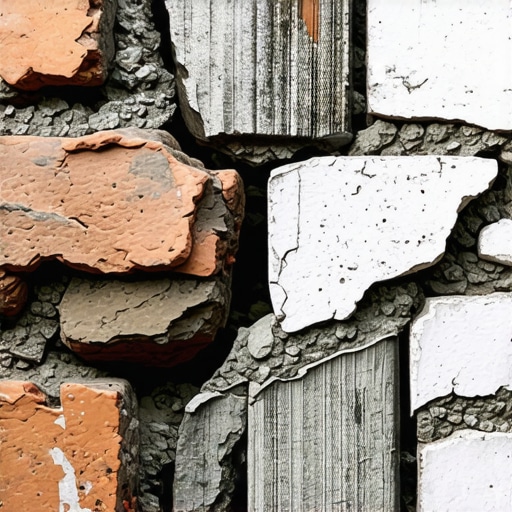
The homeowner at the 1928 Tudor estate thought it was just a cosmetic nuisance—a thin, jagged line tracing the soldier course above the garage. He did what most folks do: he went to a big-box store, bought a bag of ‘High Strength’ Type S mortar, and buttered it into the gap with a pointing trowel. Six months later, I was standing in his driveway looking at a disaster. The brick faces were literally popping off the wall like scabs, a phenomenon we call spalling. When I put my digital borescope into the cavity, the truth was uglier: the rigid, modern mortar had acted like a wedge, trapping moisture behind the facade and rusting the galvanized wall ties to orange dust. The wall wasn’t just cracked anymore; it was delaminating from the structure. This is the price of using standard, modern mortar on historic masonry. It is a fundamental violation of the physics of the wall.
“Water penetration is the single greatest threat to masonry durability. The use of mortar that is harder than the masonry units themselves leads to irreversible structural damage during thermal expansion cycles.” – BIA Technical Note 7
The Physics of the Sacrificial Joint
To understand why standard ‘mud’ from a bag is a death sentence for your walls, you have to micro-zoom into the modulus of elasticity and vapor permeability. Old-world bricks, especially those fired before the mid-1940s, are relatively soft and porous. They were designed to work in a system where the mortar is the ‘sacrificial lamb.’ In a traditional lime-based system, the mortar is softer than the brick. When the earth heaves or the temperature swings from a 100-degree summer day to a sub-zero winter night, the wall moves. If the mortar is soft, it absorbs that stress. It might develop micro-fissures, but the brick remains intact. When you use modern Portland-heavy mortar, which can hit 2,500 PSI or more, you have reversed the hierarchy. The mortar is now a stone-hard rail, and when the wall moves, the brick—being the weaker element—is the one that shatters.
The Chemistry of Breathability and Carbonation
Standard modern mortar relies on a hydraulic set, meaning it hardens through a chemical reaction with water. Historic lime mortar, however, hardens through carbonation—absorbing CO2 from the air over decades. This creates a ‘breathable’ structure. When rain hits a wall, the brick absorbs some of that moisture. In a lime-mortar system, that water can evaporate back out through the mortar joints. Modern mortars are often too dense, acting like a vapor barrier. This is where porous stone sealers often fail as well; if you seal the surface but the mortar is too hard, you trap water in a ‘pressure cooker’ scenario. During the freeze-thaw cycle, that trapped water expands by 9% in volume. Since it can’t escape through the dense mortar, it exerts thousands of pounds of pressure against the brick face until the brick face explodes.
Why Tuckpointing Machine Services Aren’t Always the Answer
Many contractors today rely on tuckpointing machine services to speed up the job. While these machines are great for grinding out failed joints in modern commercial masonry facade maintenance, they can be a surgeon’s scalpel in the hands of a butcher when used on old brick. If you aren’t careful, the diamond blades will ‘nick’ the top and bottom of the bricks, widening the joint and destroying the ‘fire-skin’ of the unit. A true master mason knows that for chimney structural repair or historic restoration, the extraction must be surgical. We often use masonry birdsmouth cuts and hand-chisels to ensure the integrity of the surrounding units remains uncompromised. Once the joint is cleaned out, the new ‘mud’ must be mixed to match the original composition—often a Type O or even a pure lime putty—not the gray, Portland-heavy soup found in a standard bag.
“Mortar should be designed to be weaker than the masonry units so that any stresses resulting from movement are relieved in the mortar joints rather than the units.” – ASTM C270 Standards
Identifying the Root Cause: Chimneys and Retaining Walls
If you are looking at cracks in a chimney, the issue is often more than just old mortar. Chimney leak detection often reveals that failed chimney flashing repair has allowed water to enter the core of the stack. In these cases, simply ‘smearing’ some mortar over a crack is like putting a band-aid on a gunshot wound. The same applies to outdoor structures. I’ve seen brick patio restoration projects fail within a year because the contractor didn’t understand retaining wall geogrid installation or hydrostatic pressure. If water is building up behind a wall, it doesn’t matter what kind of mortar you use; the wall will eventually bow and snap. You need fire-rated masonry installation techniques in high-heat areas and proper drainage everywhere else. To fix a crack, you must first stop the movement, then choose a mortar that ‘breathes’ and ‘gives’ with the soul of the building.