
The Forensic Scene: When History Crumbles Beneath the Surface
The homeowner looked at the corner of their 1912 Victorian and thought it was just a hairline crack, a minor blemish on a century of stability. But when I inserted the borescope into that fissure, the reality was much grimmer. I didn’t just see a gap; I saw the structural steel lintel behind the ornamental stone rusted to a pile of red dust, expanded to three times its original size, and literally pushing the facade off the building. The intricate, hand-carved limestone scrolling that defined the entryway was shattering under this internal pressure. In the old days, that would have been the end of the line—you couldn’t find a stone carver with the hands of a ghost to replicate that work for less than a king’s ransom. But today, we use a different kind of magic. We use 3D scanning and additive manufacturing to bridge the gap between the 19th-century craftsman and 21st-century survival.
“Water penetration is the single greatest threat to masonry durability.” – BIA Technical Note 7
The Physics of Decay: Why Old Walls Breathe and New Ones Choke
To understand why we need 3D printed masonry repairs, you have to understand why these buildings fail in the first place. Most people think a brick is a solid, inert object. It isn’t. It’s a lung. Historic masonry, particularly those built before the 1940s, relies on a delicate balance of moisture movement. These structures were built with lime-based mortars that were intentionally softer than the surrounding brick or stone. This is the ‘sacrificial principle.’ When the building shifts or moisture enters, the mortar takes the brunt of the stress. It breathes, allowing water to evaporate through the joints rather than being trapped inside the masonry unit itself.
When a modern ‘handyman’ comes along and slaps a hard Portland cement mortar into a soft historic joint—a process often misidentified as historic pointing styles but executed with the finesse of a butcher—they create a disaster. The hard cement blocks the moisture path. The water gets trapped behind the face of the brick. When the temperature drops and that water freezes, it expands by 9%. That expansion pressure is enough to pop the face right off a hand-molded brick. This is where brick efflorescence removal becomes more than just a cleaning task; it’s a diagnostic event. Those white, powdery salts on the surface are the building’s way of screaming that it’s drowning. The salts are carried to the surface by moisture; as the water evaporates, the salt stays, often crystallizing inside the pores of the brick (sub-florescence), causing it to crumble from the inside out.
The Digital Twin: 3D Scanning the Unreplaceable
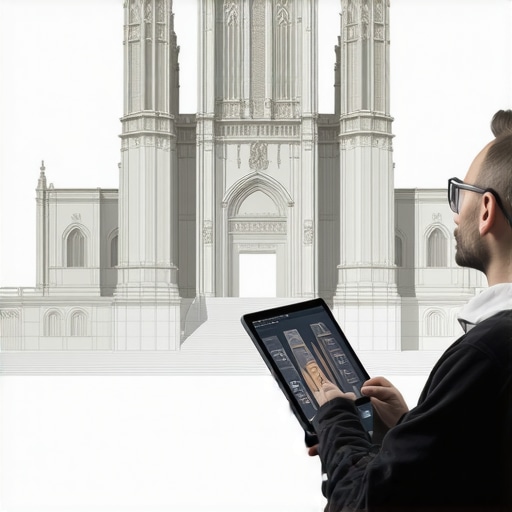
When we encounter a shattered ornamental piece—perhaps a decorative corbel or a unique retaining wall capstone replacement that no longer exists in any quarry catalog—we turn to photogrammetry and LiDAR scanning. We are no longer limited by what we can hand-carve. By taking thousands of high-resolution images and laser measurements, we create a ‘digital twin’ of the damaged element. We can then digitally ‘heal’ the stone in a CAD environment, stripping away the erosion and cracks to reveal the original geometry intended by the master mason a century ago.
Once the digital model is perfected, we have two paths for historic masonry preservation. We can 3D print a negative mold into which we cast fiber-reinforced mortars or specialized stone-replacement compounds that mimic the original’s density, porosity, and color. Or, for non-structural elements, we can print the final piece in a weather-resistant mineral composite. This isn’t just ‘lick-and-stick’ veneer work; this is forensic replication. We are matching the ‘tooth’ of the original material so that the new piece doesn’t just look right—it behaves right under thermal stress.
The Art of the Mud: Mortar Science and Fiber Reinforcement
When it comes to concrete masonry unit restoration or repairing a cracked brick wall repair, the ‘mud’—our trade term for mortar—is everything. You don’t just grab a bag of Type S from a big-box store and start buttering bricks. We use fiber-reinforced mortars to provide the tensile strength that traditional lime mortars lack, without sacrificing the breathability. These micro-fibers act like a skeleton within the mortar, preventing the micro-cracking that occurs during the curing process, especially in deep-hole repairs or when we are building up a profile on a stone coping installation.
“The use of compatible materials in the repair of historic masonry is essential to ensure the longevity of the restoration.” – ASTM C270 Standards
A true master knows that the suction of a dry brick can ruin a repair. If the brick is too thirsty, it will suck the moisture out of your mortar before the chemical hydration process is complete. This ‘burns’ the mortar, leaving it chalky and weak. We pre-wet the substrate, bringing it to a ‘saturated surface dry’ state. Then, using a hawk and a slicker, we pack the joints in lifts, ensuring there are no voids where chimney leak detection would later find water infiltration. A cold joint is a failure; we work to ensure a monolithic bond between the old and the new.
Hardscape Truths: Capstones and Coping
We often see the most brutal failures in horizontal surfaces like retaining wall capstone replacement. These stones are the first line of defense against the sky. If your stone coping installation lacks a proper drip edge or if the joints are failing, water will migrate down into the core of the wall. In a concrete masonry unit restoration, this water leads to honeycombing and structural rot. We now use 3D-printed templates to ensure that replacement stones have perfectly matched reglets and flashing grooves, ensuring that water is shed away from the wall face, preventing the cycle of saturation that leads to spalling.
The Forensic Conclusion: Preservation vs. Patchwork
Don’t be fooled by a smooth finish. A soldier course that looks pretty today might fall off in three winters if the physics weren’t respected. The marriage of 3D scanning and historic material science isn’t about making things easier; it’s about making them possible. We are preserving the value of our built environment by refusing to accept that ‘close enough’ is good enough for a building that has stood for a hundred years. When you see a cracked brick wall repair, don’t just think about the crack. Think about the moisture, the salt, the thermal expansion, and the century of history that is trying to tell you exactly how it wants to be fixed. Do it once, do it right, or don’t do it at all.