
The Anatomy of a Vertical Failure
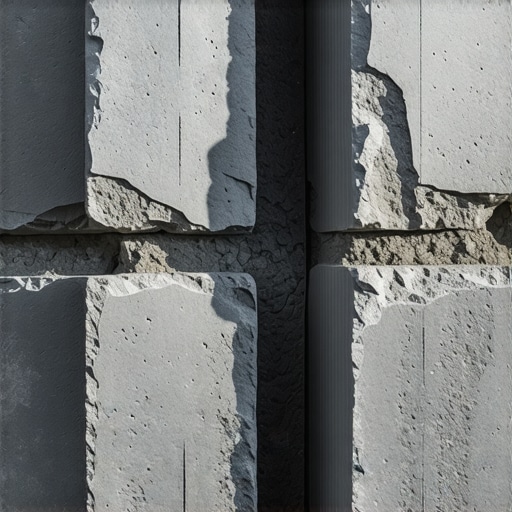
I remember walking onto a job site in the humid corridor of the Appalachian foothills where a $200,000 stone facade restoration was literally peeling away from the backup wall. The homeowner thought it was just a few loose stones, a minor inconvenience. But when I sent a camera behind the veneer, I saw the structural nightmare: the installer had used standard Type S mortar to bond heavy, non-porous granite to a smooth concrete backup. It was like trying to glue a bowling ball to a mirror using Elmer’s glue. The sheer weight of the stones, combined with the lack of mechanical ‘tooth,’ had caused the entire system to fail. This wasn’t just a mistake; it was a fundamental misunderstanding of the physics of vertical adhesion.
The Physics of the Vertical Plane
When you lay a brick on a horizontal bed, gravity is your best friend. It compresses the mud, forcing it into the microscopic fissures and pores of the unit, creating a mechanical interlock once it hydrates. But on a vertical plane, gravity becomes the enemy. It is constantly pulling at the bond, trying to shear the material away from the substrate. This is where Why vertical bonding requires specialized masonry adhesives becomes the most critical question in a forensic inspector’s mind. Standard mortars are designed for compression, not tension or shear strength. When you butter the back of a stone or a thin-brick unit for a vertical application, you need more than just the carbonation of lime; you need a polymer-modified chemical bond that can withstand the constant downward pull.
“Water penetration is the single greatest threat to masonry durability, but the failure of the bond between the unit and the substrate is the primary cause of catastrophic veneer collapse.” – BIA Technical Note 7
The Chemistry of the ‘Micro-Bond’
To understand why specialized adhesives are mandatory, we have to look at the hydration process at a molecular level. Standard mortar hardens through a chemical reaction between Portland cement and water, creating calcium silicate hydrate (CSH) crystals. These crystals grow into the pores of the brick. This is what we call ‘suction.’ However, in modern concrete masonry unit restoration, the substrate is often dense and non-absorptive. If there is no suction, those CSH crystals have nowhere to go. They simply sit on the surface, creating a cold joint. Specialized masonry adhesives are engineered with long-chain polymers—essentially microscopic rubber bands—that bridge the gap between the adhesive and the substrate. These polymers provide ‘wetting’ ability, allowing the adhesive to penetrate even the tightest pores of a stone facade restoration project.
The Birdsmouth Cut and Mechanical Precision
In high-end masonry, we often use masonry birdsmouth cuts to wrap corners. This requires a level of precision that traditional mortar cannot support. A birdsmouth cut creates a fragile edge that, if not bonded with a high-flexural strength adhesive, will crack at the first sign of thermal expansion. This is especially true in the North, where the freeze-thaw cycle is relentless. When water gets behind a stone and freezes, it expands by 9%. If your adhesive isn’t specialized to be slightly flexible while maintaining a massive tensile hold, that expansion will pop the stone right off the wall. This is why we also emphasize porous stone sealers; you have to stop the water from entering the stone’s matrix in the first place, or no adhesive in the world will save your facade from spalling.
Geotechnical Pressure and Vertical Integrity
Vertical bonding isn’t just about the ‘lick-and-stick’ aesthetics of a fireplace. It’s about structural stability. During a retaining wall installation, for instance, the vertical alignment is under immense hydrostatic pressure. Even with a retaining wall geogrid installation to hold back the soil, the facing units need a bond that won’t give way. If the wall begins to tilt due to soil heaving, the vertical bonds are the first to snap. This is where forensic inspectors look for honeycombing in the mortar—voids where the mud didn’t fully consolidate, creating weak points. In severe cases, we see homeowners opting for foundation helical pier installation to stabilize the entire structure, but if the vertical stone veneer was improperly bonded, the stabilization of the foundation won’t fix the crumbling face of the wall.
“The selection of an adhesive for masonry must account for the differential movement between the veneer and the backup system.” – BIA Technical Note 28B
Tuckpointing and Maintenance Realities
When I provide a tuckpointing cost estimation, I’m not just looking at the price of sand and lime. I’m looking at the labor involved in grinding out failed, hard cement mortars that were used where specialized, softer adhesives should have been. On historic projects, using a modern, rigid adhesive can be just as damaging as using a weak one. The goal is to match the modulus of elasticity. If the adhesive is harder than the stone, the stone will break before the adhesive does. This is a common tragedy in stone facade restoration. We also see issues with tile grouts on masonry; people use indoor-rated grouts for exterior masonry applications, and within one season, the grout has turned to powder because it couldn’t handle the UV exposure or the thermal shock.
Modern Inspection Techniques
Today, we don’t just rely on tapping a brick with a slicker or a hawk to see if it ‘rings.’ We use drone chimney inspections to get high-resolution thermal imaging of vertical bonds. These drones can detect ‘hot spots’ where moisture is trapped behind the veneer, indicating a bond failure before the stone actually falls. If you see a soldier course of brick beginning to lean outward, you aren’t looking at a minor repair; you’re looking at a systemic failure of the vertical bonding system. Specialized adhesives are the only way to ensure that the vertical planes of our buildings stay where they belong—upright and intact against the elements.