The homeowner told me it was just a loose stone, something a bit of construction adhesive could fix. But when I climbed the ladder and ran my fingers along the underside of that limestone overhang, I didn’t feel a minor repair. I felt the heartbeat of a dying wall. I put my borescope into a quarter-inch gap in the mortar, and what I saw was a graveyard. The structural steel lintel was a mass of flaky orange scales, rusted to a point where it had expanded to twice its original thickness, jacking the coping stones upward like a slow-motion explosion. This wasn’t a ‘handyman special.’ This was a forensic scene where the killer was water, and the weapon was a lack of a drip edge.
Stone coping is the umbrella of your masonry. Whether it’s atop modular retaining walls, a chimney, or a decorative garden wall, it represents the first line of defense against the relentless assault of gravity and chemistry. When it fails, it doesn’t just look ugly; it invites masonry water damage that can rot a foundation from the top down. As a third-generation mason, I’ve seen what happens when people treat stone like it’s a plastic trim piece. Stone breathes. It has suction. It has a specific ‘tooth’ that demands the right ‘mud’—what we call mortar—to stay bonded for a century instead of a season.
“The primary function of a coping is to prevent water from entering the top of a masonry wall. Copings should be weather-resistant and sloped to shed water.” – BIA Technical Note 36A
In the North, where I spent decades scraping ice off my trowel, the enemy is the freeze-thaw cycle. Think about the physics: water enters a microscopic pore in the mortar or the stone itself. When the temperature drops, that water expands by roughly 9% in volume. That expansion generates thousands of pounds of pressure per square inch. If the mortar is too hard—say, a high-Portland cement mix used by a contractor who thinks ‘stronger is better’—the water can’t escape. It finds the path of least resistance, which usually means popping the face off your expensive stone. This is why we prioritize tuckpointing weatherproofing using lime-rich mortars that are sacrificial; the mortar should fail before the stone does.
“Mortar should be designed to be weaker than the masonry units it binds to ensure that stresses do not cause cracking of the units themselves.” – ASTM C270
When dealing with tuckpointing curved walls, the complexity doubles. You can’t just run a straight slicker through those joints. You have to understand the geometry of the curve to ensure the ‘mud’ is packed tight without honeycombing. If you leave air pockets, you’re just building a reservoir for ice. I’ve been called for masonry rescue after disaster where entire parapet walls have collapsed because the chimney flashing repair was neglected, allowing water to bypass the coping and travel down the interior of the flue, saturating the bricks until they turned into a mushy red paste. This is particularly critical when using metallic masonry finishes, which can oxidize and streak if the coping fails to shed water properly.
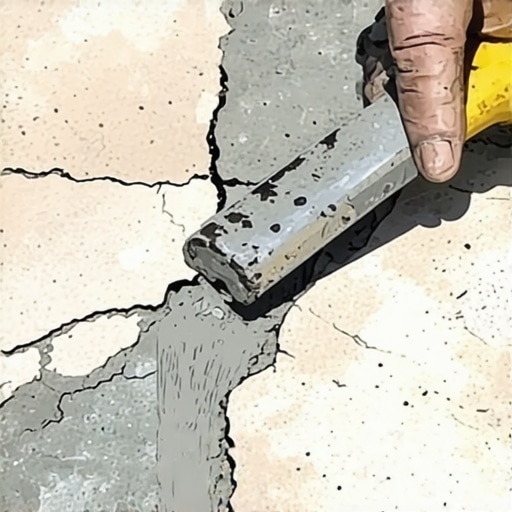
Fixing failed coping isn’t about slapping more cement on top. It starts with the base. If you’re working on modular retaining walls, the coping stone needs a solid bed of mortar with ‘suction’—meaning the stone needs to be slightly damp so it doesn’t instantly suck the moisture out of the mud, leading to a cold joint. We use a hawk to hold our material and ‘butter’ the edges of the stone, ensuring a full-depth joint. For masonry joint sand repair on horizontal surfaces, the pitch is everything. If that stone isn’t sloped at least 1/4 inch per foot, you’re just inviting a puddle to sit there and eat your masonry. Once the stone is set, we use a soldier course of brick below if necessary, and ensure masonry repair services include checking the through-wall flashing. Without a clear path for water to exit via weep holes, you’re just trapping the enemy inside the fortress. Don’t let a ‘pro’ tell you that caulk is a substitute for proper mortar and flashing. Caulk is a temporary fix; masonry is meant for the ages. If you do it right once, your grandkids will be the ones worrying about the next tuckpointing cycle, not you.